
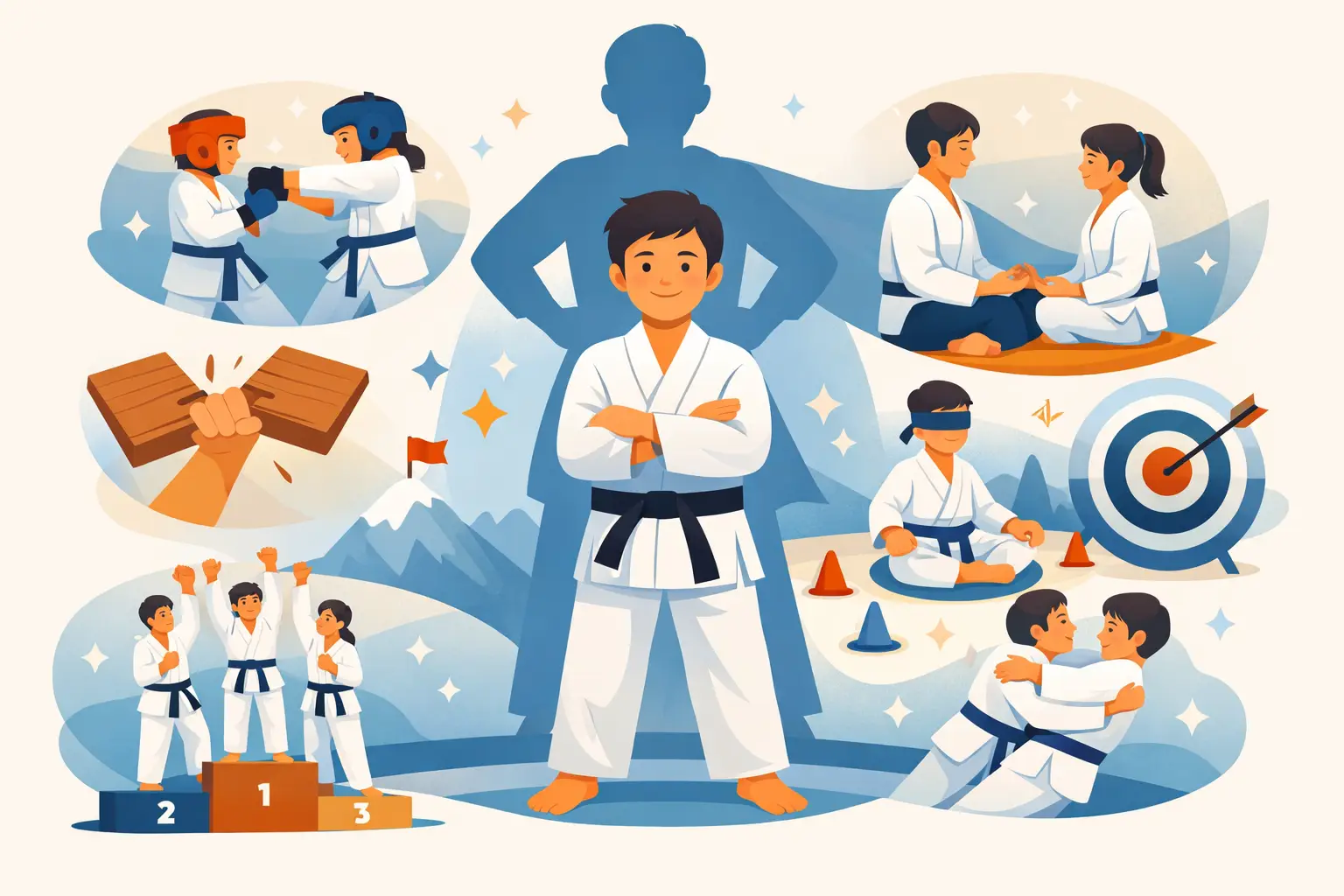
8 Best Martial Arts Confidence Activities
A child who avoids eye contact, a teen who hesitates to speak up, or an adult who second-guesses every new challenge does not need empty praise. They need repeated proof that they can learn, respond, and improve under pressure. The best martial arts confidence activities create that proof through disciplined practice, supportive coaching, and visible progress.
Confidence in martial arts is not about acting tough or trying to win every exchange. It is the calm belief that comes from knowing how to stand with purpose, follow through on a goal, and recover after a mistake. For families in Sapulpa, that makes training far more valuable than another after-school activity. It becomes a place where children, teens, and adults learn to carry themselves with greater focus and self-control.
What Makes Martial Arts Confidence Activities Work
Effective confidence-building activities have three parts: a clear challenge, a safe way to practice it, and specific feedback afterward. Students should know what success looks like, whether that means holding a balanced stance, completing a technique sequence, speaking loudly enough to be heard, or helping a training partner learn.
The challenge must fit the student. A shy beginner may build confidence by introducing themselves and performing one movement in front of a small group. A more experienced student may need the pressure of controlled sparring or the responsibility of leading a warm-up. Growth happens when training is demanding enough to require effort but structured enough that students can succeed.
The Best Martial Arts Confidence Activities
1. Strong Stance and Command Voice Drills
A balanced stance changes more than body position. When students plant their feet, keep their hands ready, look forward, and use a firm command voice, they practice taking up appropriate space. This is especially useful for children who tend to shrink back in unfamiliar settings or struggle to set boundaries.
A simple drill can pair a defensive stance with a clear verbal command such as “Stop” or “Back up.” The goal is not aggression. It is awareness, posture, and the ability to communicate with confidence. In a quality class, instructors correct posture and volume without embarrassing the student, allowing a quiet voice to become stronger one repetition at a time.
2. Goal-Based Belt and Skill Progressions
Few confidence activities are as powerful as a goal students can see. Martial arts rank systems, skill patches, and technique requirements give students a clear path: learn the movement, practice consistently, receive feedback, and demonstrate progress.
Belts should never become the only reason to train. Still, they give children and adults a meaningful milestone when motivation drops. A student who earns a new rank knows it was not handed to them. They showed up, listened, practiced through frustration, and improved. That lesson carries into schoolwork, sports, work projects, and family responsibilities.
3. Partner Drills With Controlled Contact
Confidence grows when students learn they can work with another person calmly and safely. Partner drills teach distance, timing, cooperation, and respect. They also help students understand that a training partner is not an enemy. Both people have a role in helping each other improve.
For young children, this may look like taking turns practicing a simple block, balance drill, or pad strike. Teens and adults can progress to more realistic self-defense responses, grappling positions, or controlled sparring. The trade-off is that contact can feel intimidating at first. Proper supervision, clear rules, and gradual progression make that discomfort productive rather than overwhelming.
4. Pad Work That Rewards Commitment
Hitting a target with correct form provides immediate feedback. Students can hear and feel when their technique lands with focus, balance, and proper alignment. Pad work is a healthy outlet for energy, but its real value is teaching commitment. A hesitant strike often comes from a hesitant decision.
Instructors can build confidence by setting achievable combinations, then raising the standard as students improve. A child who starts with two clean strikes may eventually complete a full sequence while moving, responding to commands, and maintaining guard. Adults often find that pad work also relieves stress while building conditioning and practical coordination.
5. Falling, Rolling, and Getting Back Up
Everyone falls short sometimes. Martial arts makes that reality physical in a safe, teachable way. Breakfalls, rolls, and ground-movement drills teach students how to protect themselves, reset, and rise with control.
This activity is particularly valuable in programs that include Japanese Jujutsu or wrestling fundamentals. Students learn that being on the ground is not automatic failure. They can breathe, use technique, create space, and get back to a safer position. That physical lesson builds resilience. Mistakes become part of training instead of a reason to quit.
6. Kata, Forms, and Weapon Fundamentals
Traditional forms give students a private challenge they can steadily refine. A kata, Iaido sequence, or basic Kenjutsu drill requires memory, focus, posture, timing, and attention to detail. Students cannot rush through it successfully. They must be present.
For a student who does not enjoy the unpredictability of sparring, forms can be an excellent confidence builder. They provide a reliable structure and a way to measure improvement over time. The student who once forgot every step can eventually perform with precision in front of classmates or family. That visible transformation is powerful.
7. Leadership Roles on the Mat
The student who helps organize a line, demonstrates a warm-up movement, or welcomes a new beginner practices confidence in a different way. Leadership requires speaking clearly, paying attention to others, and setting a positive example.
These roles should be earned through consistency and maturity, not reserved only for the loudest students. A reserved child may thrive when given one simple responsibility, such as counting repetitions or assisting a younger partner. Teens gain valuable practice in accountability when they help create a respectful training environment. Confidence becomes less about being the center of attention and more about being dependable.
8. Controlled Sparring and Scenario Training
Once students have a foundation, controlled sparring teaches them to stay composed when a situation changes quickly. They learn to manage adrenaline, make decisions, respect boundaries, and respond without panic. It is one of the clearest ways to turn technique into real confidence.
This is not the right starting point for every beginner, and it should never be chaotic. Younger students may begin with reaction games, distance drills, or light point-based exercises. Older students and adults can work through realistic self-defense scenarios that include verbal awareness, escape options, stand-up skills, and ground-fighting fundamentals. The purpose is not to prove who is toughest. It is to build judgment under pressure.
How Parents Can Support Confidence Beyond Class
Parents do not need to become martial arts instructors at home. The best support is simple: ask what your child practiced, notice effort instead of only results, and encourage regular attendance. Saying, “I saw you keep trying that difficult movement,” teaches more than saying, “You are the best.”
Avoid using martial arts as a punishment or expecting immediate personality changes. Some students become more vocal quickly; others build confidence quietly through better posture, patience, and willingness to try. Consistency matters more than dramatic moments. A respectful dojo gives families a steady environment where those small wins add up.
At Japanese Martial Arts Academy, students can build confidence through traditional Japanese systems, practical self-defense training, stand-up skills, and ground-fighting instruction. The right class meets each student where they are, then gives them a disciplined path forward.
The most meaningful confidence is not performed for others. It shows up when a child raises their hand, when a teen handles pressure with control, or when an adult tries again after a hard day. Give students a place to practice those moments, and they will carry the results far beyond the mat.