
Can Martial Arts Improve Listening? What Training Teaches
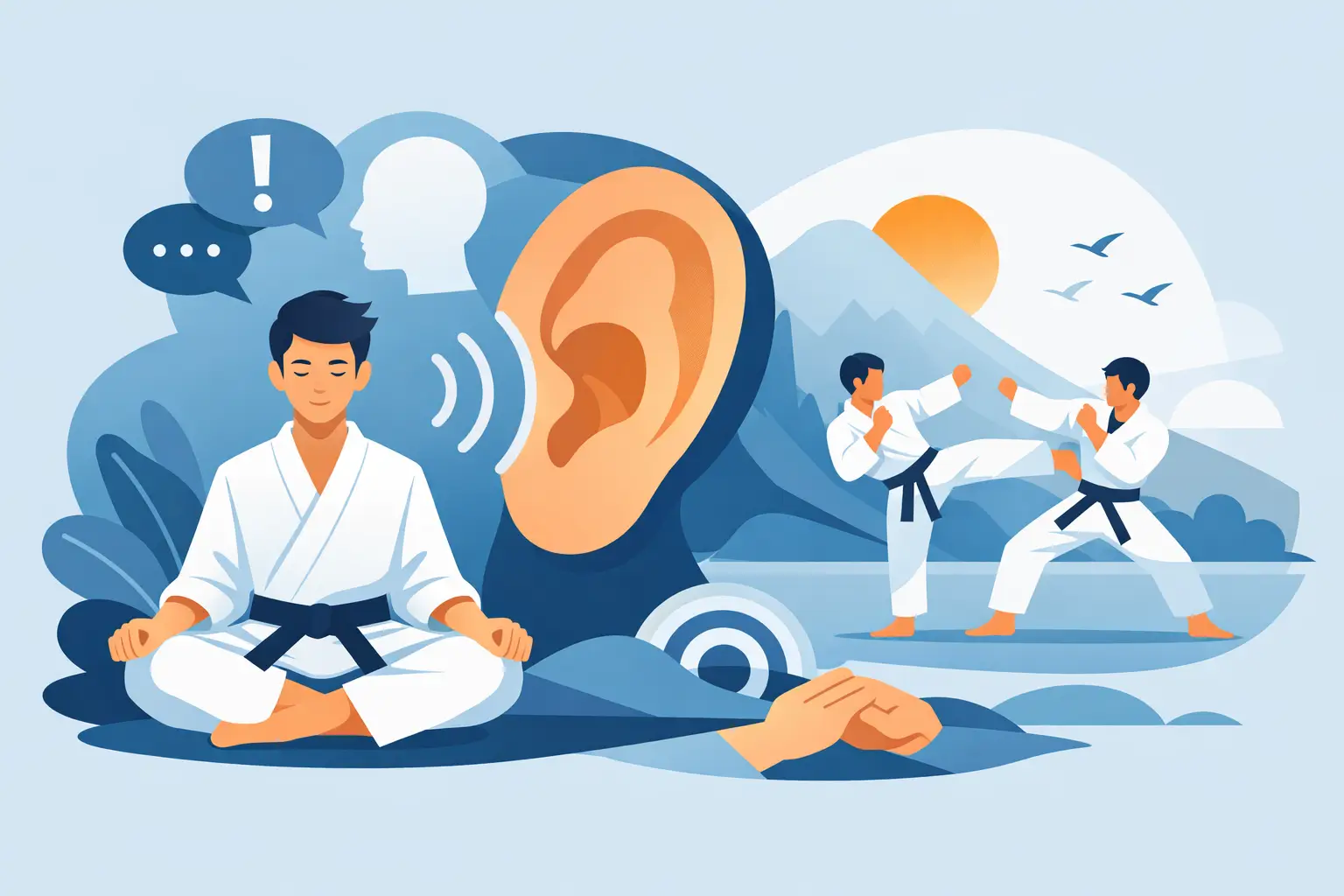
A child stands in a ready stance while an instructor gives a three-part direction: step back, block, then respond. The student who hears only the first command may move quickly, but the student who listens closely moves correctly. That distinction is one reason parents ask, can martial arts improve listening? With consistent, well-structured training, it often can.
Martial arts does not turn listening into a switch that flips after one class. It gives children, teens, and adults a place to practice attention, follow-through, and respectful communication week after week. In a quality dojo, listening is not treated as passive obedience. It is an active skill that helps students stay safe, learn accurately, work with partners, and build confidence under pressure.
Can Martial Arts Improve Listening for Kids?
Yes, especially when instruction is clear, age-appropriate, and repeated consistently. A martial arts class gives children an immediate reason to listen: directions shape what happens next. If they miss the instruction for a stance, a breakfall, or a partner drill, they cannot perform it correctly. The result is natural feedback, not a lecture.
Children also learn that listening has a physical component. They must pause their movement, look toward the instructor, process the words, and respond in sequence. Over time, those small moments build the habit of slowing down before reacting. For a child who tends to rush, interrupt, or get distracted, that is meaningful practice.
The benefit is not limited to younger students. Teens often face a different challenge: they may hear instructions but dismiss them before considering the reason behind them. Traditional martial arts helps connect listening with responsibility. A teen who listens carefully protects their training partner, improves technique faster, and earns greater trust as a leader in class.
Why the Dojo Builds Attention Differently
Many kids are told to listen throughout the day. At school, at home, and during activities, they may hear the same reminder repeatedly. Martial arts changes the setting by making attentive listening part of a clear system with expectations and visible progress.
In Japanese martial arts, students are expected to show respect for the instructor, fellow students, and training space. That respect is demonstrated through actions: arriving ready, responding when called on, paying attention during demonstrations, and applying corrections without argument. These routines create structure without making every class feel like a discipline talk.
A good instructor also uses concise commands and demonstrates the movement being taught. Students learn through hearing, seeing, and doing. This combination is valuable because listening is not always about memorizing a long verbal explanation. Sometimes it means noticing a key cue, such as when to keep the chin tucked, when to control distance, or when to stop immediately.
Listening Supports Safety and Self-Defense
The strongest reason to listen in martial arts is safety. Whether students are practicing karate strikes, wrestling positions, Japanese Jujutsu holds, or controlled weapon forms, they need to respond to instructions promptly and precisely.
Partner training teaches another layer of listening: awareness of another person. Students learn to recognize verbal cues like “stop,” “slow down,” or “again,” while also reading body language. A partner who becomes unbalanced, uncomfortable, or confused needs space and support, not more force. That is an important lesson for children and adults alike.
This does not mean martial arts teaches students to comply blindly with everyone. Healthy training teaches the difference between listening carefully, making sound decisions, and maintaining personal boundaries. In a self-defense context, awareness and judgment matter. Students should learn to recognize unsafe situations, seek help, and use physical skills responsibly.
The Training Habits That Carry Beyond Class
Listening improves most when students practice it as a sequence rather than a vague expectation. Martial arts reinforces a useful pattern: receive the direction, understand it, perform it, and accept feedback. That pattern applies in school, at home, on a team, and at work.
For example, an instructor may correct a student’s guard by saying, “Hands higher, elbows in, eyes forward.” The student must hold all three parts in mind while moving. When they make the adjustment successfully, they experience the value of paying attention. The correction is no longer criticism. It becomes a tool for improvement.
Repetition matters here. A single exciting class can motivate a student, but lasting listening habits come from regular attendance and consistent expectations. As students advance, directions become more detailed. A beginning student may focus on stance and balance. A more experienced student may need to listen for timing, distance, breathing, and partner safety all at once.
What Parents May Notice at Home
Every child develops at a different pace, so families should avoid expecting instant changes after enrollment. Still, many parents begin to notice small shifts first: their child waits for the full instruction, asks a better question, or completes a task with fewer reminders.
Those changes are worth recognizing. Instead of saying, “Why don’t you listen?” try naming the behavior you want to see: “You waited until I finished the directions, just like you do in class.” Specific encouragement helps children connect dojo habits to family life.
Parents can reinforce this skill without turning home into another classroom. Give one or two clear directions at a time, ask the child to repeat the steps back when needed, and praise effort when they pause and pay attention. If a child is overwhelmed, tired, or frustrated, shortening the instruction is often more effective than repeating it louder.
Not Every Martial Arts Class Teaches Listening Well
Martial arts can support listening, but the result depends on the teaching environment. A class with unclear expectations, overly complicated instruction, or little individual feedback may not give students the focused practice they need. High energy is valuable, especially for kids, but it should be paired with control and purpose.
Look for an academy where instructors set standards respectfully, explain why rules matter, and adjust coaching for different ages. Beginners should feel welcomed, not embarrassed for making mistakes. More experienced students should be challenged to lead by example, not simply perform harder techniques.
A broad curriculum can also help students stay engaged. Stand-up training develops balance, distance, and coordination, while ground training requires patience, body awareness, and careful communication with a partner. Traditional forms build concentration and memory. Each setting gives students another reason to listen with intention.
How Adults Benefit From Listening Training
Adults often come to martial arts for fitness, self-defense, or a break from a screen-heavy routine. They may be surprised by how much training sharpens their listening. A new technique requires humility: paying attention to details, accepting correction, and trying again without getting defensive.
That habit can carry into work, relationships, and parenting. The adult who learns to pause before reacting during a difficult drill is practicing the same self-control needed during a stressful conversation. Martial arts will not remove everyday pressure, but it gives people a disciplined way to respond instead of simply react.
For families, training together can make these lessons even stronger. Parents and children see the same standards in action: respect, attention, effort, and self-control. They also get to celebrate progress together, whether that means a child remembers a sequence or an adult finally understands a challenging movement.
A Better Question Than “Are They Listening?”
Instead of asking only whether a student listens, ask what they do with what they hear. Can they follow a direction safely? Can they accept a correction and make an adjustment? Can they stay attentive when the task becomes difficult? Those are the skills that disciplined martial arts training develops.
At Japanese Martial Arts Academy, students can build those habits through structured instruction, supportive coaching, and training that respects both traditional standards and each student’s starting point. Listening grows one focused repetition at a time, and that growth can reach far beyond the mat.