
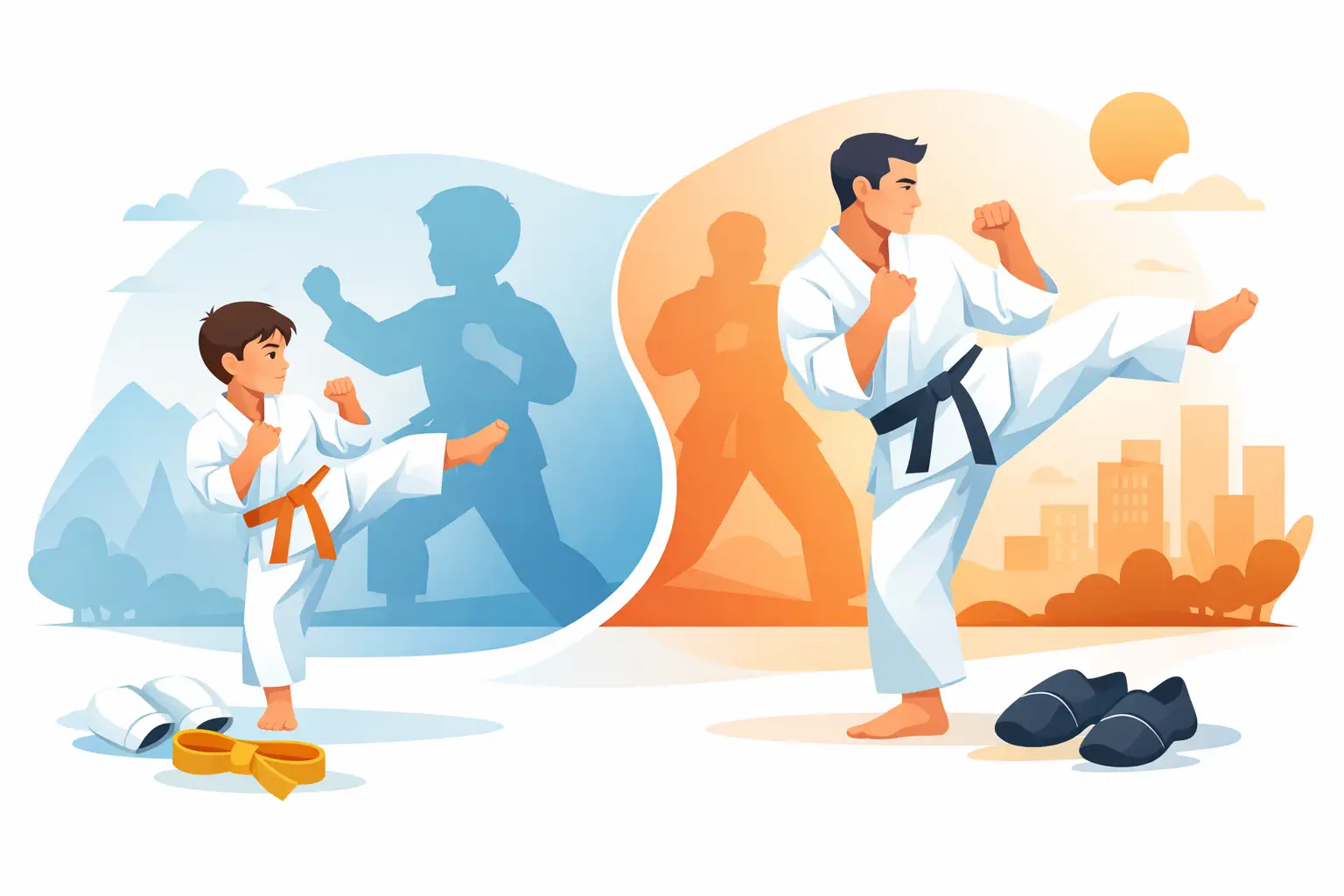
What Age Start Karate for Kids and Adults?
Some parents ask at age four. Others wait until middle school. Adults often ask the same question for themselves after years of putting it off. If you are wondering what age start karate makes sense, the honest answer is simple: there is no single perfect age, but there is a right starting point for each student.
Karate works best when the program matches the student’s stage of development. A young child needs structure, short bursts of activity, and clear expectations. A teen needs challenge, accountability, and real skill-building. An adult often needs practical instruction, smart conditioning, and a training environment that feels welcoming instead of intimidating. When those pieces line up, students build confidence faster and stick with training longer.
What age should kids start karate?
For many children, ages 4 to 6 can be a strong introduction to karate. At this stage, the goal is usually not advanced technique. It is learning how to listen, follow directions, stay with a group, and begin developing balance, coordination, and self-control.
That said, not every four-year-old is ready just because they hit a birthday. Some children thrive in a structured class early. Others need a little more time to handle transitions, focus for a full lesson, or participate without constant redirection. Age matters, but maturity matters just as much.
A quality beginner program for young children should feel active and positive while still holding a clear standard for behavior. Kids need movement, but they also need routine. Bowing in, standing in line, taking turns, and responding to instruction are not just classroom habits. They are part of how martial arts helps shape confidence and discipline.
What age start karate if your child is 7 to 12?
For many families, this is the sweet spot. Children in the 7 to 12 range are often ready to understand more detail, retain technique better, and connect effort with progress. They can usually handle a longer class, partner drills, and more precise correction from instructors.
This age group tends to gain visible benefits quickly. Parents often notice improved focus, better body control, stronger listening skills, and more confidence in social situations. Karate also gives kids a healthy challenge outside of school, one where progress is earned step by step.
There is another advantage here. Elementary and middle school years are often when children begin comparing themselves to others more strongly. Martial arts gives them an environment where growth is personal. The goal is not to be the loudest or most naturally athletic. The goal is to show up, work hard, and improve.
Is 13 too late to start karate?
Not even close. Teens can be excellent beginners because they are old enough to understand purpose, absorb instruction, and train with more intensity. A teenager starting karate may progress faster in certain areas than a younger child simply because they can process details and apply them more consistently.
Teen training also comes at the right time for many families. These are the years when confidence can take hits, screen time can climb, and physical activity sometimes drops off. Karate creates structure and momentum. It gives teens a place to challenge themselves, develop resilience, and learn practical self-defense in a disciplined setting.
The trade-off is that teens sometimes feel self-conscious about being new. They may worry they are behind. Good instruction solves that by meeting them where they are and focusing on steady progress, not comparison. Starting in the teen years is not a disadvantage. For many students, it is exactly when martial arts begins to click.
What age can adults start karate?
Adults can start karate at almost any age, provided the training is taught responsibly and adjusted when needed. You do not need a childhood background in martial arts. You do not need to already be in shape. You need a willingness to learn and the consistency to keep showing up.
Adults come in for different reasons. Some want practical self-defense. Some want to improve fitness without spending another year bored on a treadmill. Some want the discipline and mental reset that comes from focused training. Others want to join because their child started first and now the whole family wants to train together.
The biggest obstacle for adults is usually not age. It is hesitation. People assume they missed their chance because they are not twenty anymore. In reality, adult beginners often do very well because they value the training, pay attention to instruction, and understand that real progress takes time.
Signs someone is ready to begin
Instead of focusing only on birthdays, it helps to look for readiness. A child is often ready for karate when they can participate in a group, follow simple directions, separate from a parent without major difficulty, and stay engaged for a structured activity. Perfect behavior is not required. Willingness to learn is.
For teens and adults, readiness is even simpler. If they want to train, can participate safely, and are prepared to commit to regular practice, they are ready to start.
This is where experienced instruction matters. A strong academy does not force every beginner into the same mold. It recognizes the difference between a preschooler, a ten-year-old, and a forty-year-old parent returning to fitness. Each student should be challenged, but in a way that builds success rather than frustration.
When starting too early can backfire
Parents sometimes feel pressure to start as early as possible, as if earlier automatically means better. That is not always true. If a child is placed into a class before they can handle the basic structure, the experience may feel stressful instead of empowering.
A child who spends the entire class melting down, wandering away, or resisting instruction may simply need more time. That does not mean karate is a bad fit. It means the timing or class format may need adjustment.
The goal is long-term development, not checking a box. Starting at the right stage often leads to better retention, better habits, and a more positive relationship with training.
Why karate benefits every age differently
Karate is not one-size-fits-all, and that is a strength. Young children often gain attention, coordination, and respect for structure. School-age students build confidence, self-control, and perseverance. Teens gain resilience, identity, and practical self-defense habits. Adults gain fitness, discipline, and a skill set that feels useful in the real world.
At a well-rounded school, those benefits deepen even more when students train in an environment that values both tradition and practical skill. That is especially true when stand-up movement, ground awareness, and real self-defense principles are taught with clear progression. Students are not just staying busy. They are building capability.
For families, there is also something powerful about training in a community where different age groups grow side by side. Kids see older students leading by example. Parents see what disciplined progress looks like over time. Families share a common challenge and a common language of effort, respect, and improvement.
Choosing the right karate school matters more than choosing the exact age
If you are asking what age start karate is best, the better question may be this: what kind of school will help this student succeed? A great academy can make the difference between a student who quits quickly and one who builds confidence for years.
Look for structured classes, patient instructors, and age-appropriate expectations. The environment should feel disciplined but encouraging. Beginners should be welcomed, not overwhelmed. Safety should be obvious in how classes are taught, how partner work is supervised, and how students are advanced.
It also helps to choose a school that sees martial arts as more than a quick activity. The strongest programs build character, physical skill, and consistent habits over time. At Japanese Martial Arts Academy, that mindset is central. Students are taught with respect for traditional martial arts while also gaining practical benefits families can see in everyday life.
So, what age is best?
If your child is mature enough to participate, early elementary years are often an excellent time to begin. If they are younger and ready for structure, they may also do well. If they are older, they are not behind. If you are an adult, you are not too late.
The best age to start karate is the age when the student is ready to engage, learn, and grow through disciplined training. That might be four. It might be ten. It might be thirty-eight.
The better move is not waiting for a perfect age that may never appear. It is finding the right environment, stepping onto the mat, and giving yourself or your child the chance to build something strong.