
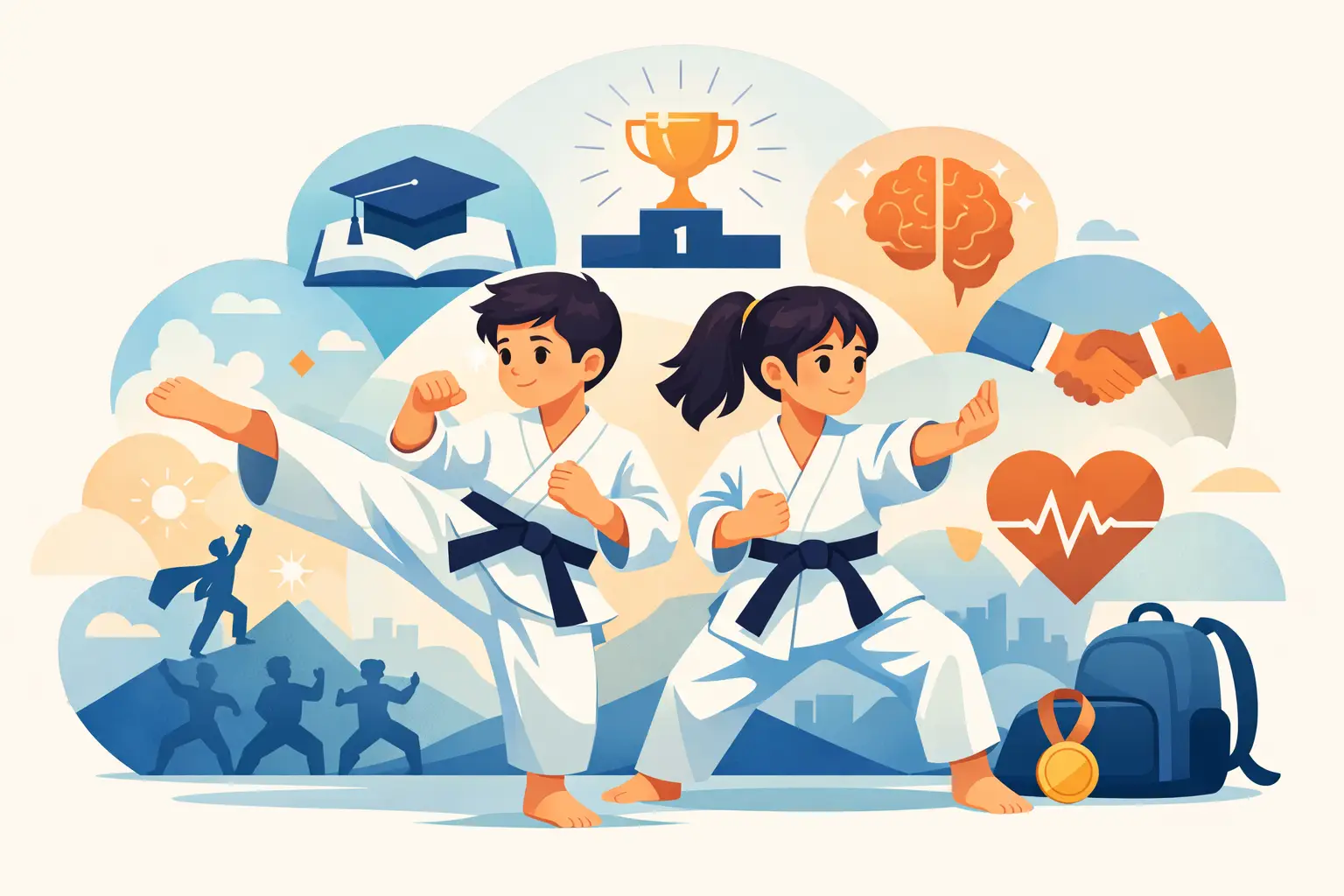
10 Karate Benefits Kids Carry for Life
Some activities wear kids out for an hour. Karate gives them something they carry into the classroom, the home, and every challenge that follows. When parents ask about karate benefits kids can actually feel in daily life, they are usually looking for more than exercise. They want confidence that lasts, discipline that shows up at school, and a healthy outlet that helps their child grow.
That is exactly where quality martial arts training stands apart. A well-run karate program does more than teach punches and kicks. It gives children structure, accountability, and steady progress. For many families, that combination becomes one of the most valuable parts of a child’s week.
Why karate benefits kids beyond physical activity
A lot of youth activities build one or two strong qualities. Team sports can improve conditioning and cooperation. Music lessons can sharpen focus and patience. Karate is different because it develops the body and the mindset at the same time.
In class, kids are expected to listen carefully, follow directions, control their movement, and respect the people around them. That matters because many of the struggles parents see outside the dojo are not really about energy alone. They are about attention, self-control, frustration, and confidence.
Karate puts children in a setting where those skills are practiced on purpose. They bow in, stand with posture, wait for instruction, repeat techniques, and learn that improvement comes through disciplined effort. Over time, that process starts to shape how they respond in other areas of life.
There is also a practical difference between random activity and structured training. In a strong karate program, progress is visible. Kids can see themselves improving. They earn stripes, belts, and skills through effort instead of luck. That matters for children who need proof that hard work leads somewhere.
Confidence that is earned, not handed out
One of the clearest karate benefits kids experience is real confidence. Not loud confidence. Not showy confidence. The kind that comes from doing hard things and getting better at them.
Many children walk into their first class feeling unsure. They may be shy, hesitant, or uncomfortable trying something new in front of others. Good instruction meets them there and gives them a path forward. They learn a stance, then a block, then a strike, then a sequence. Each success builds on the last one.
That step-by-step progress matters. Kids begin to understand that they do not need to be the best in the room to succeed. They need to stay consistent. For children who doubt themselves easily, that lesson can change a great deal.
Confidence from karate also tends to be steadier than confidence based only on praise. Praise fades fast when a child faces pressure. Skill-based confidence holds up better because it is built on experience. A student knows, “I practiced this. I improved. I can handle challenges.” That mindset often carries into school presentations, social situations, and new environments.
Better focus and stronger listening habits
Parents often notice changes in attention before anything else. Karate classes require children to listen closely, respond quickly, and stay engaged from start to finish. That kind of practice can support better focus over time.
The key is that karate gives children a reason to pay attention. If they do not listen, they miss the technique. If they rush, they make mistakes. If they drift mentally, they fall behind the class rhythm. Because of that, focus stops being an abstract idea and becomes part of the training itself.
This is especially helpful for kids who have plenty of energy but need help channeling it. Movement becomes an advantage when paired with clear structure. Instead of being told to “sit still” over and over, they are taught when to move, how to move, and when to control that movement.
That does not mean karate is a magic fix for every child. Some kids improve quickly. Others need time. But in a disciplined environment, many children do become more attentive, more responsive, and more capable of finishing what they start.
Discipline and self-control that show up at home
Discipline is one of those words parents hear often, but in martial arts it has a very specific meaning. It is not about being harsh. It is about learning to manage behavior, emotions, and effort.
Karate teaches children to follow a standard even when they are tired, distracted, or frustrated. They learn to line up properly, show respect, practice with care, and keep going when a skill does not click right away. Those habits are valuable because life does not always reward children immediately. Sometimes they need the maturity to stay with the process.
Self-control is just as important. Children practice stopping when told, controlling power, and working safely with partners. That is a major part of martial arts done right. A child who learns how to generate force must also learn when not to use it.
For parents, this can translate into fewer emotional blowups, better responses to correction, and a stronger sense of responsibility. Results vary by child, of course. Some children need longer to mature. But consistent training gives parents another framework to reinforce expectations at home.
Karate benefits kids physically in ways that matter
The physical side still matters, and it goes well beyond burning energy. Karate helps children build coordination, balance, flexibility, posture, and body awareness. These are foundational skills that support overall athletic development.
Not every child is ready for fast-paced team sports, and not every child enjoys them. Karate offers a different path. A child can improve individually while still being part of a group. They can develop strength and movement skills without needing to be the fastest or most aggressive student in the room.
Body awareness is especially valuable. Many kids spend long hours sitting, looking at screens, or moving in limited ways. Karate trains them to control their stance, align their body, and move with intention. That can improve how they carry themselves both physically and emotionally.
There is also a health benefit in simply building a routine around movement. When children connect exercise with progress and achievement, they are more likely to stay active long term.
Social growth in a respectful community
Karate may look individual from the outside, but good schools build strong community. Children train alongside others, learn partner drills, and see students at different levels working toward the same standards.
That creates an environment where respect matters. Kids are expected to treat instructors, classmates, and themselves with care. They learn that everyone starts somewhere and that improvement deserves encouragement, not ridicule.
This can be particularly helpful for children who are shy or still developing social confidence. Shared training gives them a natural way to connect without forced small talk. Over time, many become more comfortable speaking up, participating, and building friendships.
At the same time, karate teaches humility. Children learn that there is always more to improve. They can be proud of progress without becoming careless or disrespectful. That balance is part of what makes traditional martial arts so valuable for long-term character development.
Safety, self-defense, and the right mindset
Parents are right to ask about safety. Martial arts should never be reckless. In a quality program, safety is built into instruction, supervision, and age-appropriate training methods.
When children learn self-defense, the goal is not to make them aggressive. It is to help them become more aware, more composed, and better prepared. That starts with posture, boundaries, listening, and recognizing problems early. Physical techniques matter, but judgment matters more.
This is an area where instruction quality really counts. Kids need teachers who understand both skill development and child development. The best programs help students become calmer under pressure, not more confrontational.
For families looking for practical value, this matters. A child who is more alert, more confident, and better able to control fear is often in a stronger position to avoid trouble in the first place.
What parents should look for in a kids karate program
Not all karate classes deliver the same results. If parents want the full range of karate benefits kids can gain, they should look closely at how a school teaches.
A strong program has clear structure, consistent standards, and instructors who know how to lead children with both firmness and encouragement. It should feel organized, safe, and purposeful. Kids should be challenged, but not overwhelmed. Beginners should feel welcomed, not lost.
It also helps to look for a school that values development beyond technique. Belt rank matters, but so do attitude, effort, respect, and self-control. When those pieces are built into the culture, students usually gain more than martial arts skills.
For many local families, that is why a traditional academy with broad experience can make such a difference. At Japanese Martial Arts Academy, the focus is not just on keeping kids busy. It is on helping them build confidence, discipline, practical skills, and habits that support success for years to come.
The right class will not change a child overnight. Real growth takes time, repetition, and guidance. But when a child trains in the right environment, week after week, the results have a way of showing up everywhere else. Sometimes the best reason to start is simple: your child does not need another activity just to pass the time. They need something that helps them become stronger in every sense of the word.