
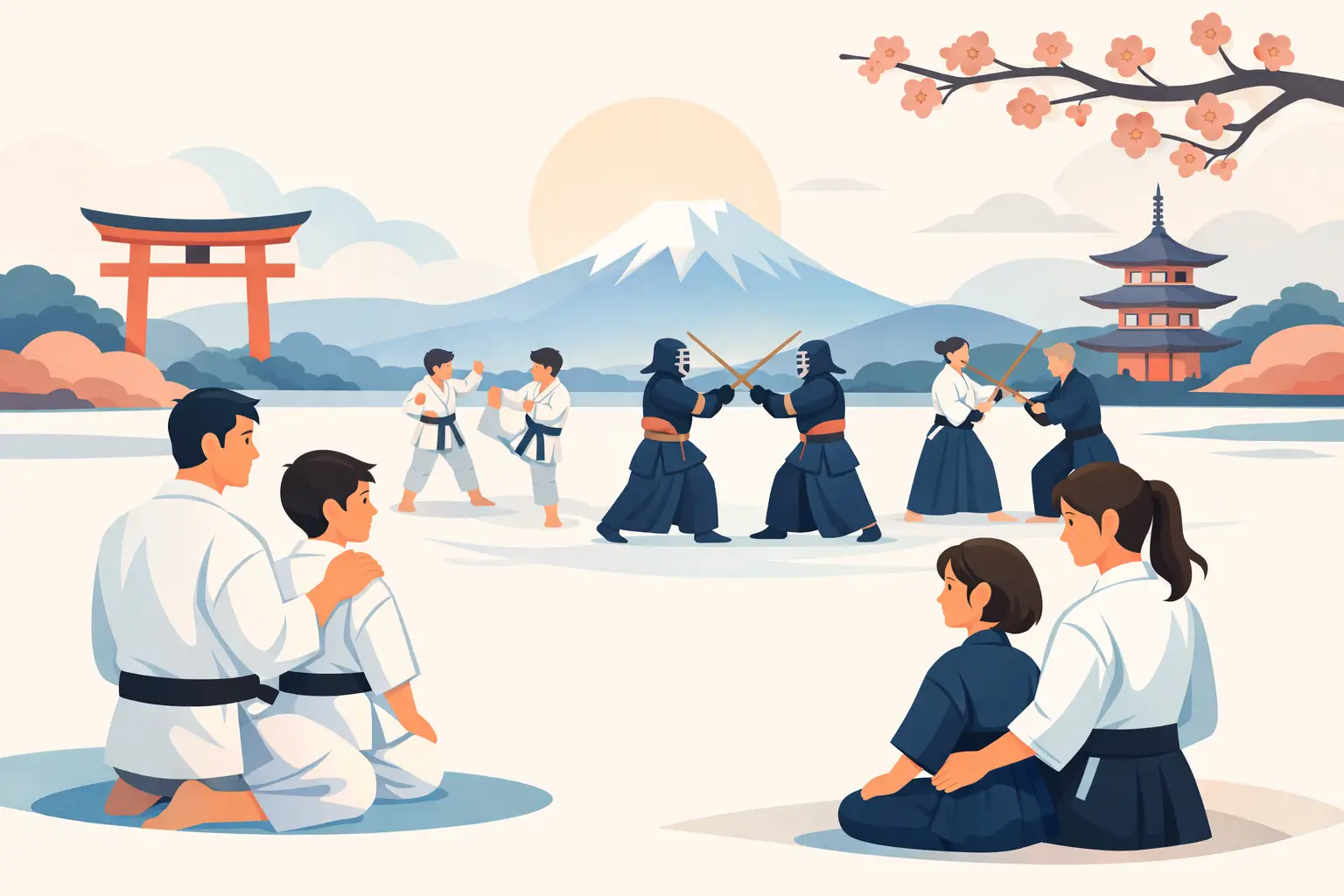
Japanese Martial Arts Guide for Families
Choosing a martial arts school should feel clear, not confusing. This japanese martial arts guide is built for families, beginners, teens, and adults who want more than a hard workout. The right training should build confidence, improve fitness, teach practical self-defense, and create the kind of discipline that carries into school, work, and everyday life.
For many people, the first question is simple: which martial art is right for me or my child? The better question is usually broader. What kind of training environment will help us stay consistent, feel supported, and keep growing over time? A strong academy does not just teach techniques. It teaches habits, focus, respect, and resilience.
What a Japanese martial arts guide should help you decide
A good Japanese martial arts guide should not just list styles and leave you guessing. It should help you understand what each discipline develops and how those benefits match your goals.
If your priority is striking, timing, and strong fundamentals, karate is often the starting point people recognize first. If you want throws, joint controls, and close-range self-defense, jujutsu has a different appeal. If weapons training and traditional discipline matter to you, arts like iaido and kenjutsu offer a deeper study of precision, posture, and control. And if you want a fuller self-defense foundation, combining stand-up skills with ground training gives students a more complete skill set than a single-discipline approach.
That last point matters. Many schools specialize in one lane. There is value in that, but there is also a trade-off. A student who only learns striking may be less prepared when distance closes. A student who only grapples may need more experience managing range, movement, and striking awareness. For families and adults looking for practical development, a broader program can be the smarter choice.
Understanding the major training paths
Japanese martial arts are not one thing. They are a family of disciplines with different purposes, training methods, and outcomes. Knowing the difference helps you make a confident decision.
Karate for structure, confidence, and striking skill
Karate is often the best entry point for children and beginners because it creates visible structure from day one. Students learn stance, balance, blocking, striking, movement, and control. That structure matters for kids who need focus and consistency, but it also matters for adults who want a disciplined path back into fitness.
Goju-ryu karate, in particular, blends hard and soft elements. That means students develop power, but also breathing, body control, and close-range technique. It is not just about hitting hard. It is about learning how to stay composed under pressure.
Jujutsu for practical self-defense
Japanese jujutsu focuses on what happens when an encounter gets close. It teaches leverage, off-balancing, takedowns, joint controls, and defensive responses that do not rely only on strength. For teens and adults interested in realistic self-defense, that makes it highly valuable.
It is also a reminder that technique beats aggression when training is correct. A well-run class teaches students to stay calm, protect themselves, and use skill instead of panic.
Iaido and kenjutsu for precision and discipline
Not every student wants training that looks like a typical gym workout. Some are drawn to the tradition, concentration, and technical refinement of Japanese sword arts. Iaido emphasizes controlled drawing and cutting patterns, while kenjutsu develops combative principles with partner work and weapon awareness.
These arts demand patience. Progress can feel slower at first because detail matters so much. But that is also their strength. Students build posture, attention, discipline, and mental control that carry into every other area of life.
Wrestling and ground work for a complete system
A lot of people do not initially connect wrestling with a Japanese martial arts academy, but they should understand why it belongs in a serious self-defense conversation. Ground control, takedowns, balance disruption, and pressure management are practical skills.
This is where a dual-system approach stands out. Stand-up training teaches distance, strikes, movement, and posture. Ground training teaches what to do when a situation changes levels or hits the floor. Together, they create a more realistic foundation.
How to choose the right program for your family
The best program is not always the most intense one. It is the one that fits your goals, your schedule, and your stage of life.
For young children, the biggest wins are often confidence, listening skills, coordination, and self-control. Parents may come in thinking about self-defense, but they often stay because they see better focus at home and school. A child who learns how to line up, follow directions, persevere, and show respect is gaining benefits that go far beyond class time.
For teens, training needs to do more. It should challenge them physically, give them a healthy outlet, and push them toward accountability. Teen students respond well when expectations are high and progress is visible. Rank advancement, skill milestones, and consistent coaching help them stay motivated.
For adults, the right program usually combines practicality with sustainability. Some want real self-defense. Others want to get back in shape without being thrown into a chaotic environment. Many want both. Good instruction meets adults where they are, whether they are athletic, returning to exercise, or stepping onto the mat for the first time.
Families often do best in a school that serves multiple age groups well. That creates shared momentum. When parents and kids train in the same community, progress becomes part of family culture instead of another activity on the calendar.
What to look for in a martial arts academy
A school can offer impressive style names and still be the wrong fit. The quality of instruction and the culture of the academy matter just as much as the curriculum.
Look for a place with clear structure. Beginners should know what to expect. Parents should be able to see how classes support development. Adult students should understand how training progresses from fundamentals to more advanced application.
Look for instructors who balance discipline with encouragement. Martial arts should be demanding, but not intimidating for the wrong reasons. Students grow best when standards are high and support is consistent.
Look for a program that values safety without watering down training. Good schools teach control first. That is especially important for children, but it matters for every age. Safe training builds confidence because students can push themselves without feeling reckless.
Finally, look for breadth with purpose. A school that offers karate, jujutsu, weapon arts, and ground training should not feel scattered. The programs should fit together in a way that develops well-rounded students.
Why traditional training still works for modern families
Families today are managing packed schedules, endless distractions, and too much screen time. Martial arts works because it creates a different kind of environment. Students bow in, pay attention, move with purpose, and earn progress through effort.
That matters for children who need healthy structure. It matters for teens who need challenge and belonging. It matters for adults who want to train in a setting that respects discipline, not just convenience.
Traditional Japanese martial arts also offer something many activities do not: a clear link between character and skill. Students are not only rewarded for talent. They are rewarded for consistency, self-control, respect, and perseverance. Those lessons do not expire when class ends.
For local families in Oklahoma, that combination of tradition and accessibility is often the difference-maker. A strong academy can preserve the seriousness of Japanese martial arts while still welcoming complete beginners. At Japanese Martial Arts Academy, that balance is what helps students of all ages build confidence, transform through disciplined training, and stay committed long enough to see real results.
The first step matters less than consistency
People often wait because they think they need to get in shape first, choose the perfect style first, or feel fully confident first. In practice, progress starts when you show up.
A child does not need to walk in fearless. An adult does not need previous experience. A family does not need to have every answer. They need a place where training is structured, expectations are clear, and growth is taken seriously.
The right school will help you start at the right level, train safely, and build momentum one class at a time. That is how confidence is built. That is how self-defense skills become usable. And that is how martial arts becomes more than an activity – it becomes part of how you live.
If you are choosing training for yourself or your family, trust the program that develops the whole student. Skills matter. Fitness matters. But the best martial arts training also builds stronger habits, stronger character, and stronger people.