
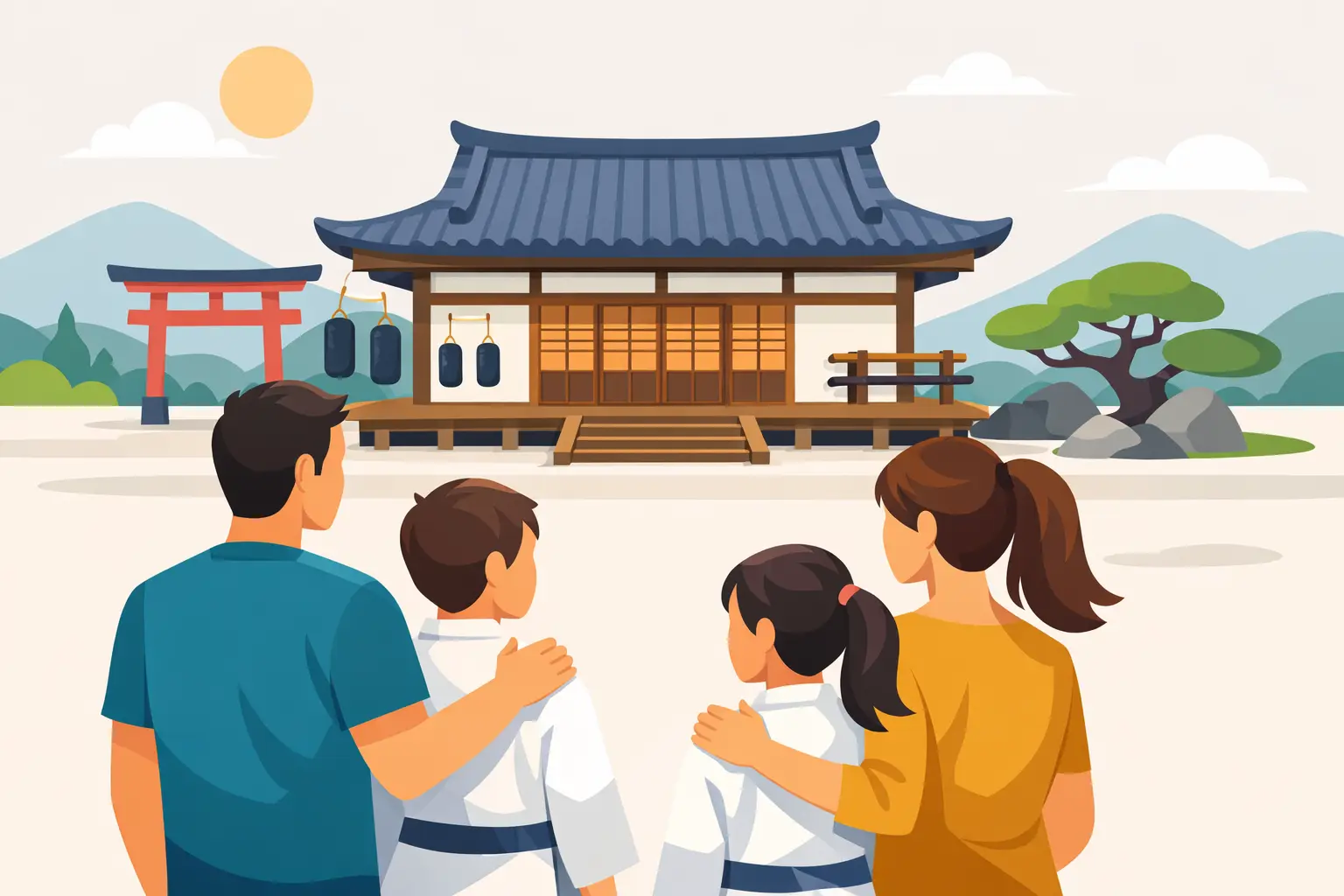
How to Choose a Dojo That Fits Your Family
A polished lobby and a low trial price can make any school look appealing for ten minutes. But if you are figuring out how to choose dojo training for yourself, your child, or your whole family, the real question is simpler: will this school help you grow safely, steadily, and with purpose over time?
That answer does not come from a flyer. It comes from what happens on the mat, how instructors teach, how students behave, and whether the program matches your goals. A good dojo should build confidence, discipline, self-control, and practical skill. It should also feel like a place where beginners are welcomed, standards are clear, and progress is earned.
How to choose dojo training with the right goals in mind
Start by being honest about why you are looking. Parents often want more focus, confidence, and structure for their children. Teens may want self-defense, challenge, and a stronger sense of discipline. Adults are often looking for fitness, stress relief, practical skills, or a meaningful long-term pursuit.
Those goals matter because not every school is built the same way. Some programs are heavily sport-focused. Some are more traditional. Some are designed mainly for recreation. None of those approaches is automatically wrong, but they are not interchangeable.
If your goal is well-rounded development, look for a dojo that teaches more than surface-level movement. Strong martial arts training should improve posture, awareness, resilience, coordination, and respect for instruction. If self-defense is important to you, it also helps to look for a program that goes beyond one narrow lane of training. A student who only learns to strike, or only learns ground work, may miss important parts of real-world preparedness.
Look at the quality of instruction before anything else
The instructor sets the culture of the school. That is why credentials matter, but teaching ability matters just as much.
A qualified instructor should be able to explain clearly, correct safely, and manage a class with confidence. In a kids class, that means structure without chaos and encouragement without softness. In an adult class, that means technical depth, practical application, and a standard that pushes students to improve.
Watch how the instructor handles beginners. Do they ignore them while focusing on advanced students? Do they overwhelm new students with jargon and speed? Or do they build skill in a way that is disciplined, patient, and organized?
A strong dojo does not rely on intimidation. It relies on standards. Students should know when to speak, when to listen, how to line up, and how to train respectfully. That kind of environment helps children build self-control and helps adults train with confidence.
How to choose a dojo based on class structure
One of the fastest ways to judge a school is to watch a full class from start to finish. Good structure leaves clues.
The class should have a clear beginning, a focused lesson, supervised partner work where appropriate, and a purposeful close. Students should not spend most of the session wandering, waiting, or doing random exercises with no connection to the art.
For children, structure is especially important. Kids benefit from repetition, clear expectations, and age-appropriate challenges. A class that looks entertaining but lacks discipline may keep attention short term, but it often does little to build lasting habits. On the other hand, a class that is too rigid for young beginners can create frustration. The best programs balance order with momentum.
For teens and adults, class design should show progression. Techniques should build on each other. Conditioning should support the art instead of replacing it. There should be a difference between simply getting tired and actually getting better.
Pay attention to safety, not just intensity
Many families assume a tougher-looking school must be more effective. That is not always true. Safe training is not weak training. It is smart training.
A well-run dojo should have controlled partner work, attentive supervision, and clear expectations around contact level. Beginners should not be thrown into situations they are not ready for. Children should not be treated like small adults. At the same time, training should still be real enough to develop timing, awareness, and composure under pressure.
This is where experience matters. Instructors with a deep background in martial arts understand how to challenge students without exposing them to unnecessary risk. They know when to correct, when to slow down, and when a student is ready for the next level.
Safety also includes emotional safety. Students should be corrected firmly, but not humiliated. Parents should feel informed. New students should feel welcomed, not judged.
Check whether the dojo teaches character or just techniques
Martial arts can absolutely help students build confidence. But confidence without discipline is fragile. Real growth happens when a dojo teaches students how to handle effort, correction, and responsibility.
That is why culture matters so much. Watch the students. Are they respectful? Do they listen? Do older students help newer ones? Does the school reward consistency and attitude, or just natural talent?
For parents, this point is often the deciding factor. A strong dojo should reinforce the traits families want at home and in school: focus, perseverance, self-control, and respect. Physical skill is important, but for many children, the biggest wins happen outside class – better listening, more confidence in social settings, and greater resilience when things get hard.
Consider whether the program is broad enough for long-term growth
A school may offer great introductory classes but still be limited in what it can provide over the long run. That matters more than people think.
Students grow. A child who starts for confidence may later want stronger self-defense skills. A teen who joins for fitness may become serious about technical training. An adult may begin with one class per week and later want a deeper challenge.
That is why comprehensive training has real value. A dojo that includes striking, grappling, weapons traditions, and age-specific instruction can support students through different stages of growth. It also creates a more complete training experience. In practical terms, stand-up skills and ground skills complement each other. Traditional systems can sharpen discipline and technical precision. Specialty classes can keep students engaged and give families more ways to train together.
This is one reason many Oklahoma families look for more than a one-size-fits-all program. A school with depth can serve beginners now and still challenge them later.
Ask how progress is measured
Belts can be motivating, but they should mean something. If advancement feels automatic, the rank system loses value. If promotion standards are mysterious, families can feel confused about what their child is actually learning.
A good dojo will have clear expectations for attendance, attitude, knowledge, and performance. Progress should be visible in skill, not just in belt color. You should be able to see improvements in control, balance, focus, awareness, and confidence.
This matters for adults too. Students stay motivated when they can feel the difference between showing up and truly progressing. The right school makes that progress measurable without turning every class into a test.
Look for a community you can stay with
The best dojo for your family is not always the flashiest one. It is the one where you can imagine training consistently.
That means practical things count. Is the schedule realistic? Are there classes for different age groups? If you have multiple family members interested, can the school support everyone without spreading instruction thin? Does the environment feel welcoming to complete beginners?
Community matters because consistency changes everything. A student who trains in the right environment over months and years will gain far more than someone who bounces between short-term programs. In a healthy school, students encourage one another, families feel connected, and instructors know their people by name and by progress.
At Japanese Martial Arts Academy, that kind of long-term development is part of the mission. Families are not just looking for an activity. They are looking for a place where children, teens, and adults can build confidence, sharpen self-defense skills, and grow through disciplined training.
Questions worth asking before you enroll
When you visit a school, ask direct questions. How are beginners introduced? What are the expectations for behavior and attendance? How does the program help children build focus and self-control? What kinds of martial arts are taught, and how do they work together? How is safety handled during partner drills and sparring?
You do not need a perfect script. You just need to listen for clear, confident answers. A serious dojo should be able to explain what it teaches, why it teaches it, and how students progress.
Trust what you see as much as what you hear. If the instruction is organized, the students are respectful, and the training feels purposeful, you are probably in the right place. If the school talks big but the class feels scattered, keep looking.
Choosing a dojo is really choosing an environment for growth. Pick the one that challenges you, supports your family, and gives you reasons to come back long after the first week.