
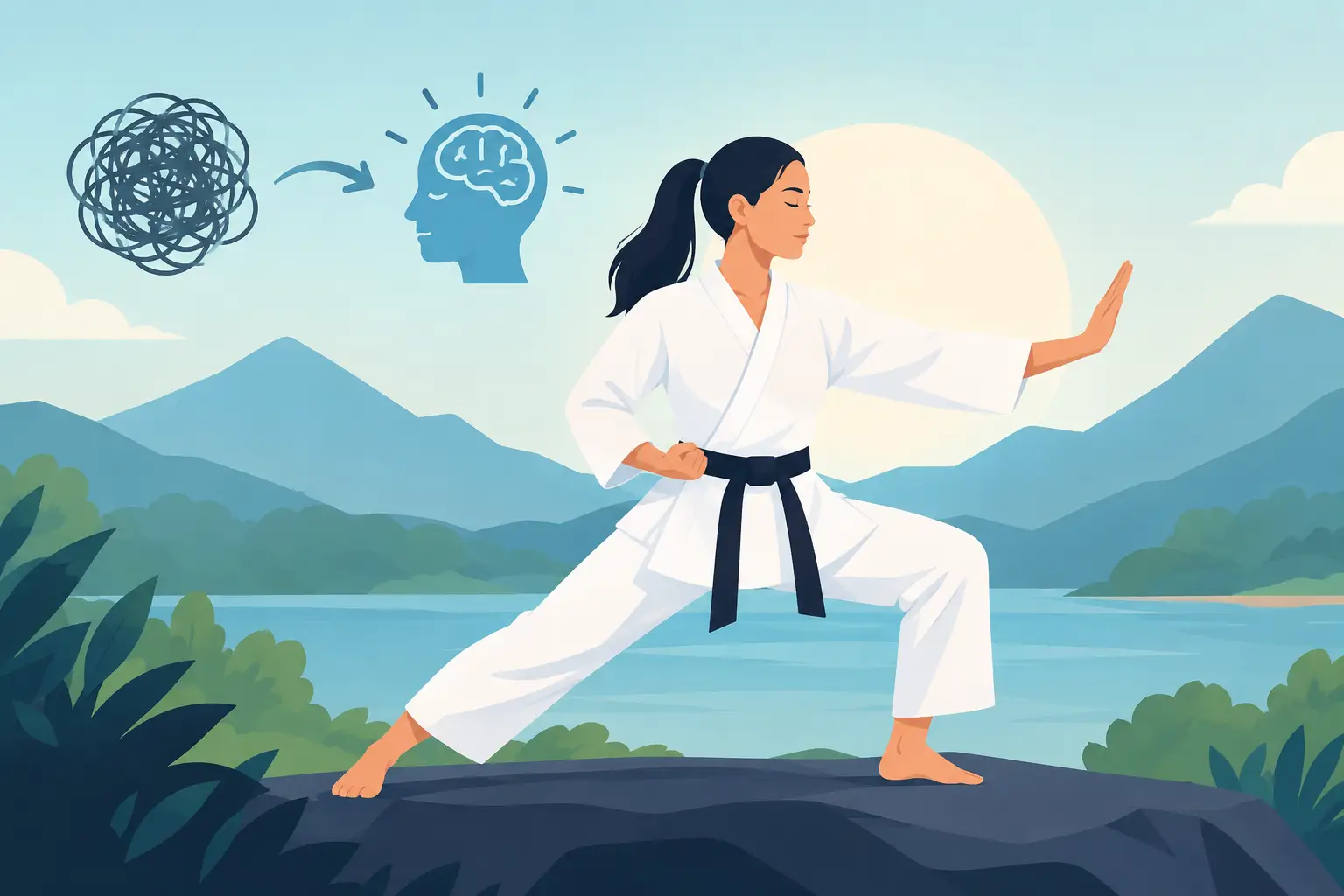
Can Martial Arts Reduce Stress? A Practical Answer
Stress rarely announces itself with a single dramatic moment. More often, it shows up as a child who cannot settle after school, a teen who feels overwhelmed by expectations, or an adult who carries work tension home. So, can martial arts reduce stress? For many students, the answer is yes – when training is consistent, well coached, and matched to the student’s needs.
Martial arts are not a replacement for professional mental health care when someone is struggling with anxiety, trauma, depression, or a serious health concern. They can, however, become a powerful part of a healthy routine. Structured training gives the body a productive outlet, gives the mind a clear task, and gives families a place to build confidence together.
Can Martial Arts Reduce Stress Through Movement?
Stress is not only a thought problem. It is often physical. Tight shoulders, shallow breathing, restless sleep, headaches, and a short temper can all be signs that the body has been carrying too much tension for too long.
A martial arts class asks students to move with purpose. They practice stances, strikes, blocks, footwork, throws, grappling, and controlled drills. That physical effort can help release built-up energy while improving strength, coordination, and cardiovascular conditioning. After a focused class, many students feel tired in the right way: their bodies have worked, their minds have slowed down, and the noise of the day has lost some of its grip.
The type of movement matters. A random workout can be helpful, but martial arts adds direction. Students are not simply burning calories. They are learning how to control distance, maintain balance, protect themselves, and respond calmly under pressure. That purpose can make training more engaging than another hour on a treadmill or in front of a screen.
For adults, the benefit may be a clean break between work and home. For kids, it may be a healthier way to handle the energy and frustration that build up during a long school day. For teens, it can be a place to work hard without having to be perfect on the first try.
A Clear Mind Needs a Clear Task
One reason stress feels so heavy is that the mind keeps replaying what happened or worrying about what comes next. Martial arts creates a different kind of mental demand. During class, students must pay attention to posture, timing, technique, breathing, and their instructor’s direction. There is little room to scroll, multitask, or rehearse the day’s frustrations.
This is not empty distraction. It is active focus. A student practicing a kata, a self-defense sequence, or a grappling escape has to stay present. If their attention wanders, their balance changes, their timing slips, or they miss the next movement. Over time, that repeated practice of returning attention to the task can build stronger concentration outside the dojo too.
Traditional Japanese martial arts also place value on calm preparation. Students learn to line up, listen, follow a sequence, respect training partners, and take responsibility for their effort. Those routines can feel simple, but they create order. When life feels disorganized, a dependable class structure can be deeply reassuring.
Breathing and control under pressure
Martial arts training does not promise that students will never feel stressed. The real goal is more useful: learning what to do when pressure arrives.
A student may feel nervous before sparring, frustrated while learning a difficult technique, or winded during conditioning. With proper instruction, they learn to reset their posture, control their breathing, listen for the next direction, and continue. That is a practical life skill. A child can use it before a presentation. A teen can use it before a test. An adult can use it during a difficult conversation or demanding day at work.
Confidence Changes the Way Stress Feels
Stress often grows when people feel powerless. They may not be able to control a deadline, a bully, a busy schedule, or a difficult situation. Martial arts does not remove every challenge, but it can build a stronger belief that challenges can be faced.
Progress in training is visible. A beginner who struggles with a stance may eventually move with stability. A student who is hesitant to speak up may learn to answer with a clear voice. Someone who cannot complete a conditioning drill may gradually build the endurance to finish it. Each small win becomes evidence: “I can improve when I show up and practice.”
That confidence is especially valuable for children. Kids need safe opportunities to make mistakes, accept correction, and try again. When they earn progress through effort rather than instant praise, they develop resilience. They begin to understand that discomfort is not failure. It is often part of growth.
For parents, this can mean fewer battles over motivation and more opportunities to recognize real effort. The goal is not to make every child aggressive or turn every student into a competitor. The goal is to help them stand taller, manage emotions, and trust their ability to handle difficult moments.
The Community Factor: You Do Not Train Alone
Stress can make people withdraw. Adults may isolate after work. Teens may retreat into devices. Children may act out because they do not yet have the words for what they are carrying. A supportive martial arts school gives students a healthy community with clear expectations.
Training partners matter. Students learn that a good partner is controlled, respectful, and invested in everyone’s safety. They take turns, practice communication, and learn that skill is not an excuse to intimidate others. In a quality program, beginners are welcomed while experienced students set the standard through their behavior.
Family training can be especially meaningful. When parents and children share a class or support one another’s progress, martial arts becomes more than an activity on the calendar. It becomes common ground. Families can talk about goals, practice at home, celebrate belt promotions, and encourage one another through difficult weeks.
At Japanese Martial Arts Academy, students can explore traditional systems while building both stand-up and ground-fighting skills. That variety helps families find training that keeps them engaged, whether they are drawn to karate, jujutsu, wrestling, iaido, or another specialized discipline.
Stress Relief Is Not the Same for Everyone
Martial arts can be demanding. A challenging class may leave a student feeling energized, while another person may need a slower pace, more recovery, or additional support before they feel comfortable. That is why beginner-friendly instruction and a respectful school culture matter.
For someone who already feels overextended, training five or six days a week may create more pressure instead of less. Starting with two consistent classes per week is often enough to establish a positive rhythm. Sleep, nutrition, work demands, school schedules, and physical limitations all affect how a person responds to exercise.
Parents should also watch how their child feels before and after class. Healthy challenge can include nerves, effort, and occasional frustration. It should not include humiliation, unsafe contact, or constant fear. The right program teaches discipline without tearing students down.
If stress is severe or begins affecting sleep, school performance, work, relationships, or daily functioning, martial arts should be one part of a larger support plan. A physician, counselor, or qualified mental health professional can help identify what additional care may be needed.
How to Make Martial Arts a Real Stress-Management Habit
The biggest stress-relief benefit comes from consistency, not from one extraordinary class. Treat training as an appointment with your health and your family’s growth. Choose class times that fit real life, arrive a few minutes early, and let the transition into class become part of the routine.
Set goals that go beyond belts. A child might work on listening the first time. A teen might aim to speak with confidence. An adult might focus on attending twice a week for a month, improving mobility, or learning one practical self-defense response. Goals like these keep progress personal and reduce the pressure to compare.
It also helps to leave the day at the door. Before class, take one slow breath and decide that the next hour belongs to training. After class, notice one thing that improved, even if it was small. Those moments of reflection reinforce the connection between disciplined practice and a calmer state of mind.
The best first step is not waiting until stress is overwhelming. Step onto the mat, learn the basics, and give yourself or your child a steady place to grow. A focused hour of training can become a weekly reminder that calm is not passive – it is a skill built through practice.