
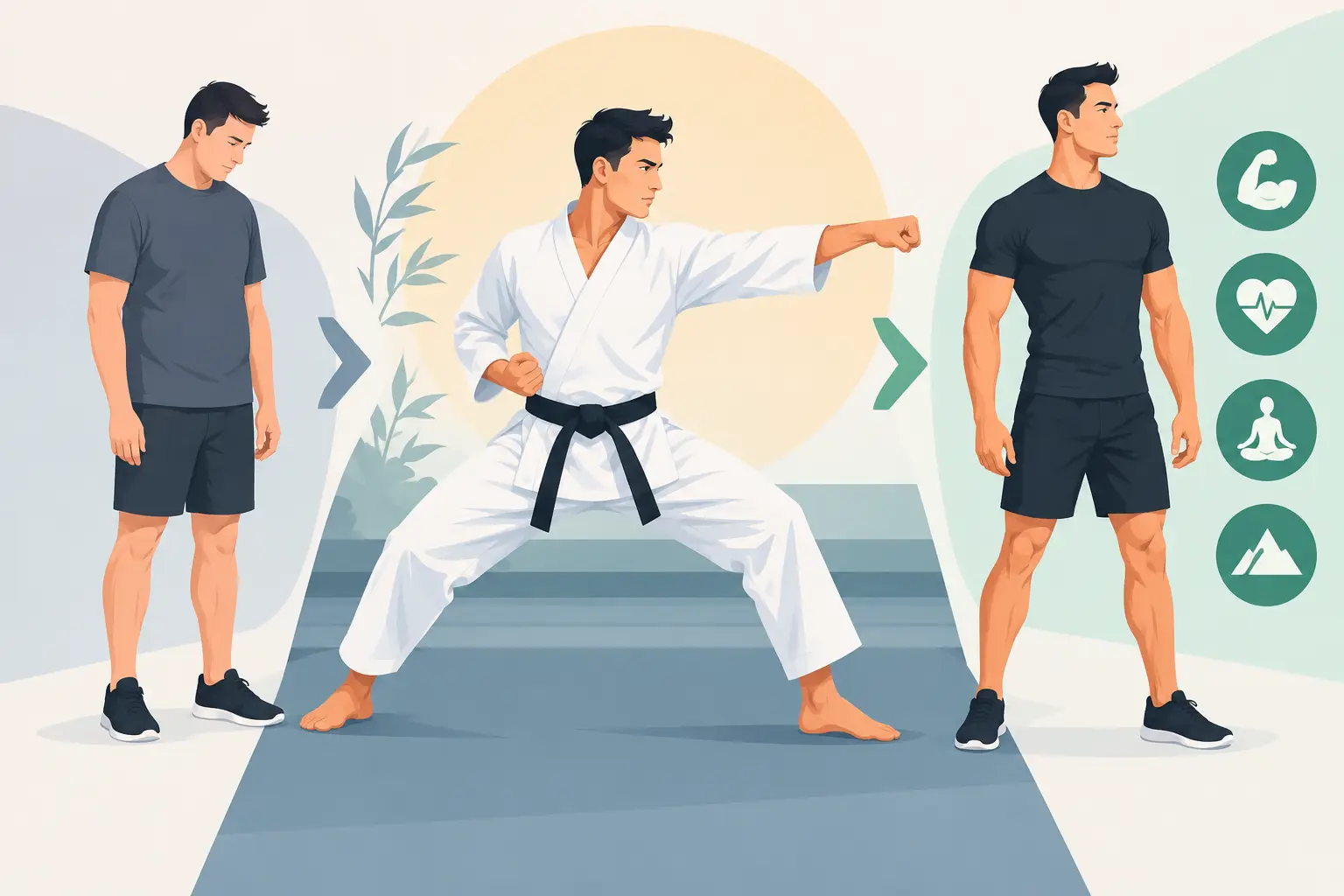
Adult Fitness Transformation Through Martial Arts
The workout that changes your life is rarely the one that leaves you exhausted for a week. It is the one you can return to with purpose. An adult fitness transformation through martial arts gives you more than a way to burn calories. It gives you a structured place to build strength, improve conditioning, learn practical skills, and prove to yourself that progress is still possible.
For many adults, fitness has become a stop-start cycle. A new gym membership begins with good intentions, then work deadlines, family schedules, old injuries, or plain boredom take over. Martial arts training creates a different kind of commitment. You are not simply counting reps. You are learning technique, improving coordination, working toward the next level, and training alongside people who know your name.
Why Adult Fitness Transformation Needs More Than Cardio
Cardio machines have a place. They can improve heart health, support weight management, and provide an accessible starting point. But for adults who need a real change in how they feel and function, cardio alone can become repetitive. It does not always build confidence, teach awareness, or make training feel personally meaningful.
Martial arts asks your whole body to work together. A proper stance engages the legs and core. Strikes require balance, timing, shoulder stability, and controlled hip movement. Ground-fighting movements challenge grip strength, mobility, and endurance. As technique improves, your body becomes more capable in ways that show up outside the training floor.
That may mean carrying groceries without discomfort, climbing stairs without losing your breath, getting up from the ground more easily, or feeling more steady and alert in unfamiliar situations. The scale may be part of your goal, but it should not be the only measure of success. Better movement, stronger habits, and greater self-respect are signs of lasting progress too.
The Building Blocks of an Adult Fitness Transformation
A strong program does not throw beginners into the deep end. It builds fitness through consistent, progressive training that respects your starting point while giving you a reason to improve.
Strength That Has a Purpose
Martial arts strength is not limited to lifting the heaviest possible weight. It is the ability to control your body, maintain posture under pressure, create force with good mechanics, and move safely through a full range of motion.
Kicks, stances, partner drills, defensive movements, and ground techniques all develop usable strength. Your legs learn to support you. Your core becomes more active. Your arms and shoulders work with control rather than tension. Over time, this creates a balanced kind of fitness that supports both training and everyday life.
If you already lift weights, martial arts can complement that work by improving mobility, coordination, and conditioning. If you have not trained in years, beginning with technique-focused classes can be a more approachable entry point than trying to force intense workouts before your body is ready.
Conditioning That Does Not Feel Pointless
The best conditioning often happens when your attention is on the task, not the clock. A round of pad work, controlled sparring drills, movement practice, or grappling can raise your heart rate quickly because you are constantly responding, adjusting, and staying engaged.
That engagement matters. Adults are more likely to stay consistent when training feels like learning rather than punishment. You leave class physically tired, but you also know what you practiced and why it matters. That sense of accomplishment makes it easier to come back next week.
Intensity should build gradually. New students do not need to match the pace of advanced practitioners on day one. Good instruction provides modifications, encourages smart pacing, and teaches students how to challenge themselves without ignoring warning signs from their bodies.
Mobility, Balance, and Coordination
Aging does not mean giving up speed, flexibility, or athletic movement. It means training them with greater care. Martial arts develops balance through stances, transitions, kicking mechanics, and controlled footwork. It develops coordination by asking the hands, feet, eyes, and mind to work as one.
This is especially valuable for adults who spend long hours sitting, driving, or working at a screen. Stiff hips, rounded shoulders, weak posture, and limited movement patterns can slowly become normal. Regular training gives your body a reason to move with intention again.
Traditional arts such as karate and iaido also reward precision. You learn that power is not wild effort. It is posture, breathing, timing, and focus working together. That lesson can improve how you move in every setting.
Train for Confidence, Not Just Appearance
Physical changes are motivating, but confidence is often the result adults value most. There is a difference between looking fit and trusting your ability to handle a challenge. Martial arts helps close that gap.
Self-defense training teaches awareness, distance, posture, and practical responses. It also teaches restraint. The goal is not to seek confrontation. The goal is to recognize risk, stay composed, and have skills available if you need them.
That confidence can carry into work, parenting, and personal goals. Students often notice they speak up more clearly, handle stress with greater patience, and stop defining themselves by what they cannot do yet. Every class offers a small test: show up, focus, attempt the technique, learn from mistakes, and improve.
At Japanese Martial Arts Academy, adults can train within a system that includes stand-up combat skills and ground-fighting instruction. This broader approach helps students build well-rounded fitness while developing practical knowledge across different ranges of self-defense.
How to Start Without Getting Overwhelmed
The biggest obstacle is usually not fitness level. It is the belief that you need to get fit before you begin. You do not. Beginner-friendly martial arts instruction is designed to teach fundamentals, build conditioning over time, and help you develop confidence at your own pace.
Start by choosing a realistic attendance schedule. Two classes per week can create meaningful change when you protect that time on your calendar. Add walks, basic mobility work, or simple strength exercises at home if they fit your routine, but do not build a plan so demanding that it collapses after two weeks.
Wear comfortable workout clothing, bring water, and arrive willing to learn. You do not need previous athletic experience, a martial arts background, or perfect flexibility. You need consistency and a coachable attitude.
It also helps to set goals beyond weight loss. Aim to attend a certain number of classes, improve your balance, hold a stronger stance, learn a sequence, or complete a round without needing to stop. These goals are specific, encouraging, and within your control.
What Progress Really Looks Like
Adult progress is not always dramatic from one week to the next. Some days you will feel powerful. Other days, you may feel stiff, tired, or frustrated by a technique that has not clicked yet. That is normal. Disciplined training teaches you to keep working without demanding instant results.
After several weeks, you may notice better energy and improved recovery. After a few months, your movement may feel sharper, your endurance may increase, and skills that once felt awkward may become natural. Over a longer period, the changes can reach far beyond your physical condition. You become someone who follows through.
The trade-off is time and effort. There is no honest program that promises major results without both. But martial arts gives that effort a purpose. You are not chasing a temporary fitness trend. You are building a stronger body, a more focused mind, and skills that remain valuable at every stage of adulthood.
Your first class does not need to be impressive. It only needs to be the moment you decide that your health, confidence, and capability deserve a place on your schedule.