
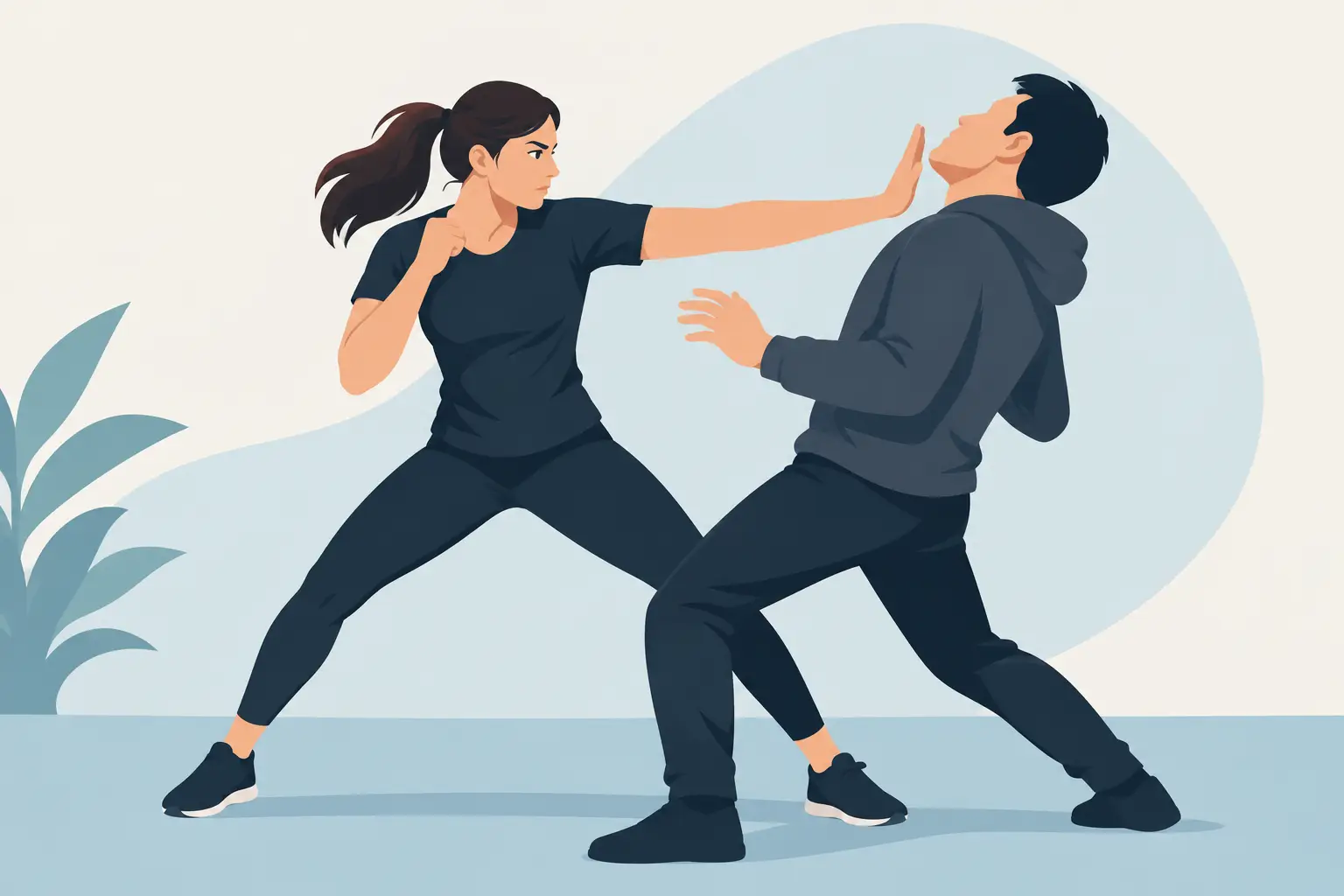
Self Defense Skills That Work Under Stress
A child walking from the bus, a teen leaving practice, or an adult crossing a parking lot does not need more fear. They need calm awareness, good judgment, and skills they have practiced enough to use when their heart is racing. That is what meaningful self defense training is designed to build.
Real protection is not about looking for a fight or proving toughness. It is about recognizing risk early, setting clear boundaries, creating space, and getting home safely. Physical techniques matter, but they are only one part of the equation. The strongest training helps students make smart decisions before a situation becomes physical.
Self Defense Starts Before Contact
Most dangerous situations offer warning signs. A person standing too close after being asked to step back, someone following at a distance, an argument that is becoming aggressive, or an unfamiliar setting that feels wrong can all call for action. Students who train regularly learn to notice those signals without becoming anxious or suspicious of everyone around them.
Awareness means keeping your head up instead of being completely absorbed by a phone. It means knowing where exits are, staying near other people when something feels off, and trusting the instinct to leave. For children, awareness may look like understanding safe adults, avoiding isolated areas, and knowing that they can say no loudly and clearly. For teens and adults, it also includes recognizing when pride is trying to turn a tense moment into a confrontation.
A good self defense response often begins with simple communication. A firm voice, a direct boundary, and movement toward a safer place can stop many problems before they grow. Students practice phrases such as “Back up” or “I do not want trouble” because words are more effective when they are practiced, not invented in a moment of panic.
Why Technique Alone Is Not Enough
A technique that looks sharp in a demonstration may fail if it has never been practiced with movement, resistance, or pressure. Stress changes how people react. Fine motor skills become harder, balance can disappear, and a person may freeze if they have not trained for the emotional intensity of an unwanted confrontation.
That is why practical instruction teaches principles along with techniques. Students learn how to protect their head, maintain balance, control distance, break grips, escape from a hold, and stand back up safely if they fall. These are useful skills because they work across many situations. They do not depend on an attacker standing still or cooperating.
Training should also cover both standing and ground situations. A student may be grabbed while standing, shoved against a wall, or knocked down in a scramble. Schools that only train one range can leave a major gap in a student’s preparation. Stand-up striking, clinch control, takedown defense, ground escapes, and safe recovery work together as a complete system.
This does not mean every student needs to become a competitive fighter. The goal is simple: build enough skill to create an opening, get away, and seek help. The best outcome is always avoiding injury, not winning an exchange.
Pressure Changes Everything
Controlled partner drills teach a lesson that solo practice cannot: another person moves, resists, and reacts unpredictably. Beginners need a safe and supportive environment to learn this gradually. They should not be thrown into intense sparring before they understand fundamentals, but they also should not spend years practicing only against the air.
A quality program increases difficulty as skill and confidence grow. At first, a child may practice stepping back, raising their hands, and using a strong voice. Later, they may learn how to escape a wrist grab while maintaining balance. Adults may work on managing distance, defending a push, or getting up safely from the ground. Progression matters because it creates confidence without careless risk.
The Character Side of Self Defense
Self defense training is also self-control training. Students learn that strength comes with responsibility. They learn when not to use force, why de-escalation matters, and how to stay composed when someone else is not.
For parents, this is one of the most valuable parts of martial arts. A child who trains consistently is not being taught to become aggressive. They are taught to listen, follow instruction, respect training partners, and channel strong emotions with discipline. Those lessons often carry into school, home, sports, and friendships.
Teens benefit from a structured place to develop confidence without needing to perform for social media or fit into a certain crowd. They learn to stand tall, speak clearly, and handle pressure with more maturity. For adults, training can become a powerful reset from the demands of work and family life. It builds fitness, but it also builds the steady mindset needed to make sound choices in difficult moments.
What Families Should Look for in a Self Defense Program
Not every martial arts class has the same purpose. Some programs focus primarily on sport competition. Others emphasize forms, fitness, or demonstrations. Each can offer value, but families seeking practical self defense should ask whether training includes realistic distance management, escape skills, ground safety, and controlled work with a partner.
Look for experienced instructors who can adapt lessons for different ages and abilities. Young children need clear, age-appropriate safety skills and positive structure. Teens need practical confidence and accountability. Adults need instruction that respects their starting fitness level while still challenging them to improve.
A strong academy also creates a culture of respect. Students should be pushed to grow, but never humiliated. They should be taught to train with intensity while protecting their partners. That balance is especially important for families who want martial arts to become a long-term part of their lives rather than a short-lived activity.
At Japanese Martial Arts Academy, students can develop a broader foundation through traditional Japanese systems and training that addresses both stand-up combat and ground fighting. That wider approach helps families avoid the limits of a single-focus program while giving each student a clear path forward.
Building Skills That Last
Consistency matters more than natural athletic ability. A student who attends regularly, listens closely, and practices fundamentals will make meaningful progress over time. The first gains may be simple: better posture, stronger focus, improved coordination, and the confidence to speak up. Those gains create the foundation for more advanced skills.
Families can support progress outside class without turning home into a training camp. Ask your child what they learned. Practice awareness when entering a store or walking through a parking lot. Encourage them to use a confident voice and to tell a trusted adult when something concerns them. Adults can reinforce their own training by staying active, practicing basic movement, and choosing habits that support clear thinking under pressure.
It is also wise to understand the limits of any physical system. No technique guarantees safety, and no training removes all risk. Size, environment, surprise, multiple people, and the presence of a weapon can change a situation quickly. When a weapon is involved, escape and distance are usually far safer choices than attempting to disarm someone. Sound judgment is not less courageous than physical action. It is often the reason a person gets home.
The most valuable lesson is this: confidence does not have to be loud. It grows quietly through disciplined practice, responsible choices, and the knowledge that you can stay calm when life gets difficult. Give yourself or your child the chance to build that kind of confidence one class, one skill, and one strong decision at a time.