
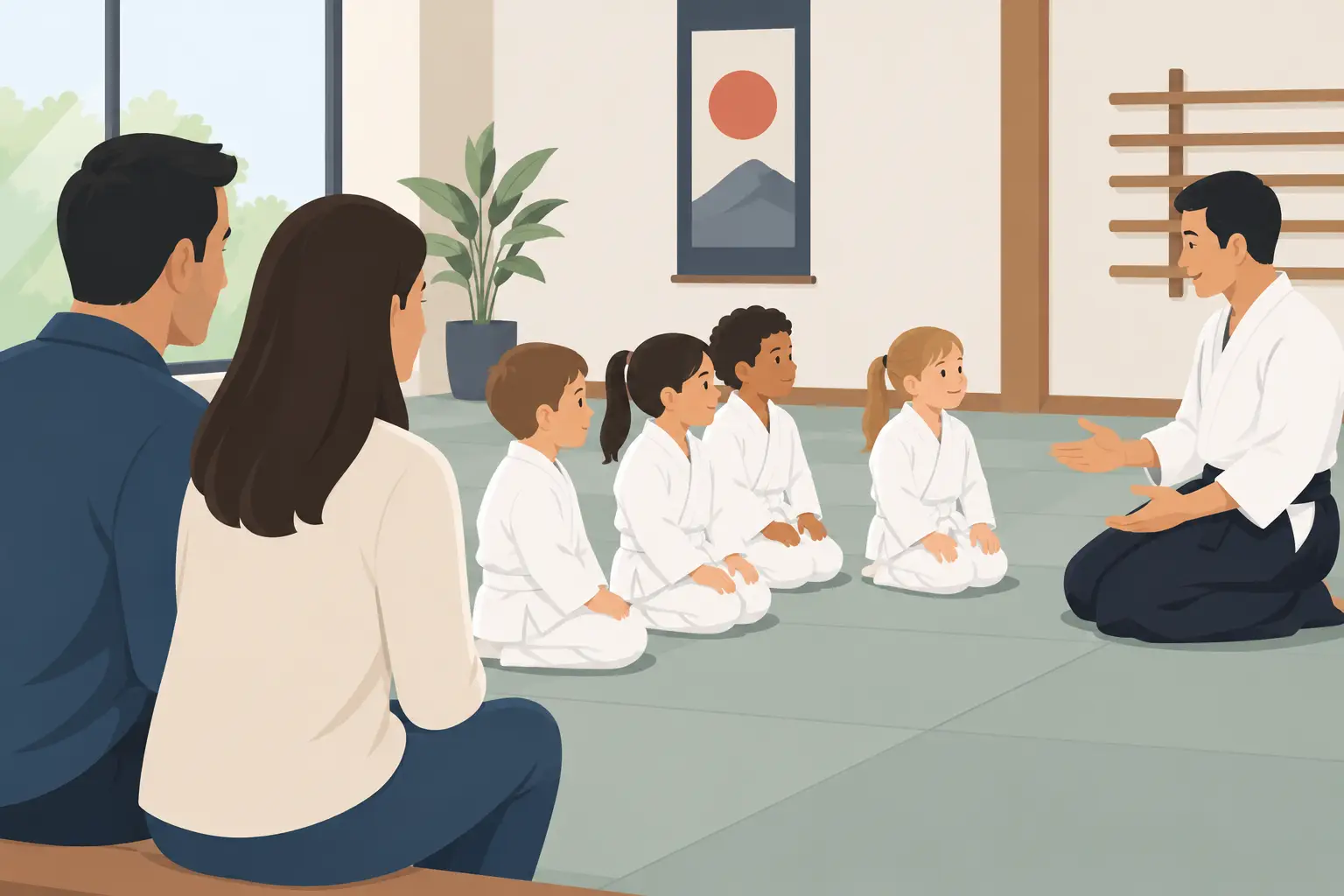
Dojo Etiquette Explained for Parents of Beginners
A child walks onto the training floor, sees students bowing, hears unfamiliar Japanese terms, and suddenly has a lot more to learn than punches and kicks. Dojo etiquette explained for parents begins with this simple idea: the routines around training are not extra rules. They are part of how children build focus, self-control, safety awareness, and respect for others.
At a traditional martial arts academy, etiquette gives every student a clear structure. Your child learns when it is time to listen, when it is time to work hard, and how to be a dependable teammate. For parents, understanding those expectations makes the first few weeks calmer and helps your child get more from every class.
Why Dojo Etiquette Matters for Your Child
A dojo is a place for disciplined training, not just another after-school activity. Students may practice strikes, throws, ground skills, balance, coordination, and self-defense concepts. Those skills require attention and control. Etiquette creates the environment where instruction can happen safely.
Bowing before entering the training area, standing in line, listening when an instructor speaks, and treating classmates with courtesy may seem small. Repeated week after week, those habits carry into school, home, sports, and social situations. A child who can pause, listen, and respond appropriately is building confidence that does not depend on being the loudest person in the room.
The goal is not blind obedience. Good martial arts instruction teaches students why standards exist. They bow because they respect the place and the people training there. They follow directions because safety matters. They practice self-control because real confidence includes knowing when not to use force.
Dojo Etiquette Explained for Parents: What to Expect
Each academy has its own traditions, so families should follow the instructor’s specific guidance. Still, several expectations are common across Japanese martial arts programs.
Arriving prepared and on time
Aim to arrive a few minutes early so your child can use the restroom, put on their uniform correctly, and settle in before class begins. Rushing through the door at the last second can make it harder for a beginner to focus.
If you are late, do not assume your child should run straight onto the floor. Many dojos ask late students to wait at the edge until the instructor signals that they may join. This is not meant to embarrass anyone. It prevents interruptions and teaches children that showing up prepared is part of being accountable.
Life happens. Traffic, work schedules, and family responsibilities are real. If lateness becomes frequent, speak with the academy about the best approach. A clear plan is better than letting your child feel uncertain every time they arrive.
Keeping the uniform clean and appropriate
A clean uniform is a sign of respect for training partners and the school. It also supports hygiene in a setting where students work closely together. Parents should make sure uniforms are washed regularly, fit safely, and are free of sharp accessories or loose items.
Long hair should be secured away from the face. Jewelry, watches, and similar items are usually removed before class because they can catch on clothing or injure a partner. Keep fingernails and toenails trimmed as well. These details protect everyone during drills, especially in classes that include grappling or ground fighting.
If your child forgets a uniform or needs help with sizing, ask the instructor or front desk rather than guessing. Some academies allow suitable athletic clothing for a beginner’s first class, while others have more specific requirements.
Bowing and greetings
In Japanese martial arts, a bow is a customary sign of respect. Students may bow when entering and leaving the dojo, before class, to the instructor, or before working with a partner. It is not a performance. It is a quick way of saying, “I am ready to train with attention and good intent.”
Parents do not need to worry about getting every detail perfect on day one. Your child will learn by watching, practicing, and receiving patient correction. The most helpful thing you can do is treat the tradition seriously without making it feel intimidating.
Listening without interrupting
When an instructor is teaching, students are expected to be still, quiet, and attentive. That expectation is especially valuable for children who struggle with distractions or have spent a long day in a classroom.
Encourage your child to raise a hand or wait for a proper moment to ask questions. A good dojo welcomes questions, but timing matters. Students learn that their question deserves an answer, and their classmates deserve the chance to hear instruction without constant interruptions.
For parents observing class, the same principle applies. Keep side conversations low, silence phones, and avoid calling instructions from the sidelines. Your support should help your child focus on their instructor, not split their attention between the floor and the viewing area.
Respecting training partners
Martial arts progress depends on partners. A child cannot learn a safe throw, controlled kick, escape, or grappling position without classmates who practice responsibly. Students should take turns, use appropriate control, and stop immediately when an instructor says to stop.
Your child will train with students of different ages, skill levels, personalities, and physical abilities. They do not need to become close friends with everyone, but they do need to treat everyone with basic courtesy. No teasing, showing off, rough behavior, or celebrating when a partner makes a mistake.
This is also where martial arts can be especially powerful for children. They learn that strength is not permission to dominate someone. It is responsibility to use skill with control.
How Parents Can Support the Right Mindset
The ride home is often where parents shape a child’s relationship with martial arts. Instead of asking only, “Did you win?” or “Did you get the next belt?” try asking what they practiced, what felt difficult, or how they helped a partner.
Progress in a dojo is not always dramatic. Some days your child may improve a technique. Other days, the win may be standing with better attention, returning after a tough class, or accepting correction without giving up. Those are meaningful signs of character growth.
Avoid pressuring your child to perform for relatives or demonstrate techniques outside of appropriate settings. Martial arts skills are learned for discipline, fitness, self-defense, and personal development, not for proving toughness. Let the dojo remain a place where your child can learn at their own pace.
It is also wise to share relevant information with instructors. Let them know about injuries, physical limitations, major changes at home, or concerns that could affect your child’s training. Professional instructors can adapt drills when needed, but they need accurate information to do so.
What Happens When Your Child Makes a Mistake?
Every beginner forgets a bow, talks at the wrong time, wears the uniform incorrectly, or loses focus during class. That is normal. Etiquette is learned through repetition, not expected perfection.
Instructors may correct a student directly and firmly. In a disciplined academy, that correction should be respectful, age-appropriate, and focused on the behavior, not the child’s worth. A simple reminder to stand properly, pay attention, or use more control is part of the learning process.
Parents can reinforce that message by staying calm. Do not rush to rescue your child from every correction. Ask them what they learned and remind them that being corrected means the instructor believes they can improve. If something concerns you, discuss it privately with the academy after class rather than challenging the instructor in front of students.
Etiquette Builds Confidence Beyond the Dojo
The routines may look formal at first, but they serve a practical purpose. Children learn to walk into a room with awareness, greet adults respectfully, follow directions, care for their equipment, and work with people outside their usual friend group.
At Japanese Martial Arts Academy, that structure supports students as they build confidence through disciplined training. Whether a child is learning Karate, Jujutsu, wrestling, or another program, the same foundation matters: respect, effort, control, and a willingness to keep improving.
The best approach is simple. Help your child arrive prepared, encourage them to listen and practice with humility, and give them room to grow through the small corrections. Over time, those quiet habits can become some of the strongest lessons they take home from the dojo.