
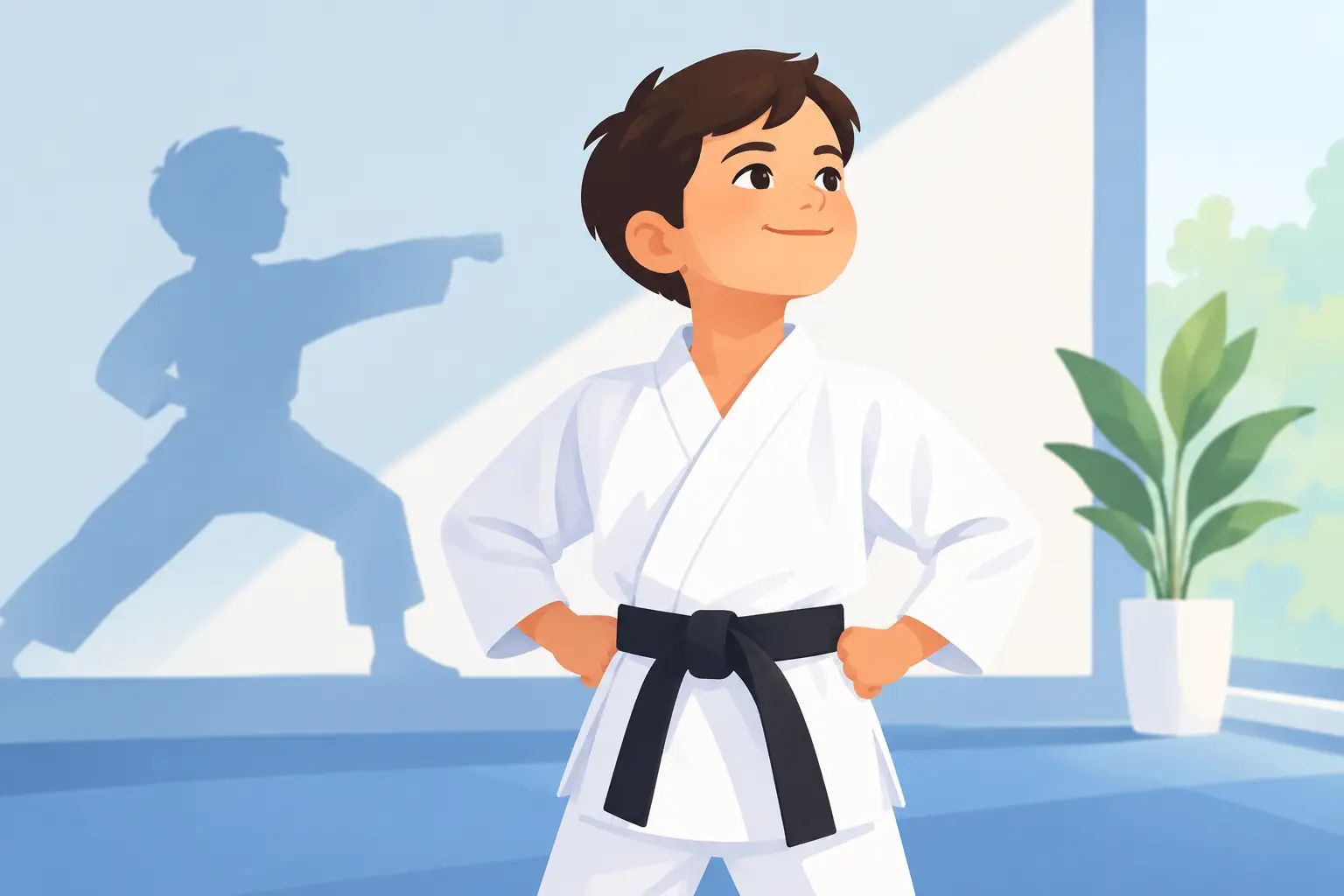
Building Child Confidence After a Karate Program
A child who once hung back during group activities may start volunteering to demonstrate a stance. A child who shut down after a mistake may take a breath, reset, and try again. That is what meaningful child confidence after karate program training can look like: not loudness or bravado, but a growing belief that effort leads to improvement.
For many Sapulpa-area parents, confidence is the result they hope for most. They want their child to feel capable at school, comfortable around peers, and prepared to handle challenges without giving up. Karate can support that growth because it gives children something concrete to practice, improve, and earn over time.
Why Karate Builds Confidence Differently
Confidence is often described as a feeling, but lasting confidence is built on evidence. A child needs real experiences that show them, “I can learn hard things.” Traditional karate creates those experiences every class.
Students learn how to stand with balance, follow a sequence, work with a partner, and respond to instruction. At first, a new stance or technique can feel awkward. Then it becomes familiar. A child who could not remember a basic form a few weeks ago may perform it with control in front of the class. That visible progress matters.
Karate also teaches children that confidence does not mean never feeling nervous. A student may be nervous before testing for a new rank, meeting a new training partner, or speaking loudly during class. With patient coaching and consistent practice, they learn they can move forward even when they feel uncertain. That is a far more useful skill than simply being told to “be confident.”
What Child Confidence After a Karate Program Really Means
Parents sometimes expect confidence to appear as a dramatic personality change. In some children, it does. A quiet student may become more talkative and willing to participate. But confidence can also grow in subtle, powerful ways.
A confident child may make eye contact when greeting an instructor. They may accept correction without tears or anger. They may start practicing a form at home because they want to improve, not because someone reminded them. They may recover faster after losing a game or making an error in school.
These changes show that a child is developing self-trust. They are learning that mistakes are part of training, that discipline creates results, and that respect for others does not require shrinking themselves.
Confidence Is Earned, Not Handed Out
Praise has a place, especially when a child is working hard. But empty praise can fade quickly because children know when they have not truly accomplished something. Martial arts gives instructors and parents a better foundation for encouragement.
Instead of saying, “You are the best,” a parent can say, “I saw you keep trying after that technique was difficult.” Instead of focusing only on a belt, recognize the habits that helped the child earn it: showing up, listening, practicing, and staying respectful.
Belt rank can be motivating because it gives children a clear goal. Still, the belt is not the whole story. The greater value is the work a student puts in between promotions. A quality karate program makes that clear from the beginning.
The Role of Structure and Safe Challenge
Children need a setting where expectations are clear. In a well-run karate class, students know when to line up, how to address instructors, when to listen, and how to work safely with classmates. That structure helps children feel secure enough to take healthy risks.
A student may be challenged to hold a stance longer, remember a more detailed form, or practice controlled movement with a partner. Those challenges should be age-appropriate and carefully supervised. The goal is never to intimidate a child. The goal is to help them discover that they can do more than they thought.
This is especially valuable for children who struggle with frustration, focus, or self-control. They learn that a difficult moment does not have to become a meltdown or a reason to quit. They can pause, listen, adjust, and try again.
At Japanese Martial Arts Academy, children train within a disciplined environment that respects traditional Japanese martial arts while welcoming beginners and families. Students build stand-up skills and ground-fighting awareness while learning the responsibility that comes with those abilities.
How Parents Can Support Confidence at Home
Karate class provides the instruction, but parents can reinforce the lessons without turning home into another dojo. The most helpful support is usually calm, consistent, and specific.
Ask questions that invite your child to reflect on effort. “What was challenging today?” and “What did you improve?” can lead to better conversations than “Did you win?” or “Were you the best?” If your child is discouraged, remind them of a technique or task that once felt hard but is easier now.
Keep attendance steady when possible. Children gain confidence through repetition, and long breaks can make it harder to maintain momentum. At the same time, avoid putting too much pressure on performance. If every class becomes a test of whether they impressed you, training can feel stressful instead of empowering.
It also helps to let your child own small parts of the process. They can pack their uniform, fill their water bottle, or practice a few basics for a short time at home. Responsibility reinforces the message that their progress belongs to them.
When Confidence Takes Longer to Show
Not every child responds to karate in the same way or on the same timeline. A naturally outgoing child may enjoy the social energy of class right away. A shy child may watch quietly for several weeks before participating with more confidence. Both can be making progress.
Some children need time to adjust to physical activity, group instruction, or being corrected. Others may have a tough day at school and bring that frustration into class. The right response is patient consistency, not comparison. Comparing one child to a sibling, friend, or more advanced student can undermine the confidence training is meant to build.
If a child seems overwhelmed, speak with the instructor. A skilled instructor can help identify whether the challenge is normal adjustment, a need for clearer goals, or a training pace that should be modified. Martial arts should be demanding, but it should also remain constructive and safe.
Confidence That Carries Beyond the Dojo
The strongest sign of progress is when karate lessons show up in everyday life. Parents may hear that their child raised a hand in class, handled a disagreement more calmly, or stayed with a difficult homework assignment. Teens may begin carrying themselves with more composure in social situations and making stronger choices about peers.
Karate is not a shortcut that removes every insecurity. Children will still face disappointments, nerves, and setbacks. What disciplined training can provide is a reliable response: stand tall, stay respectful, control your actions, and keep working.
Give your child enough time to experience that process. Celebrate the courage it takes to walk onto the mat, the discipline it takes to return each week, and the quiet strength that grows one practiced lesson at a time.