
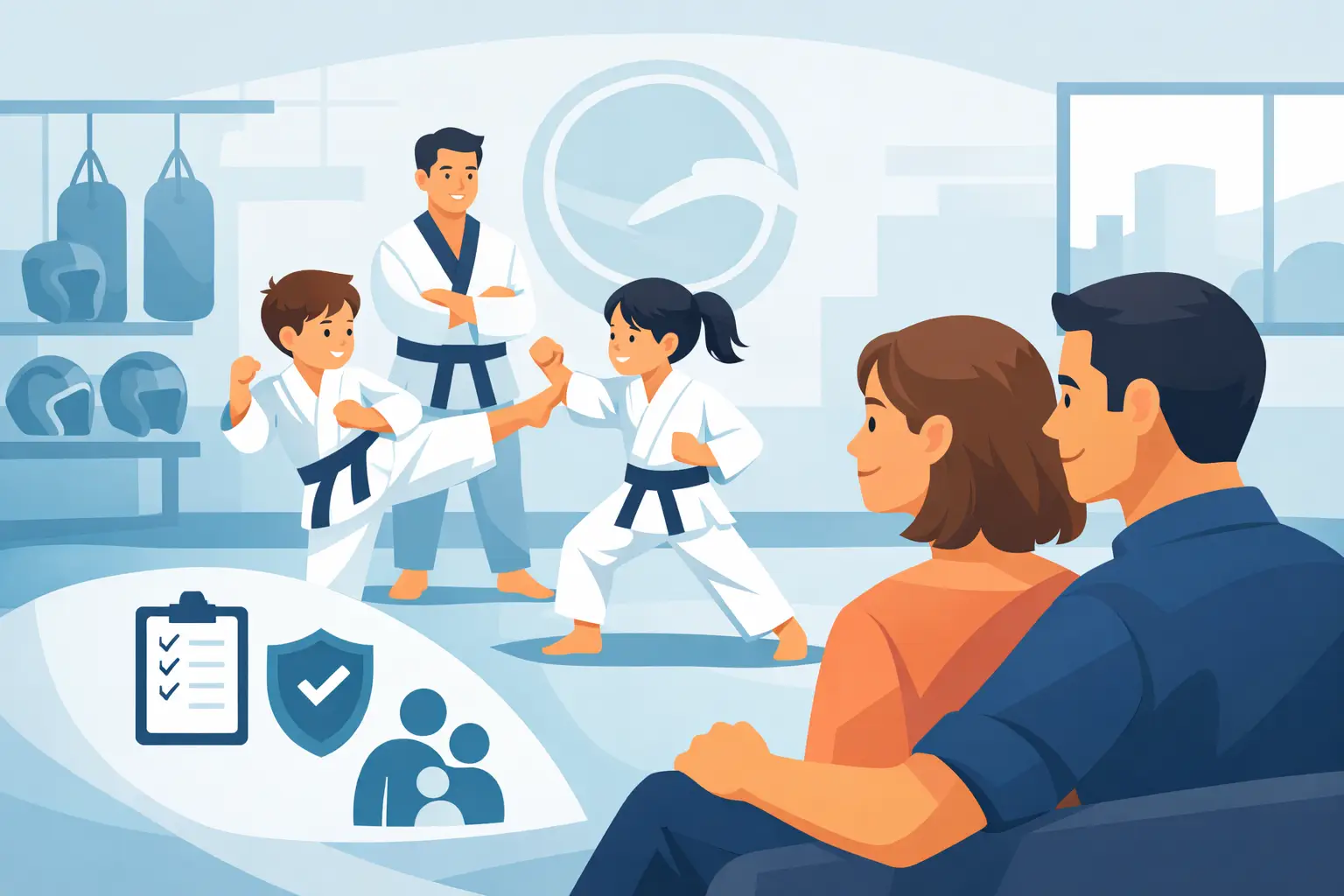
Youth Karate Program Review Parents Can Trust
A karate class can look impressive from the doorway: uniforms, sharp stances, loud kiai, and children moving together on command. But a useful youth karate program review asks a more meaningful question: what is your child actually learning after the excitement of the first few classes wears off?
For Sapulpa families, the right program should offer more than a place to burn energy after school. It should give children a steady structure where they learn to listen, work through challenges, move with control, and earn progress through consistent effort. Those outcomes do not happen by accident. They come from qualified instruction, clear standards, and a school culture that treats every child’s development seriously.
Youth Karate Program Review: What Parents Should Look For
A strong youth karate program has a purpose beyond teaching punches and kicks. Children should gain physical coordination and practical awareness while also practicing focus, respect, self-control, and perseverance. The best schools make those expectations visible from the start.
Watch how class begins. Are students expected to line up, listen, and respond respectfully? Are directions simple enough for younger children to follow, yet challenging enough to keep older students engaged? A disciplined class is not one where children are silent out of fear. It is one where they understand the routine, know what is expected, and receive encouragement to improve.
Parents should also look for age-appropriate instruction. A five-year-old needs different pacing, drills, and coaching than a teenager. Young students benefit from short, active exercises that build balance, coordination, and attention. Older children and teens can handle more detailed technique, conditioning, partner practice, and conversations about responsibility. One mixed-age class can work in some situations, but it must be organized carefully so no student is overlooked.
Safety Is Part of Quality, Not an Extra
Safety should be easy to see during a trial class. Instructors need to set clear boundaries for partner drills, explain how to make contact safely, and remain attentive when students practice together. Controlled training is especially important in a martial art. Children need to learn that skill and self-control go together.
Look for instructors who correct behavior promptly without humiliating students. A child may be excited, distracted, or nervous on the first day. Good coaching redirects that energy with firm, calm guidance. The goal is not to remove all challenge. It is to create a setting where children can face challenge without feeling unsafe or unsupported.
Ask how the school handles injuries, bullying, repeated unsafe behavior, and parent communication. The answers should be direct. A school that values character will have standards for how students treat training partners, because respect is tested most clearly when a drill becomes difficult or emotions run high.
Instruction Should Be Clear and Personal
Great karate instruction is more than calling out commands from the front of the room. Children need demonstrations they can understand, corrections they can use, and recognition for genuine effort. During your visit, notice whether instructors know students’ names and whether they offer specific feedback.
“Try harder” is not enough. Helpful coaching sounds more like, “Keep your hands up,” “Turn your hip with the kick,” or “Take a breath, reset, and try it again.” That kind of direction teaches children how to improve rather than leaving them frustrated.
Experience matters, but so does the ability to teach. A highly skilled martial artist is not automatically an effective youth instructor. The strongest programs combine traditional knowledge with patience, organization, and a real understanding of how children learn.
Look Beyond the Belt
Belts can be motivating. They give students a visible goal and allow families to celebrate progress. Yet belt color alone should never be the main measure of a program’s value. Ask what students must demonstrate before they advance. Are they learning techniques, terminology, forms, partner-control skills, and personal responsibility? Is advancement based on preparedness rather than simply time enrolled?
A meaningful rank system gives children a healthy lesson: progress is earned through practice. Some students develop quickly in physical movement but need more work on focus. Others are highly disciplined but need extra time to build coordination. A good program meets students where they are while still holding a consistent standard.
The same principle applies to confidence. Parents often enroll a shy child hoping karate will help them speak up, stand taller, and feel more capable. It can. But confidence is built through repeated small victories, not forced performance. A student who learns a new stance, completes a difficult drill, or returns after a frustrating class is building confidence that carries into school, friendships, and family life.
Physical fitness is another important benefit, especially for children spending long hours with screens and schoolwork. Karate develops agility, balance, mobility, body awareness, and conditioning. Still, families should be careful of programs that promise instant transformation. Real fitness and real discipline grow over months of steady training. The right school makes that process enjoyable enough for children to keep showing up.
Does the Program Teach Practical Awareness?
Traditional karate has tremendous value, but a well-rounded youth program should also help students understand distance, balance, and personal safety in realistic ways. Children do not need fear-based lessons. They need calm, age-appropriate tools for recognizing uncomfortable situations, using a strong voice, respecting boundaries, and seeking help from trusted adults.
For older students, practical training may include controlled partner work, escape concepts, ground-awareness drills, and conditioning that builds composure under pressure. This is where a broader martial arts approach can be valuable. Stand-up technique teaches movement, posture, striking mechanics, and distance. Ground-fighting skills help students understand what to do if balance is lost or a situation becomes close-range.
Not every child needs the same level of self-defense training. A younger beginner may first need to learn how to stand with confidence and follow instructions. A teen may be ready for more detailed training and the responsibility that comes with it. The key is progression. A school should not rush children into advanced material for entertainment, but it should give committed students a path to keep growing.
At Japanese Martial Arts Academy, families can look for that broader approach through structured training that combines traditional Japanese martial arts values with stand-up and ground-fighting development. The objective is not to make children aggressive. It is to help them become capable, respectful, and prepared.
Use the Trial Class to Evaluate the Culture
A trial class gives parents more information than a brochure ever can. Arrive early enough to watch how students enter the school and interact before instruction begins. Do older students model good behavior? Are beginners welcomed? Does the atmosphere feel focused without being cold?
Pay attention to your child after class as well. They may be tired, excited, uncertain, or proud. All of those reactions can be normal. Ask open questions: What was your favorite part? What felt hard? Did the instructor help you when you needed it? Their answers can reveal whether the class offered the right level of challenge.
Do not judge a program only by whether your child performs perfectly on day one. New routines can feel awkward, particularly for shy children or those who have struggled in team activities. Instead, look for willingness. If your child is curious, treated respectfully, and interested in returning, that is a strong sign that the environment may be a good fit.
Also consider the practical side of membership. Class times, location, instructor consistency, make-up policies, and family scheduling all affect long-term success. The best program on paper cannot help much if attending regularly becomes impossible. Choose a training schedule your family can sustain, because consistency is where the benefits take root.
The Questions That Reveal Real Value
Before enrolling, ask how beginners are introduced, how progress is evaluated, and what parents can expect in the first three to six months. Ask whether classes are separated by age or experience and how instructors adapt when a child needs extra encouragement. Ask what character standards are reinforced inside and outside the training area.
Clear answers show that a school has a plan. Vague promises of confidence and discipline are not enough. Parents deserve to know how those qualities are practiced in class: through respectful greetings, attention drills, goal setting, controlled partner work, and accountability for effort.
A karate program should challenge your child, but it should also give them a place where effort is noticed and growth is possible. When a child walks out a little more focused, a little more confident, and eager to return, you have found something worth building on.