
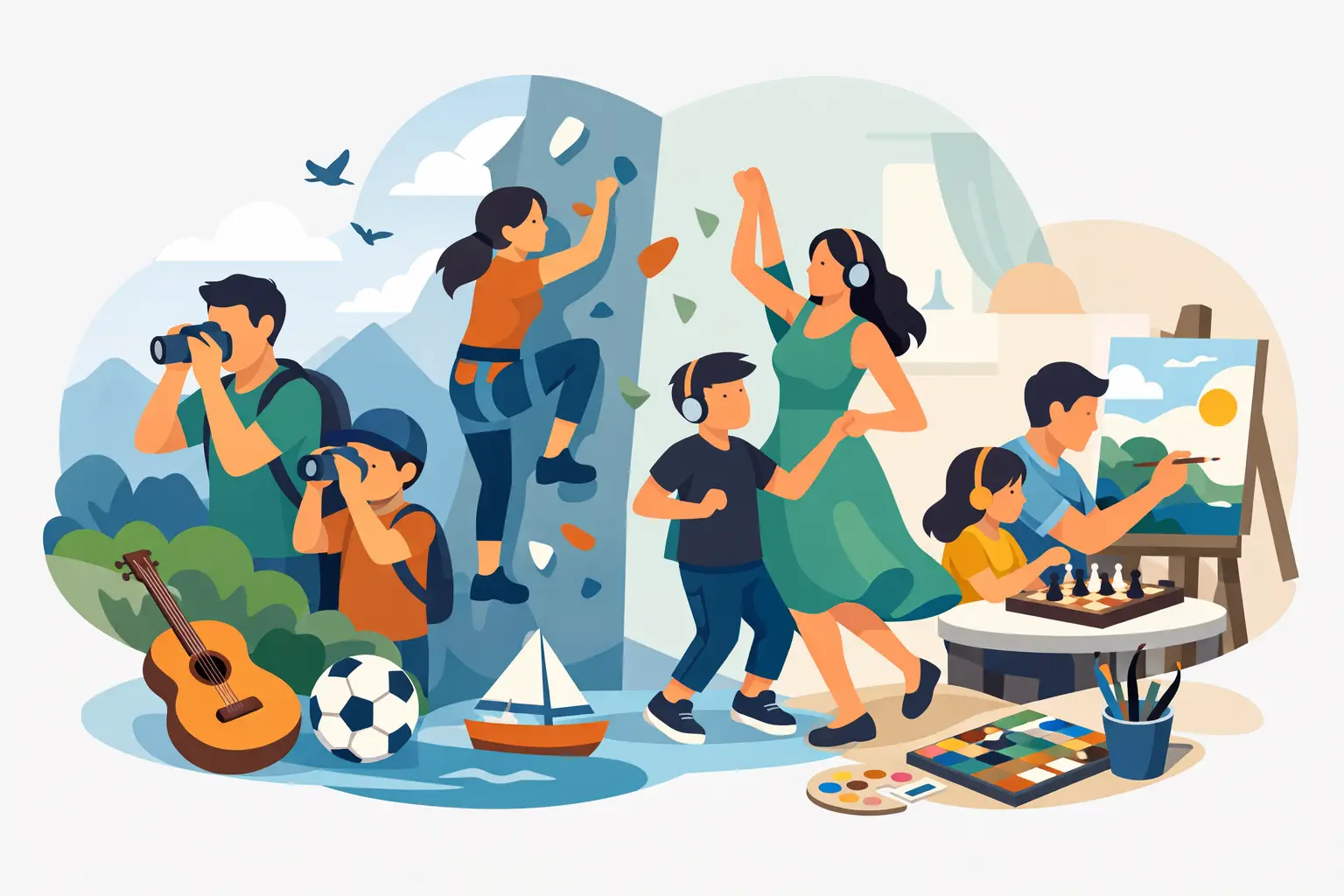
10 Top Confidence Building Hobbies for Families
Confidence is not something a child, teen, or adult simply decides to have one morning. It is built through proof: the proof that you can learn a difficult skill, stay calm when something goes wrong, and improve because you kept showing up. The top confidence building hobbies create those moments of proof again and again.
For families in Sapulpa, the right hobby can do more than fill an afternoon. It can replace screen-heavy routines with purposeful movement, give a quiet child a stronger voice, help a teen handle pressure, or give an adult a healthy outlet that feels genuinely challenging. The best choice depends on the person, but it should offer a clear path from beginner to capable.
What Makes a Hobby Build Real Confidence?
A confidence-building hobby has three key ingredients: a skill worth practicing, a safe place to make mistakes, and visible progress over time. Praise can feel good, but it does not carry the same weight as tying your own belt, playing a full song, finishing a trail, or presenting something you created.
The hobby should also involve some healthy discomfort. That does not mean throwing a beginner into a situation that feels overwhelming. It means working just beyond what is currently easy. A child who learns to speak up during a theater exercise, or an adult who completes one more round of training than last week, learns that discomfort is not the same as failure.
Consistency matters more than natural talent. Families often make the mistake of searching for the activity their child is immediately best at. A better question is: What activity will they continue long enough to become proud of their effort?
10 Top Confidence Building Hobbies to Consider
1. Martial Arts
Martial arts are one of the strongest hobbies for building confidence because progress is structured and earned. Students learn how to stand with purpose, focus under instruction, use their voice, and develop physical skills that improve week by week. Belt ranks and technique goals give children and adults clear evidence that their effort is paying off.
The benefits extend beyond kicks and punches. Traditional training teaches respect, self-control, awareness, and the discipline to keep working when a technique does not come easily. For children, that can mean more focus at school and greater confidence around peers. For teens and adults, practical self-defense skills can replace uncertainty with calm preparedness.
A quality program should balance challenge with safety. At Japanese Martial Arts Academy, students can build both stand-up and ground-fighting skills while training in a structured, encouraging environment designed for beginners through advanced students.
2. Team Sports
Soccer, wrestling, baseball, basketball, volleyball, and other team sports help people gain confidence through contribution. A player learns that success is not only about being the fastest or scoring the most. It is also about practicing, communicating, recovering after a missed play, and supporting teammates.
Team sports are particularly helpful for kids who need more social connection. They create a shared goal and regular opportunities to interact with peers. However, the team culture matters. A highly competitive program can motivate some athletes but discourage others. Look for coaches who teach effort, composure, and sportsmanship alongside performance.
3. Music Lessons
Learning an instrument builds a quiet, lasting kind of confidence. At first, a student may struggle to make a clean sound or remember a short sequence of notes. With regular practice, those difficult pieces become familiar. Performing for family, classmates, or a small audience becomes a powerful lesson in courage.
Music is a good fit for children and adults who enjoy focused individual work. It strengthens patience and attention to detail without requiring a competitive setting. The trade-off is that practice can feel lonely without encouragement, so families should celebrate steady effort instead of waiting only for a recital or major achievement.
4. Theater and Public Speaking
Theater classes, debate clubs, and public-speaking groups train a skill that follows people into school, work, and everyday life: the ability to be seen and heard without shutting down. Students practice projecting their voice, thinking on their feet, and handling mistakes in front of others.
For a shy child, theater does not have to mean becoming the loudest person in the room. It can simply mean learning to introduce themselves clearly or read one line with confidence. For teens, it offers a constructive place to develop presence before college interviews, jobs, and leadership opportunities arrive.
5. Art and Creative Crafts
Drawing, painting, woodworking, sewing, pottery, and design projects build confidence through ownership. There is a special kind of pride that comes from making something tangible with your own hands. Creative hobbies also teach problem-solving because a project rarely turns out exactly as planned.
This option can be especially valuable for people who do not connect with traditional sports. It provides a lower-pressure way to practice decisions, take creative risks, and see improvement. Parents can support the process by asking about choices the child made instead of judging whether the finished piece looks perfect.
6. Rock Climbing
Rock climbing is a direct lesson in trust, courage, and controlled problem-solving. Climbers must decide where to place their hands and feet, manage their breathing, and continue even when the route becomes challenging. Reaching the next hold creates immediate proof that persistence works.
Indoor climbing gyms are often the best starting point because they provide instruction and safety systems. This hobby may not suit everyone, especially those with a strong fear of heights, but that does not make it a poor choice. Starting with low bouldering walls or beginner routes can help a person build confidence gradually rather than forcing a dramatic leap.
7. Gardening and Animal Care
Confidence does not always need an audience. Gardening, caring for a pet, raising chickens, or volunteering with animals develops responsibility and competence through daily action. A child who remembers to water seedlings or care for an animal sees that their actions have a real impact.
These hobbies are excellent for teaching patience. Growth takes time, and not every plant thrives. That is part of the lesson. People learn to adjust, try again, and take pride in being dependable. For families, a garden or shared animal-care routine also creates meaningful time together without the pressure of a formal class.
8. Coding and Robotics
Coding, game design, and robotics give students a clear way to turn ideas into results. A program either works, needs adjustment, or leads to a new solution. That cycle teaches resilience in a practical form: identify the problem, test a change, and keep going.
This hobby often appeals to kids and teens who enjoy technology but need a more active relationship with it than passive scrolling or gaming provides. It can build confidence in school subjects while encouraging creative thinking. The key is choosing projects that are challenging but still achievable, especially early on.
9. Hiking and Outdoor Skills
Hiking, fishing, camping, and basic outdoor skills help people become more capable in the real world. Learning to read a trail map, pack the right supplies, start a campfire safely, or finish a longer hike develops independence without needing to compete against anyone else.
Outdoor hobbies also create space away from constant notifications and comparison. A family hike is a chance for children to build endurance, notice their surroundings, and contribute to a shared plan. Begin with manageable trails and preparation. Confidence grows when people learn that being prepared makes adventure more enjoyable.
10. Volunteer Service
Volunteering can be an overlooked confidence builder because it shifts attention away from self-doubt and toward service. Helping at a food pantry, supporting a community event, assisting younger students, or participating in a clean-up project shows children and adults that they have something valuable to offer.
Service is especially helpful for teens who are searching for purpose and belonging. It builds communication skills, responsibility, and gratitude while connecting them to people outside their usual circle. The most meaningful volunteer work matches a person’s interests, whether that is animals, the outdoors, community support, or mentoring.
How to Help a Hobby Stick
The right hobby will still have hard days. A child may want to quit after a tough class, a lost game, or a project that did not work. Parents do not need to force a long-term commitment to every activity, but they can teach the difference between a bad day and a bad fit.
Set a reasonable trial period, such as a few weeks or a season, before making a final decision. Keep the focus on growth: showing up, listening, practicing, and handling frustration with respect. Avoid comparing siblings or teammates. Confidence weakens when a person believes they must be someone else to succeed.
For adults, the same rule applies. Choose a hobby that challenges you without making your schedule impossible. Two consistent classes or practice sessions each week will build more confidence than an ambitious plan that disappears after ten days.
The best hobby is not necessarily the one that looks most impressive from the outside. It is the one that gives your family a reason to stand taller, keep learning, and recognize their own progress when life gets difficult.