
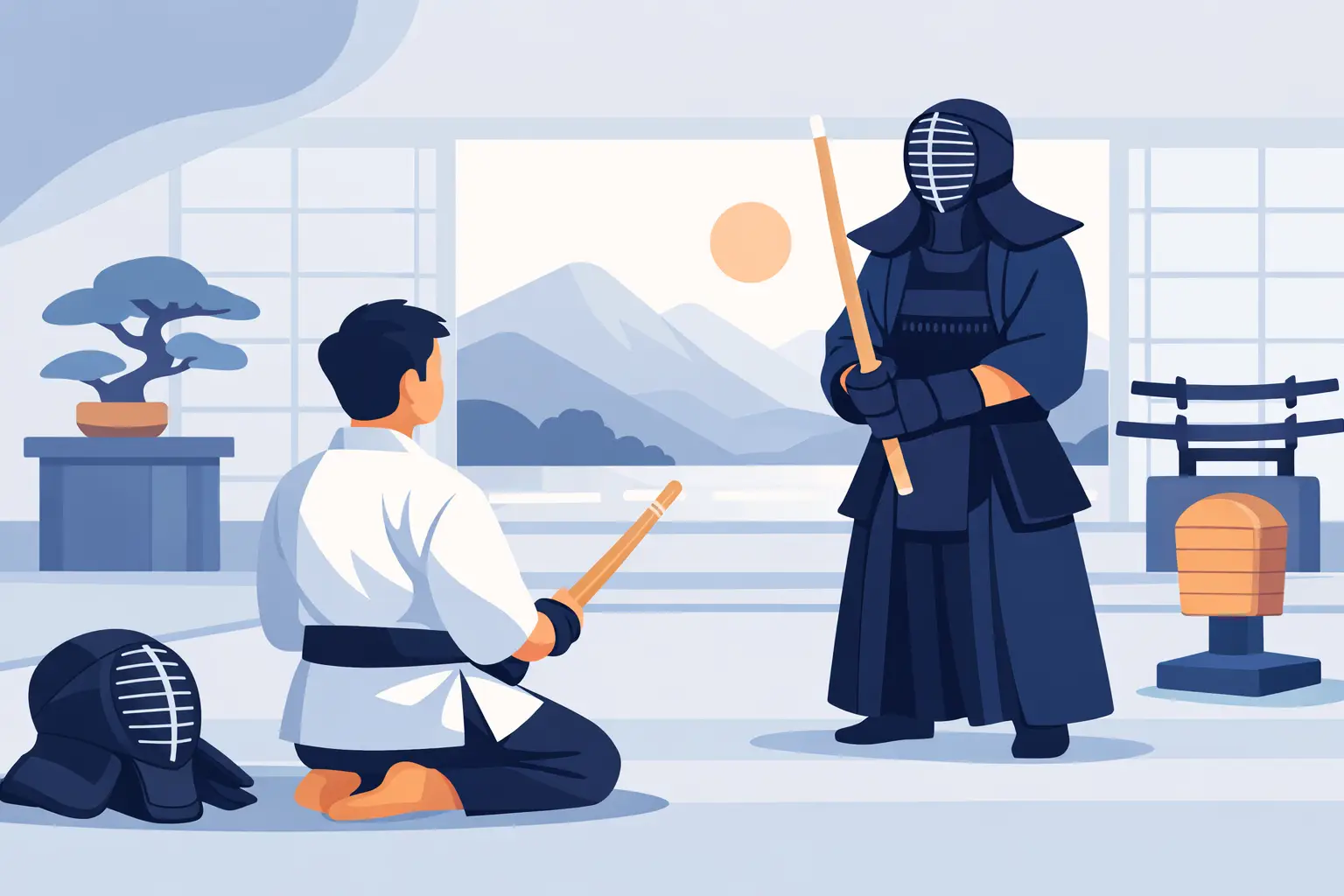
How to Start Kenjutsu as a Complete Beginner
A wooden sword has a way of revealing your habits quickly. If your posture is loose, your grip is tense, or your attention wanders, the practice shows it. That is part of what makes kenjutsu so valuable. Learning how to start kenjutsu is not about pretending to be a movie swordsman. It is about developing focus, control, respect, and practical movement through disciplined Japanese sword training.
For adults, teens, and motivated younger students, kenjutsu can be a powerful alternative to routine workouts and screen-heavy free time. You build coordination and fitness, but you also learn to stay calm under pressure, follow instruction, and improve one repetition at a time. The right beginning matters because sword training requires patience, safety standards, and qualified guidance.
What Kenjutsu Training Is Really About
Kenjutsu is the traditional study of Japanese sword techniques. Training commonly includes stance, footwork, drawing and handling drills, cutting lines, defensive movements, partnered practice, and structured forms. Although every school and lineage approaches the art differently, serious instruction is built around control before speed.
Beginners often expect sword practice to begin with dramatic combinations. In reality, the first lessons are usually more foundational. You may spend time learning how to stand with balance, move without crossing your feet, hold a bokken correctly, and return the sword safely after each technique. These details are not delays. They are the skills that protect training partners and give every future movement strength.
Kenjutsu is also different from a general fitness class. You will work hard, but the goal is not simply to leave exhausted. The goal is to become more precise. A good class asks you to pay attention to distance, timing, posture, breathing, and the intent behind each action. That challenge is why many students find the art so rewarding.
How to Start Kenjutsu Safely
Your first step should be finding qualified, in-person instruction. Sword arts are not a discipline to learn solely from videos in a garage or backyard. Online demonstrations can help you understand terminology or observe different traditions, but they cannot correct unsafe grip, poor alignment, or partner-distance mistakes in real time.
Look for an academy where instructors teach a clear progression for beginners and maintain a respectful training environment. Ask what equipment new students need, whether the class uses wooden practice swords, padded weapons, or other training tools, and how partner drills are supervised. A responsible program should welcome these questions. Safety is not separate from tradition – it is part of proper tradition.
At Japanese Martial Arts Academy, students can learn within a structured environment that values authentic Japanese systems, student growth, and family-friendly instruction. A beginner should never feel pressured to prove anything on day one. The right class will challenge you while giving you the coaching needed to build confidence correctly.
Start With the Equipment Your Instructor Recommends
Most beginners begin with a bokken, a wooden practice sword, rather than a sharpened blade. Depending on the curriculum, you may also use a saya, or scabbard, and eventually protective equipment for specific drills. Do not buy expensive gear before attending a class unless your instructor has told you exactly what is appropriate.
The safest choice is often to borrow or use school-provided equipment for your first sessions. This lets you feel the proper size, weight, and balance before making a purchase. A sword that looks impressive online may be unsuitable for your height, hand size, or the method your school teaches.
Wear comfortable training clothes and remove jewelry that could catch or cause injury. Keep your fingernails trimmed, bring water, and arrive a few minutes early. These small habits show respect for the class and help you begin with a focused mindset.
Learn Etiquette Without Feeling Intimidated
Japanese martial arts have etiquette because training involves trust. Bowing, listening carefully, addressing instructors respectfully, and caring for equipment create an organized space where everyone can practice safely. You do not need to know every Japanese term before your first class. You do need to be willing to learn.
Watch how experienced students line up, handle their weapons, and respond to instruction. If you are unsure where to stand or what to do, ask. Good students are not the ones who act like they already know everything. They are the ones who pay attention, accept correction, and apply it.
For parents, this structure can be one of the strongest benefits of martial arts training. Children learn that confidence is not loudness or showing off. It comes from responsibility, steady effort, and learning how to conduct themselves around others.
Build the Foundations Before You Chase Speed
The strongest kenjutsu practitioners make difficult movement look simple because their basics are dependable. Your first months should center on posture, grip, footwork, and awareness. A correct stance helps you move in any direction without losing balance. A controlled grip allows the sword to move with accuracy instead of relying on arm strength alone. Good footwork helps you manage distance and stay connected to the ground.
Expect repetition. You may practice the same cut, step, or guard position many times. That repetition builds more than technique. It develops patience and the ability to stay engaged when progress is gradual. Those are useful skills in school, work, sports, and family life.
Avoid trying to swing harder or move faster than you can control. Speed without alignment often creates bad habits, and bad habits are harder to correct later. Your instructor may ask you to slow down, shorten a motion, or repeat a basic drill while more advanced students practice something else. That is not a sign that you are behind. It is the process of building a skill that will hold up over time.
Train Your Body for Better Sword Work
Kenjutsu develops physical ability through practice, but a few simple habits outside class can support your progress. Walking, bodyweight squats, controlled lunges, core work, and mobility exercises can improve leg endurance and balance. Gentle shoulder and wrist mobility can also help, especially if you spend much of the day at a desk, in a car, or on a device.
Do not treat conditioning as permission to ignore technique. A strong athlete can still have poor distance or an unsafe grip. Instead, think of fitness as support for better training. Strong legs help you maintain stance. A stable core helps you turn and stop with control. Improved endurance helps you keep your attention through a full class.
Recovery matters, too. If you are sore after your first few practices, that is normal. Get adequate sleep, drink water, and let your instructor know about existing injuries or limitations. Consistent training beats occasional all-out effort. Two focused classes each week will usually produce more progress than one intense session followed by several missed weeks.
Practice at Home With Discipline
Home practice can reinforce what you learned in class, but only after you understand the drill and have enough clear space to perform it safely. Never swing a weapon near people, pets, furniture, vehicles, or fragile objects. A small movement can become dangerous when a bokken extends beyond your reach.
Start with instructor-approved fundamentals such as stance transitions, footwork, grip checks, or slow solo forms. Quality matters more than volume. Five careful minutes spent correcting your posture can be more useful than fifty rushed swings.
It also helps to keep a simple training note after class. Write down one correction your instructor gave you, one skill that felt better than last week, and one question to ask next time. This turns practice into a clear process rather than a vague hope to improve.
Choose Progress Over Comparison
Some students arrive with athletic experience. Others have never taken a martial arts class. Some will pick up movement quickly, while others need more time to coordinate hands, feet, and posture. None of that determines who will become a capable martial artist.
Measure your progress against your own previous practice. Can you hold a balanced stance longer? Do you remember the sequence with fewer reminders? Are you more relaxed when working with a partner? These are meaningful wins. In a traditional art, advancement is earned through consistency, character, and attention to detail.
The best way to begin is simple: show up ready to learn, train safely, and allow the fundamentals to do their work. Each correct step, each controlled cut, and each respectful class builds more than sword skill. It builds the kind of confidence that stays with you long after training ends.