
What to Expect in a Beginner Japanese Jujutsu Class
The first few minutes on the mat can tell you a great deal about martial arts training. Shoes come off, students line up, and the instructor sets a clear standard for attention, respect, and safety. In a beginner Japanese jujutsu class, that structure is not meant to intimidate you. It gives every new student, from a cautious child to an adult returning to fitness, a reliable place to learn practical skills with confidence.
Japanese jujutsu is a traditional system built around controlling an attacker rather than trying to overpower them. Students learn how to move, balance, protect themselves, escape common holds, and use leverage effectively. It is a challenging art, but beginners do not need martial arts experience, exceptional flexibility, or a certain fitness level to start. They need a willingness to listen, practice, and improve one repetition at a time.
What Japanese Jujutsu Teaches Beginners
Japanese jujutsu developed as a close-range fighting system. While every school may emphasize techniques differently, the core purpose remains practical: help a student respond when distance closes and striking alone is not the answer.
A beginning student is introduced to body positioning, grips, escapes, off-balancing, controlled throws, joint-control concepts, and defensive movement. You may practice how to break a wrist grab, create space from a bear hug, or move safely when someone pushes or pulls you. The goal is not to win a rough sparring match on day one. The goal is to understand how posture, timing, and leverage can give you options under pressure.
This makes Japanese jujutsu valuable for students who want more than a workout. You build fitness along the way, but each drill has a purpose. A stronger stance helps you stay balanced. Better awareness helps you recognize danger earlier. Controlled partner practice teaches you how to stay calm when another person is close and moving.
Your First Beginner Japanese Jujutsu Class
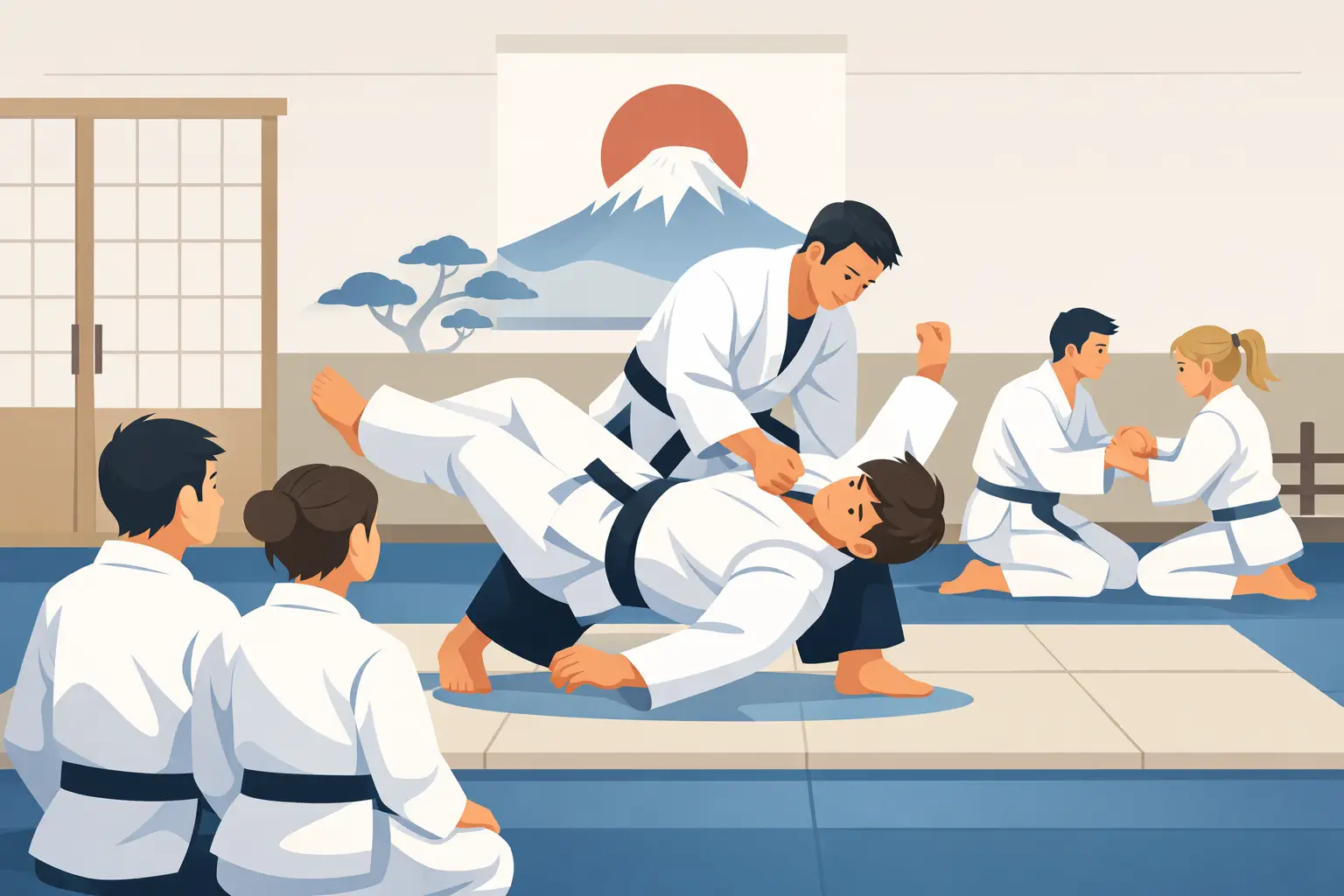
Your first class should be organized, welcoming, and appropriately paced. An instructor will explain how the class runs, where to stand, how to train with partners, and how to signal if you need to stop. Respect is part of traditional Japanese martial arts, but so is responsible instruction. Students should never be expected to use a technique they have not been taught or to train beyond their ability.
Most classes begin with a warm-up that prepares the body for movement. Expect exercises that improve mobility, coordination, balance, and basic conditioning. A child may work on body control through movement games and structured drills, while teens and adults may spend more time on stance work, falls, and partner-based conditioning.
Next comes foundational technique. Your instructor may demonstrate a movement slowly, explain the purpose, and have students repeat it in stages. Beginners often practice with a cooperative partner first. This is how students learn correct mechanics before speed, resistance, or more advanced applications are added.
A class may finish with review, controlled drills, conditioning, or a short discussion about discipline and training habits. You will not remember every detail after one visit, and that is normal. Martial arts progress comes from consistent practice. Each class reinforces skills that initially feel unfamiliar until they become more natural.
Safety Is Part of the System
Parents and adult beginners often have the same reasonable concern: Is jujutsu safe? Like any physical activity, martial arts carries risk when taught carelessly. Proper instruction, however, is designed to reduce unnecessary risk while teaching students to move responsibly.
A quality program starts with control. Students learn how to fall and land safely before practicing larger throws. They learn to apply joint-control techniques gradually and to respect a partner’s tap or verbal signal immediately. Instructors pair students thoughtfully, supervise drills, and adjust training for age, size, maturity, and experience.
There is a trade-off worth understanding. Training only with no resistance can feel comfortable, but it does not fully prepare a student for real movement or pressure. Training too hard too soon can damage confidence and increase injury risk. The right beginner program builds resistance in layers. Students first learn the movement, then practice timing, then gradually test it with more realistic energy as their control improves.
For children, safety also includes emotional safety. A good class teaches kids that being corrected is part of learning, not a reason to quit. They are encouraged to speak up, follow directions, respect boundaries, and keep trying when a skill takes time.
Benefits Beyond Self-Defense
The physical benefits of jujutsu are easy to see. Students improve coordination, balance, mobility, grip strength, endurance, and overall body awareness. Because techniques require the whole body to work together, training can be a more engaging alternative to repetitive gym routines or screen-heavy evenings.
The deeper benefits often show up at home, school, and work. Children gain confidence by learning that they can handle difficult tasks without giving up. Teens develop discipline through consistent attendance and clear expectations. Adults often find that focused training helps them release stress while rebuilding confidence in their physical abilities.
Jujutsu also teaches self-control. The skill is not simply knowing how to apply a throw or escape. It is knowing when to create distance, when to use your voice, when to seek help, and when physical action is truly necessary. Responsible self-defense begins with awareness and good judgment.
For families, shared martial arts training can create a positive routine. A parent does not have to sit on the sidelines while a child builds confidence. Family members can encourage one another, celebrate belt progress, and develop healthier habits together.
What to Wear and Bring
For a first visit, comfortable athletic clothing is usually enough unless the academy gives different instructions. Avoid clothing with sharp zippers, jewelry, or anything that can catch during partner drills. Bring water, arrive a few minutes early, and let the instructor know about injuries, physical limitations, or concerns before class begins.
A traditional uniform may be introduced after you decide to continue. The uniform is practical, but it also reinforces the focus of the training environment. Putting it on can become a useful signal that it is time to set distractions aside and work with purpose.
You do not need to buy a collection of equipment before your first class. Beginners benefit most from good instruction, regular attendance, and a positive training attitude. Specialized gear may become relevant later depending on the program, but it should not be a barrier to getting started.
How Often Should a Beginner Train?
For most beginners, two classes per week is an excellent starting point. It gives the body time to recover while allowing techniques to stay fresh. One class per week can still build familiarity, especially for busy families, but progress may feel slower because students need more time to reconnect with each lesson.
More is not always better at the beginning. A motivated student may want to train every day, but soreness and mental overload can make early training frustrating. Consistency beats intensity. Attend regularly, ask questions, practice basic movements carefully, and give yourself time to grow.
At Japanese Martial Arts Academy, students can train within a structured environment that values traditional systems, practical self-defense, and personal development. Whether the goal is stronger focus for a child, meaningful fitness for an adult, or a shared activity for the family, the first step is simply showing up ready to learn.
A beginner class is not a test of what you already know. It is a place to build skills you can carry with you: steadier confidence, better discipline, healthier movement, and the calm knowledge that progress is earned one class at a time. A free week pass can be a practical way to step onto the mat, meet the instructors, and see whether Japanese jujutsu feels like the right challenge for your family.