
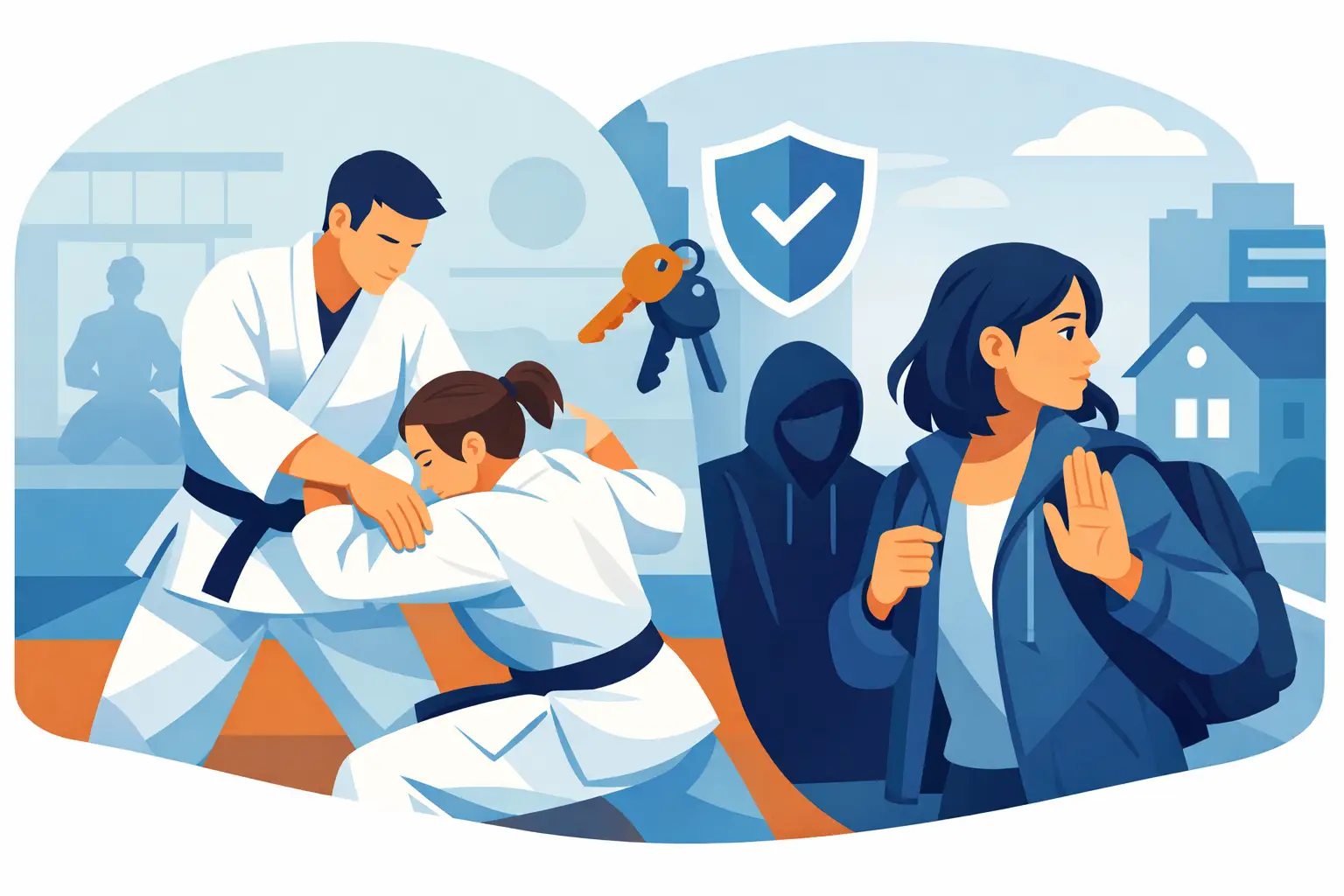
How Jujutsu Teaches Practical Safety Every Day
A practical safety skill is not a flashy move. It is the ability to notice trouble early, stay composed when someone crowds your space, and make a smart decision before a situation gets worse. That is how jujutsu teaches practical safety: through disciplined habits that help children, teens, and adults move with greater awareness, confidence, and control.
Japanese Jujutsu is often associated with throws, holds, and escapes. Those techniques matter, but their purpose goes beyond winning a confrontation. In a quality training environment, students learn how to protect themselves while respecting training partners, managing their emotions, and recognizing when the safest choice is to step away.
How Jujutsu Teaches Practical Safety Before Conflict Starts
The best self-defense outcome is usually avoiding a physical confrontation altogether. Jujutsu training reinforces that truth from the first class. Students learn to pay attention to their surroundings, maintain appropriate distance, and recognize behavior that signals a possible problem.
For children, awareness may mean knowing not to wander away from a parent, understanding when to seek help from a trusted adult, or using a clear voice when someone ignores a boundary. For teens, it can mean staying alert in parking lots, at school events, or while spending time with friends. Adults may apply the same principles when entering a workplace, walking to their vehicle, or handling an uncomfortable interaction in public.
This is not about teaching students to be fearful. It is about replacing uncertainty with preparation. A student who has practiced awareness is more likely to notice an exit, keep personal space, and avoid being surprised. That calm, observant mindset is one of the most practical safety benefits martial arts can offer.
Balance, Footwork, and Distance Matter in Real Life
Many everyday accidents happen because people lose their footing, react late, or struggle to move safely under pressure. Jujutsu gives students regular practice with balance, body position, and controlled movement. Those lessons carry beyond the mat.
Students learn how to stand in a stable position, change direction without crossing their feet, and use posture that supports mobility rather than stiffness. They also learn why distance matters. Standing too close can limit options. Standing too far away can make communication difficult. Understanding space helps a student make better choices in crowded hallways, public places, and tense conversations.
For younger students, this physical awareness often improves coordination and confidence in sports, playground activities, and daily movement. For adults, it can build better body control while also providing a focused alternative to passive workouts. Training creates fitness with a purpose: strength, mobility, balance, and the ability to stay steady when life becomes unpredictable.
Learning to Fall Safely
One of the most valuable parts of Jujutsu is learning how to fall and recover with control. Students practice breakfalls, rolling, and safe ways to protect the head and body during a controlled descent. These skills are taught progressively, with instruction adjusted for age, experience, and physical ability.
A trained fall does not make every accident harmless, and no martial art can eliminate the risk of injury. Still, knowing how to relax appropriately, avoid reaching out carelessly, and recover balance can be useful in many situations. A slippery sidewalk, a stumble during play, or an unexpected loss of footing all demand quick body awareness.
The larger lesson is just as valuable: when something goes wrong, panic makes it harder to respond. Repetition teaches students to breathe, protect themselves, and regain composure.
Controlled Technique Builds Better Decisions
Jujutsu is not taught as permission to fight. It is taught as a system of control. Students practice responding to grabs, pushes, and close-range pressure in a supervised setting, where safety rules, partner respect, and instructor guidance come first.
This matters because practical safety is rarely one-size-fits-all. A child dealing with unwanted roughness on the playground needs a different response than an adult facing a serious threat. A crowded space may call for verbal de-escalation and repositioning. A situation where escape is available should end with leaving, not staying to prove a point.
Training helps students understand that physical skills exist on a spectrum. They may use posture, movement, verbal boundaries, or a release from a grab to create room and get to safety. The goal is not to overpower another person. The goal is to reduce danger, protect oneself, and seek help when needed.
That distinction is especially important for parents. Martial arts should build self-control, not aggression. A well-run Jujutsu class makes expectations clear: students do not use techniques to intimidate classmates, settle arguments, or show off. They learn that discipline means having the ability to act without feeling the need to act.
Confidence Without Carelessness
There is a meaningful difference between confidence and false security. Confidence says, “I can stay calm, use good judgment, and protect my boundaries.” False security says, “Nothing can hurt me.” Jujutsu should build the first and actively discourage the second.
Students develop confidence through earned progress. They learn a movement, practice it slowly, improve their timing, and see that calm repetition produces results. Over time, a student who once hesitated may speak more clearly, stand taller, and respond to pressure with less panic.
For kids and teens, that confidence can show up at school and at home. They may become more willing to ask questions, more capable of handling correction, and less likely to react impulsively to teasing or frustration. For adults, training can provide a reset from work stress and sedentary routines while strengthening the mindset needed to make thoughtful decisions.
Confidence also supports better boundaries. Students who believe they have options are less likely to freeze, overreact, or follow others into unsafe choices simply to fit in.
Ground Skills Provide a Complete Safety Perspective
Many self-defense programs focus only on standing techniques. Yet close contact can lead to stumbling, clinching, or ending up on the ground. Jujutsu includes controlled ground skills so students understand how to protect themselves, create space, and work toward a safe exit.
This does not mean every student needs to become a competitive grappler. It means they should understand basic positions, avoid panic when close contact occurs, and learn that staying composed is often more useful than using brute strength. Technique, leverage, timing, and positioning can help a smaller person create an opportunity to disengage.
At Japanese Martial Arts Academy, this wider perspective fits the value of a dual-system approach: developing both stand-up awareness and ground-fighting understanding. For families, that means training is not limited to one range or one type of movement. Students build a more complete foundation while working at a level appropriate to their age and goals.
A Safe Training Culture Is Part of the Lesson
Practical safety cannot be taught well in a reckless environment. Students need clear rules, qualified instruction, age-appropriate practice, and training partners who understand respect. The culture of the dojo matters as much as the technique.
In a structured class, students bow in, listen carefully, practice with control, and take responsibility for their partner’s safety. They learn to tap when a hold is uncomfortable, release immediately when a partner taps, and accept correction without ego. These are martial arts skills, but they are also life skills.
Parents often see the results outside class. Their child may become more focused, patient, and accountable. Teens may find a positive community that values effort over attention-seeking. Adults may rediscover the satisfaction of steady progress alongside people who encourage them to improve.
Practical Safety Is a Habit, Not a Single Technique
No class can promise that a student will never face danger. Real situations are unpredictable, and the safest response will always depend on the circumstances. Running, getting help, using a strong voice, and avoiding physical contact remain the right answers whenever possible.
What Jujutsu can provide is a trained foundation. Students learn to recognize risk, control their body, manage stress, respect boundaries, and respond with purpose rather than panic. Those benefits matter whether a student is six years old, preparing for high school, raising a family, or looking for a disciplined way to build fitness and confidence.
The most useful lesson may be the one students carry quietly into daily life: stay alert, stay composed, treat people with respect, and choose the path that gets everyone home safely.