
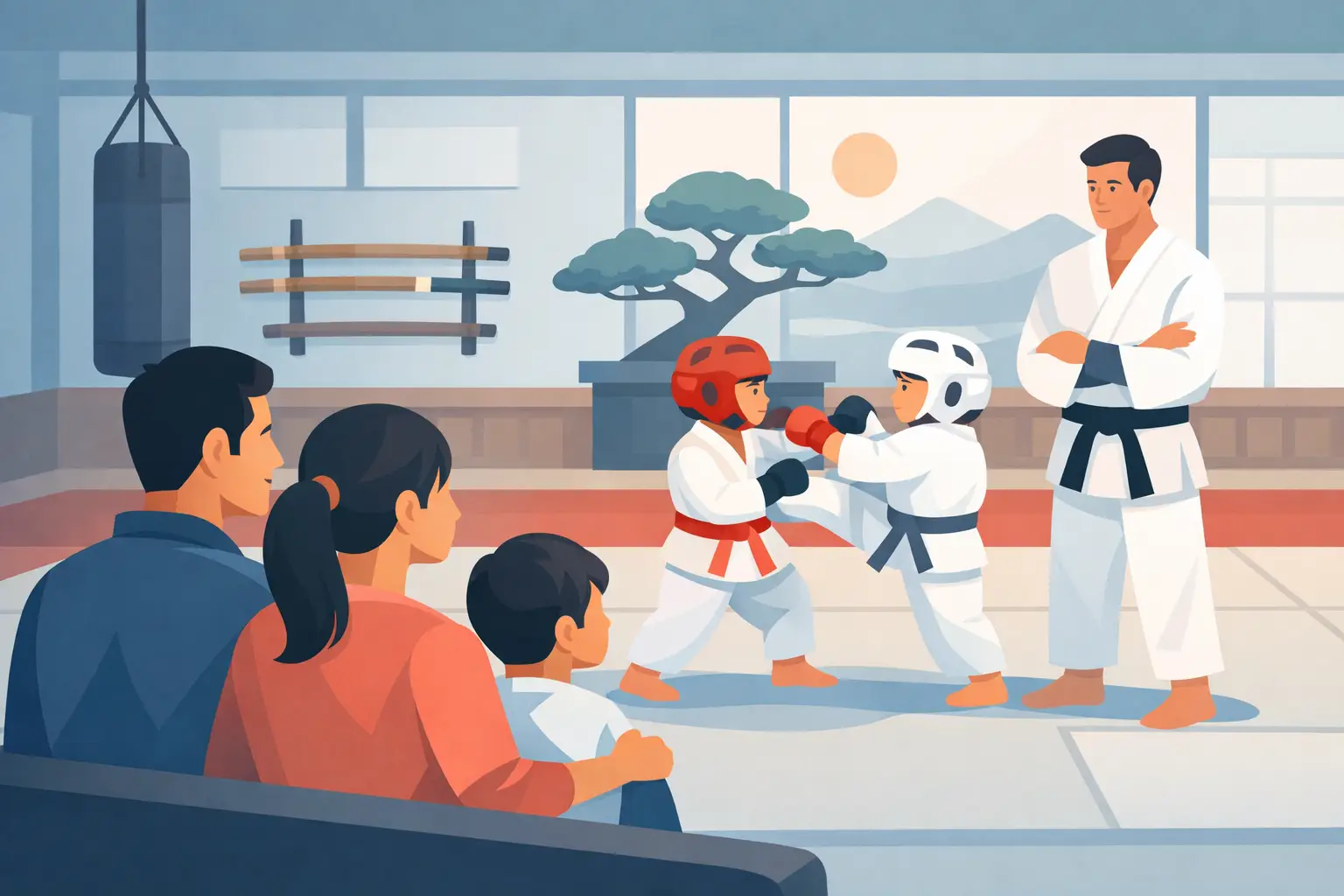
A Parent’s Guide to Dojo Safety for Families
A child’s first martial arts class can be exciting and a little nerve-racking. You may see students bowing, practicing strikes, rolling on mats, or working with training equipment that looks unfamiliar. A parent’s guide to dojo safety starts with this truth: a good martial arts school does not treat safety as a rule posted on the wall. It builds safety into every class, every drill, and every decision an instructor makes.
For families in Sapulpa and the surrounding area, martial arts can build confidence, focus, self-control, fitness, and practical awareness. Those benefits are strongest when training is structured by qualified instructors who understand how to challenge students without placing them in situations beyond their skill level.
What Safe Martial Arts Training Looks Like
Safety in a dojo is not the same as making class easy. Children need room to move, make mistakes, work hard, and develop resilience. The goal is controlled challenge. A well-run class teaches students how to fall correctly before asking them to practice takedowns, how to control a technique before adding speed, and how to respect a partner before beginning any contact drill.
Watch the first few minutes of a class. Strong instruction begins with organization. Students should know where to stand, when to begin, and what the expectation is for listening. The instructor should have the attention of the room without needing to shout constantly or create fear. Discipline should feel clear and consistent, not harsh or humiliating.
Safe programs also group students thoughtfully. A five-year-old beginner should not be expected to train at the same intensity as an experienced teenager. Size, age, maturity, experience, and the specific drill all matter. Sometimes students can learn alongside a wide range of ages, especially during warmups or basic forms. Partner work and contact training require more careful matching.
Qualified Instruction Is the First Layer of Protection
Parents should ask who teaches each class and how instructors are prepared to teach children. Martial arts experience matters, but teaching skill matters just as much. An accomplished practitioner is not automatically equipped to manage a room of young beginners, spot unsafe movement, or explain a complicated skill in a way a child can understand.
Look for instructors who give clear demonstrations, correct students with patience, and explain the purpose behind the rule. When a child learns to keep hands up, maintain distance, tap early, or stop immediately on command, they are learning habits that protect both themselves and their training partners.
At Japanese Martial Arts Academy, structured training draws from traditional Japanese systems while meeting students where they are. That combination matters. Tradition provides standards, respect, and proven training methods. A family-centered academy also recognizes that each student develops at a different pace.
A Parent’s Guide to Dojo Safety: Questions Worth Asking
You do not need to be a martial arts expert to evaluate a school. Ask direct questions, then pay attention to whether the answers match what you see on the floor.
Ask how the school handles a new student’s first month. Beginners should receive extra guidance rather than being pushed immediately into advanced sparring, throws, or weapons work. Ask how instructors match partners for drills, what protective equipment is required, and when students are allowed to increase contact.
It is also reasonable to ask about injury procedures. Every physical activity carries some risk, whether it is soccer, wrestling, gymnastics, or karate. A responsible dojo has a plan for minor injuries, knows when to contact a parent, keeps emergency information current, and does not dismiss pain simply because training is demanding.
Ask how the academy handles behavior that could endanger others. A safe school addresses horseplay, uncontrolled contact, bullying, and refusal to follow instructions quickly. This is not about punishing children for being energetic. It is about teaching them that discipline protects the entire class.
Finally, ask whether parents may observe. Schools may have reasonable viewing policies designed to reduce distractions, but families should never feel shut out of the learning environment. You should be able to see that instruction is organized, respectful, and appropriate for your child.
Clean Space, Clear Rules, and Proper Equipment
The physical environment tells you a great deal about a dojo’s standards. Mats should be clean, dry, and in good repair. Training areas should be free of clutter, loose gear, and equipment that creates trip hazards. Restrooms and waiting areas should be cared for as well. Cleanliness is not only about appearances. It reduces avoidable health concerns and shows that the school takes responsibility seriously.
Equipment should fit the activity and the student. For contact drills, that may include gloves, headgear, mouthguards, shin protection, or other gear based on the discipline and level of contact. For grappling and falling practice, properly maintained mats are essential. For traditional weapons training, students should begin with safe training tools and receive close supervision before progressing.
No piece of gear replaces good control. Protective equipment lowers risk, but safe training still depends on students following instructions, using appropriate force, and stopping when told. Parents should be cautious of any program that treats hard contact as a shortcut to confidence. Real confidence comes from capable technique, steady progress, and knowing how to remain composed under pressure.
Sparring and Grappling Should Be Earned
Many parents are concerned about sparring, and that concern is understandable. Sparring can be valuable when it is introduced at the right time. It teaches timing, distance, decision-making, emotional control, and respect for another person’s boundaries. It should never look like children being told to fight.
A responsible instructor starts with drills that teach movement and control. Students learn how to make safe contact, defend themselves, and respond to commands before intensity increases. Rules should be clear. Excessive force, reckless behavior, and techniques outside the agreed format should be stopped immediately.
Ground fighting follows the same principle. Wrestling and Japanese Jujutsu can help students develop balance, body awareness, and practical self-defense skills. Yet grappling requires close supervision because students must learn safe falls, controlled holds, tapping, and how to release a partner without hesitation. The right program makes these expectations part of the culture from day one.
Teach Your Child Their Role in Safe Training
Dojo safety is a partnership between instructors, parents, and students. Before class, remind your child that martial arts is not a place to prove toughness by ignoring pain or refusing to ask for help. It is a place to practice self-control.
Encourage them to tell an instructor if something hurts, if equipment does not fit, or if a partner is using too much force. Children sometimes worry that speaking up means they are weak. A healthy dojo teaches the opposite. Communicating clearly is a sign of maturity and respect.
The same applies at home. Make sure your child arrives rested, hydrated, and dressed in the required uniform or training clothes. Keep fingernails trimmed for partner work, remove jewelry, and notify the instructor about relevant injuries, medications, or limitations. These small habits help the class run smoothly and protect everyone on the mat.
If your child is nervous, do not assume martial arts is a poor fit. A little nervousness is common when trying something new. Talk with the instructor about a gradual introduction. A patient academy can help a shy child build confidence without forcing them into the center of attention before they are ready.
Know the Difference Between Productive Challenge and Red Flags
Martial arts training should feel demanding at times. Students may sweat, feel tired, struggle with a new movement, or need repeated practice before a technique clicks. Those are normal parts of disciplined growth.
Red flags are different. Be concerned if instructors mock students, ignore repeated unsafe behavior, allow large size mismatches during contact drills, pressure children to train through injury, or make parents feel unwelcome for asking reasonable questions. Be cautious if classes appear chaotic, if students lack supervision, or if safety rules change depending on who is watching.
It also depends on your child. A highly active student may need firm structure and a class that channels energy with clear boundaries. A child recovering confidence after bullying may need an instructor who builds contact skills gradually. The best dojo does not use a one-size-fits-all approach. It sets high standards while helping each student succeed at an appropriate pace.
The right martial arts school gives your child more than a place to burn energy after school. It gives them a disciplined community where they can learn to stand tall, move with control, respect others, and grow stronger one class at a time.