
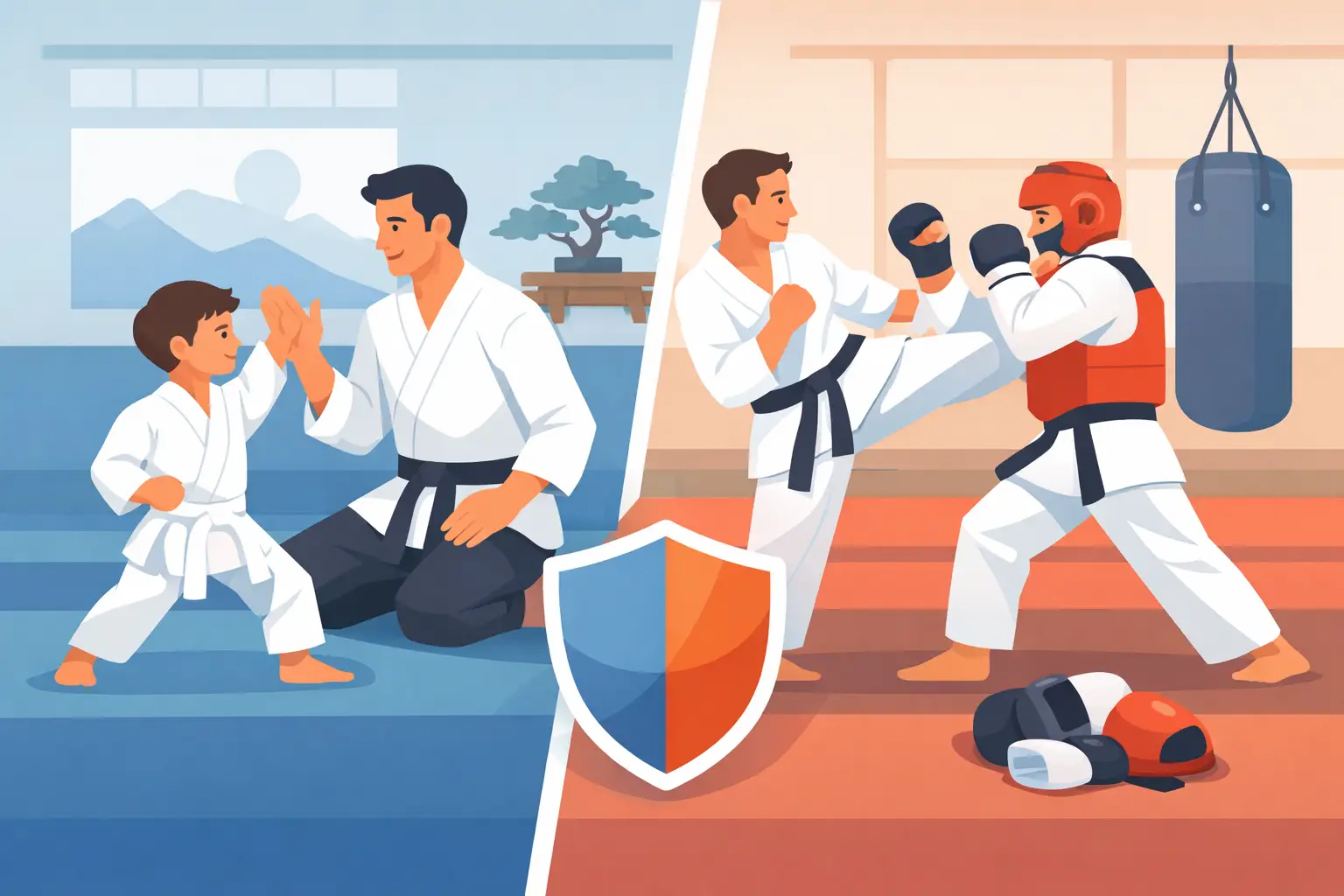
Are Dojo Classes Safe for Kids and Adults?
A lot of parents ask the safety question before anything else, and they should. Are dojo classes safe? The honest answer is yes, when the school is well-run, the instruction is qualified, and the training matches the student’s age, maturity, and skill level. Like any physical activity, martial arts carries some risk, but a disciplined dojo should reduce that risk through structure, supervision, and smart progression.
That matters because many families picture martial arts as constant sparring, hard falls, and injuries. In reality, a professional dojo spends far more time teaching control than chaos. Students learn how to move correctly, how to respect training partners, and how to build skill step by step instead of being thrown into advanced drills before they are ready.
Are Dojo Classes Safe When They Are Taught Correctly?
A safe dojo is not safe by accident. It is safe because the class is organized from the moment students step on the mat. The instructor sets expectations, watches closely, corrects bad habits early, and makes sure students train at an appropriate pace.
For children, safety starts with structure. Young students do best when classes have clear rules, consistent routines, and active supervision. That kind of environment helps prevent rough behavior before it starts. It also teaches children something valuable beyond physical technique – self-control. A child who learns to stop on command, listen carefully, and respect boundaries is not just becoming a better martial arts student. They are becoming safer in the training space.
For teens and adults, safety often comes down to progression and partner selection. Beginners should not be pushed into high-intensity contact before they understand stance, distance, balance, and control. Good schools build those fundamentals first. They also pair students carefully so that size, experience, and temperament are considered rather than ignored.
What Actually Makes a Dojo Safe?
The biggest factor is qualified instruction. A strong instructor does more than demonstrate techniques. They manage the room, read student ability, and know when to slow training down. They understand that confidence is built through successful repetition, not reckless intensity.
Safety also depends on the curriculum. Traditional martial arts can be very safe when skills are introduced in a logical order. Beginners usually start with basics such as posture, footwork, breakfalls, controlled striking, and partner etiquette. More demanding drills come later, after students have developed body awareness and discipline.
Clean facilities matter too. Mats should be in good condition. Training space should be organized. Equipment should fit properly and be used when appropriate. Even small details, such as enough room between groups, can make a real difference in preventing avoidable accidents.
Culture is another major piece. In a healthy dojo, students are not rewarded for being wild, overly aggressive, or careless with partners. They are rewarded for control, effort, respect, and steady improvement. That kind of culture protects beginners and helps experienced students train hard without turning class into a free-for-all.
Common Risks in Martial Arts Classes
It would not be honest to pretend martial arts has no risk. Minor bumps, muscle soreness, and the occasional strain are part of many physical activities, including sports, dance, gymnastics, and wrestling. A dojo should never promise zero risk. What it should offer is responsible risk management.
The most common problems usually come from preventable issues. Poor warmups can lead to strains. Training too hard too soon can lead to fatigue and sloppy movement. Mismatched partners can create bad experiences for smaller or newer students. Weak supervision can allow horseplay or uncontrolled contact.
There is also a difference between discomfort and danger. Martial arts asks students to work hard, practice unfamiliar movement, and sometimes train under pressure. That can feel challenging, especially at first. Challenging does not mean unsafe. In fact, a well-supervised challenge is often where growth happens. Students build resilience, fitness, confidence, and composure because they are asked to do difficult things in a controlled setting.
Are Dojo Classes Safe for Children?
For most children, the right martial arts program is not only safe but extremely beneficial. The key phrase is the right program. Kids need age-appropriate instruction, clear behavioral standards, and teachers who understand child development as much as technique.
A strong children’s program does not treat kids like miniature adults. It adjusts drills, pacing, contact level, and expectations based on age and readiness. Younger children may focus heavily on balance, coordination, listening skills, and basic techniques with very controlled partner work. As they mature, training can become more technical and physically demanding.
Parents should pay attention to how instructors talk to children. Are they firm but encouraging? Do they redirect unsafe behavior quickly? Do they keep the class moving so attention does not drift into goofing around? Those details tell you a lot about whether a dojo understands how to keep children safe while helping them grow.
There is another benefit parents often notice. Kids who train consistently tend to improve their body control and awareness. They learn how to move with purpose instead of flailing, how to manage energy, and how to stay calm under instruction. Those habits support safety both inside and outside the dojo.
Are Dojo Classes Safe for Adults and Beginners?
Adults often worry that they are too out of shape, too old, or too inexperienced to start. In a good school, that should not be a barrier. Beginner-friendly martial arts classes scale training to the student rather than forcing the student to keep up with the most advanced person in the room.
That does not mean every class looks easy. Adults may still sweat, feel sore, and discover muscles they have not used in years. But safe training meets people where they are. A smart instructor can modify intensity, reduce impact, and help new students build conditioning over time.
For adults interested in self-defense, safety in class is especially important because realistic training should still be controlled training. The goal is to develop useful skills, not collect injuries. A dojo that teaches practical movement, situational awareness, and disciplined partner work can help adults build confidence without creating unnecessary wear and tear.
How to Tell if a Dojo Takes Safety Seriously
You can learn a lot from one visit. Watch how the instructor runs the room. If students are attentive, transitions are organized, and corrections are specific, that is a strong sign. If the class looks chaotic, if rough behavior goes unchecked, or if beginners seem lost, take that seriously.
Ask how new students are introduced. Ask whether classes are grouped by age or experience. Ask how sparring or partner drills are supervised. Ask what happens if a student is nervous, has limitations, or needs a slower pace. Clear answers usually reflect clear systems.
You should also notice whether safety feels built into the class rather than mentioned as an afterthought. In a disciplined academy, students bow in, follow instructions, respect each other, and understand that control is part of every technique. That kind of environment helps students build confidence fast because they know what to expect.
At Japanese Martial Arts Academy, that balance matters. Families want training that builds confidence, sharpens discipline, and develops real skills, but they also want to know the environment is structured, respectful, and appropriate for every age. That is exactly how long-term student success is built.
The Trade-Off: Safe Does Not Mean Soft
Some people hear the word safe and assume the training must be watered down. That is not the case. The best dojo classes challenge students. They push focus, conditioning, coordination, and courage. They simply do it with purpose.
A class can be demanding and still be safe. In fact, disciplined challenge is often safer than casual, unstructured activity because expectations are clear and movement is taught correctly. Students who learn proper form, timing, distancing, and control are usually better protected than students who are left to figure things out on their own.
That is why the right question is not whether martial arts is completely risk-free. Almost nothing active is. The better question is whether the dojo treats safety as part of skill development. The best schools do.
If you are considering martial arts for yourself or your child, trust what you see. Look for structure, respect, clean instruction, and steady progression. When those pieces are in place, dojo training becomes more than safe enough to try. It becomes a powerful way to build confidence, discipline, fitness, and real-world self-control that carries far beyond the mat.