
Safe Martial Arts for Beginners: What to Choose
A lot of beginners ask the same question before they ever step onto the mat: which are the safe martial arts for beginners, and how do you know a school will teach them the right way? That question matters, especially for parents choosing a first class for a child, or adults coming in with no athletic background. The good news is that beginner martial arts training should not feel reckless or intimidating. In a well-run school, safety is built into the structure from day one.
The mistake people make is assuming a style is either safe or unsafe on its own. In reality, safety comes from a mix of smart instruction, age-appropriate training, controlled drills, and a culture that values progress over ego. A strong beginner program teaches students how to move well, follow direction, respect training partners, and build skill step by step. That approach protects students while helping them gain confidence quickly.
What makes martial arts safe for beginners?
For a new student, safety starts with control. A beginner should not be thrown into hard sparring, full-speed takedowns, or advanced techniques before learning the basics. Good instruction begins with stance, balance, distancing, falling safely, and partner awareness. Those foundations reduce unnecessary risk and make every later skill more effective.
Class design matters just as much as curriculum. When an instructor groups students appropriately, explains drills clearly, and supervises partner work closely, beginners can challenge themselves without feeling overwhelmed. This is especially important for children, who need structure and repetition, and for adults, who may be returning to exercise after years away.
Safety also depends on the school culture. In a disciplined academy, students are expected to listen, show respect, and practice control. That kind of environment is not just traditional. It is practical. It helps prevent the careless behavior that causes most avoidable injuries.
Safe martial arts for beginners often share the same traits
If you are comparing styles, look less at flashy techniques and more at how the art is taught. The safest martial arts for beginners usually have structured progression, strong emphasis on fundamentals, and a training format that can be scaled by age and experience.
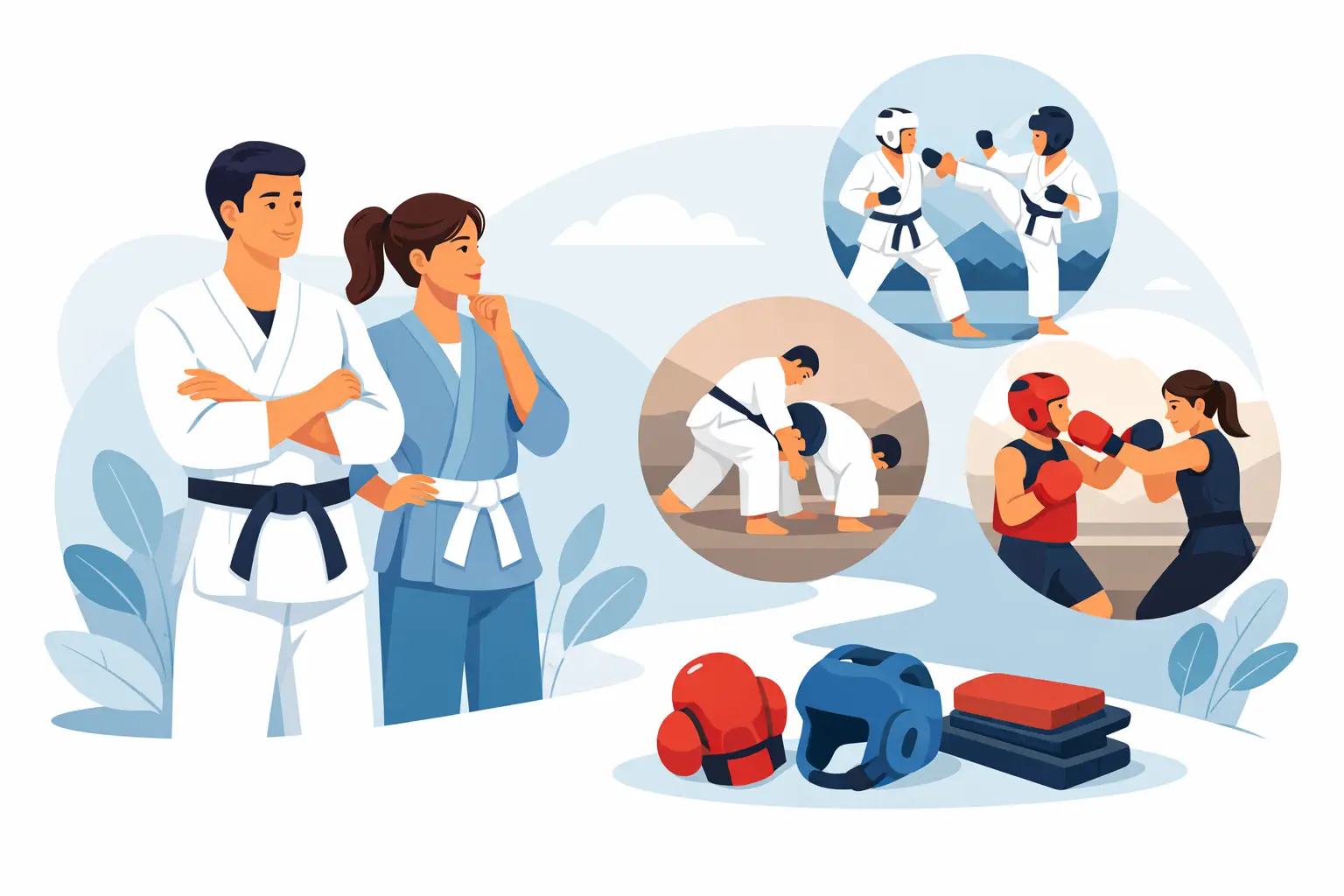
Karate is one of the clearest examples. In a beginner-friendly karate class, students build coordination, focus, posture, and self-control through basics, forms, and carefully supervised partner drills. Contact levels can be introduced gradually, which makes karate a strong choice for kids, teens, and adults who want practical skills without starting in a high-impact environment.
Japanese Jujutsu can also be a smart option when taught responsibly. Because it includes self-defense concepts, body mechanics, and controlled partner practice, it gives students useful skills while reinforcing awareness and discipline. The key is pacing. A good beginner program teaches breakfalls, positioning, and control before more advanced applications.
Wrestling and ground-based training can be safe and highly effective for beginners too, especially when coaches focus on movement, balance, and positional fundamentals rather than intensity alone. Ground training has a practical advantage for self-defense because it teaches students how to stay calm, escape pressure, and understand control. For many beginners, that creates real confidence.
Traditional weapons arts such as iaido or kenjutsu can also be beginner-friendly in the right setting because they emphasize precision, discipline, and technical accuracy. They are not usually the first choice for someone seeking fast-paced fitness or broad self-defense training, but they can be very safe introductions to martial arts for students drawn to tradition, focus, and technical growth.
The best style depends on the student
Parents often want one answer for every child, but there is no single best fit. A shy child may thrive in a structured karate class where routines build confidence over time. A high-energy teen may respond well to wrestling or a program that combines stand-up and ground work. An adult beginner may prefer a self-defense-focused class that balances practical application with steady conditioning.
That is why the phrase safe martial arts for beginners should never mean easy or watered down. Safe training still needs challenge. Students grow when they are pushed with purpose, corrected with care, and given goals they can reach through effort. The right program meets the student where they are, then helps them progress with consistency.
For families, versatility is a major advantage. Schools that offer more than one discipline can guide students into the program that fits their age, temperament, and goals. That matters because beginner success often comes down to staying engaged long enough to develop skill. If a student enjoys class, feels supported, and sees progress, they are more likely to keep training.
How a good school keeps beginners safe
A school does not become beginner-friendly by making everything soft. It becomes beginner-friendly by teaching with discipline and intention. When you visit a class, pay attention to what the instructor corrects. Are they focused on body position, awareness, and respect? Are beginners being guided closely, or left to figure things out on their own? Those details tell you a lot.
You should also notice how advanced students behave. In a strong academy, experienced students help set the tone. They partner responsibly, control their techniques, and treat new students with patience. That kind of culture protects beginners and helps them feel like they belong.
Progression is another sign of quality. A safe program does not rush students into high-risk drills for the sake of excitement. It builds layers. First movement, then technique, then timing, then resistance. This method is not slower in a bad way. It is how students build skill that actually lasts.
At Japanese Martial Arts Academy, that principle shows up in a dual-system approach that includes both stand-up and ground fighting. For beginners, this creates a more complete foundation without forcing them into a narrow training path. Students learn control, awareness, and practical self-defense in a structured environment designed for long-term growth.
What parents and adult beginners should look for
If you are a parent, ask whether classes are organized by age and skill level. Children need instruction that matches their developmental stage, not just smaller versions of adult training. The best youth programs use martial arts to build confidence, focus, discipline, and self-control while keeping expectations clear and manageable.
If you are an adult beginner, look for a school that respects your starting point. You should be challenged, but not embarrassed. You should leave class feeling worked, sharper, and motivated to return, not beaten down after the first session. A strong beginner class welcomes people who want to improve fitness, learn self-defense, and grow mentally as much as physically.
It also helps to ask about introductory options. A free trial or short-term pass gives you a chance to see whether the school teaches with the right balance of structure and encouragement. You can learn a lot in one week just by watching how instructors communicate and how students respond.
Common concerns about beginner safety
One concern is injury risk, and that is fair. Any physical activity carries some level of risk. Martial arts are no different. But well-taught classes reduce that risk through warm-ups, proper technique, controlled partner work, and clear supervision. The greater risk for many people is doing nothing at all and missing the chance to build strength, coordination, resilience, and confidence.
Another concern is contact. Not every beginner class starts with sparring, and not every style uses the same level of contact. Good programs introduce pressure gradually. Students learn how to protect themselves, how to stay composed, and how to train with control before intensity increases.
Parents sometimes worry that martial arts will make children aggressive. In a serious school, the opposite is usually true. Children learn boundaries, responsibility, and respect. They gain confidence, which often reduces the need to act out. Martial arts done properly channel energy instead of inflaming it.
The best first step is not finding a style with the safest reputation on paper. It is finding a school that teaches with experience, structure, and care. Safe martial arts for beginners are built through disciplined instruction, steady progression, and a community that wants every student to succeed. When those pieces are in place, beginners do more than stay safe. They build confidence, develop real skill, and discover what they are capable of.