
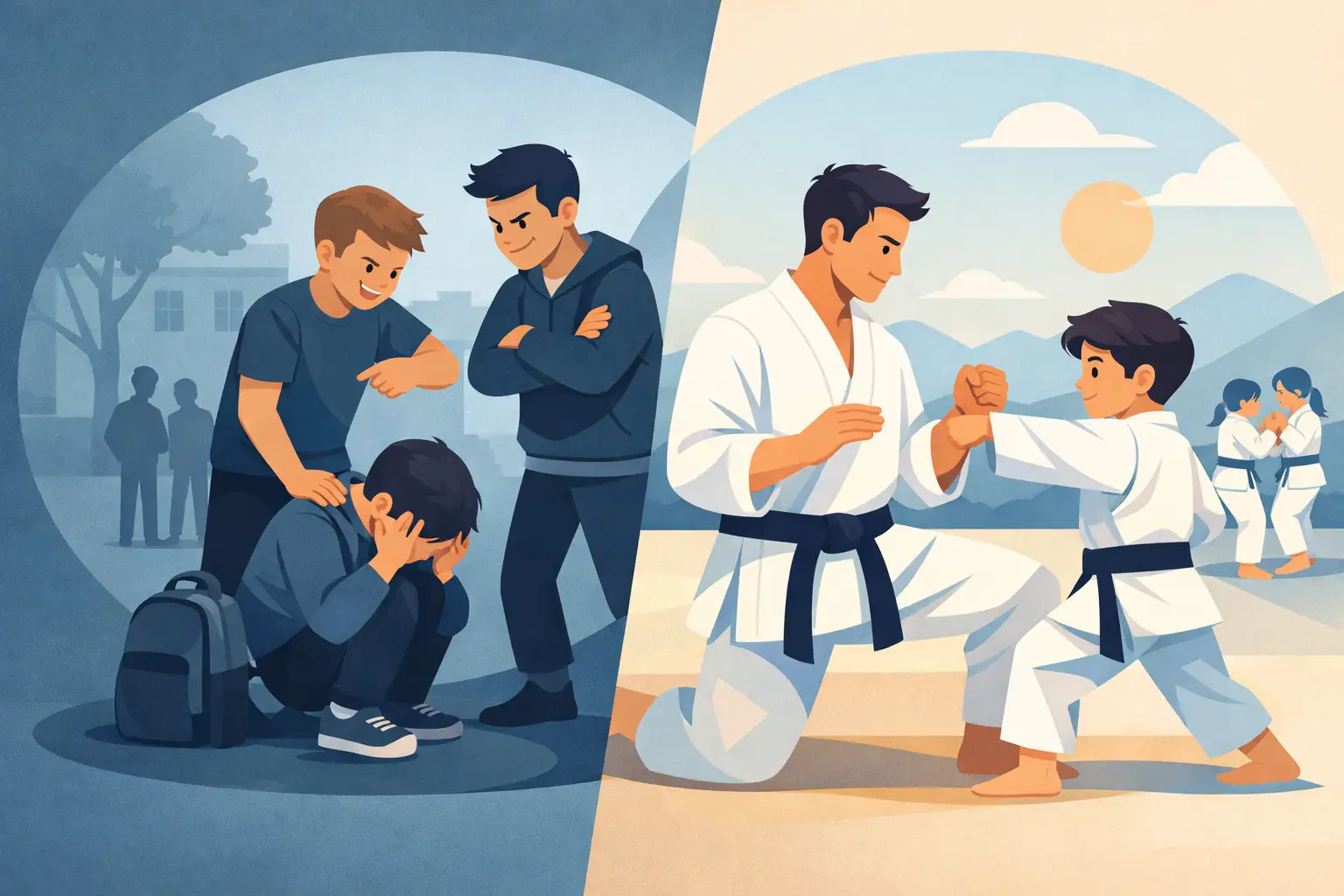
Do Martial Arts Help Bullying? Yes – Here’s How
A child who is being targeted at school usually does not need louder advice. They have already heard, “ignore it,” “tell a teacher,” or “stand up for yourself.” What many families are really asking is more specific: do martial arts help bullying in a way that creates real change? In many cases, yes – but not because martial arts teach kids to fight. The real value is that quality training helps children carry themselves differently, manage fear, use their voice, and respond with control under pressure.
That distinction matters. Parents are not looking for aggression. They are looking for confidence, discipline, and practical skills that help their child feel less vulnerable and more prepared.
Do martial arts help bullying at the root level?
Bullying often grows where a child appears isolated, unsure, or easy to intimidate. That is painful to say, but it is a reality many families see firsthand. Strong martial arts training can change that picture.
A good program improves posture, eye contact, awareness, and self-control. Those changes may seem small from the outside, but they are often the first things other kids notice. A student who moves with more confidence and speaks more clearly is less likely to look like an easy target.
This is one reason martial arts can help before a physical confrontation ever happens. The goal is not to create a child who wants conflict. The goal is to build a child who projects calm confidence and knows how to handle pressure.
What martial arts really teach children
The best martial arts schools do more than teach punches, kicks, or takedowns. They teach structure. For many kids, especially those dealing with social stress, structure is a major part of the solution.
In class, students learn to listen, follow directions, control their emotions, and keep going when something is difficult. They also practice speaking up. Answering loudly, introducing themselves, asking for help, and responding with confidence are all part of healthy training culture.
Over time, that carries into daily life. A child who has practiced staying composed during drills is often better equipped to stay composed when another student tries to embarrass or provoke them. A child who learns boundaries in training starts to understand personal boundaries outside the dojo as well.
That kind of growth does not happen overnight. It comes from consistent practice, strong instruction, and an environment that expects respect.
Confidence helps, but confidence alone is not enough
Some articles make this sound too simple. They suggest that once a child gains confidence, bullying disappears. Sometimes that happens. Sometimes it does not.
Certain bullying situations are verbal, social, or online. Others involve repeated physical intimidation. In those cases, confidence is necessary, but it is only one part of the answer. A child also needs situational awareness, verbal boundary-setting, adult support, and, when necessary, practical self-defense skills.
That is where serious martial arts training becomes especially valuable. A well-rounded program teaches students how to avoid trouble, how to de-escalate, and how to protect themselves if there is no other option. Those are very different lessons from teaching a child to “win a fight.”
For families, that difference should be non-negotiable. Training should produce restraint, not recklessness.
Why the right school matters more than the style
Parents often ask whether karate, jujutsu, wrestling, or another system is best for bullying prevention. The honest answer is that the school matters more than the label.
A strong instructor creates disciplined students. A weak instructor can turn even a respected style into little more than activity time. If a school tolerates ego, chaos, or careless sparring, it may not give a child the tools they actually need.
A quality academy teaches students when not to use force. It builds physical skills alongside emotional control. It also gives children realistic practice, so they do not freeze the first time someone gets in their space.
This is where a broader training approach can be especially useful. Stand-up skills help with distance, balance, and posture. Ground skills help if a confrontation becomes more physical. Together, they give students a more complete understanding of self-defense without feeding false confidence.
Do martial arts help bullying for shy or anxious kids?
Often, yes. In fact, these students may benefit the most.
Shy children are not weak. Anxious children are not incapable. But they may struggle to project confidence under stress, and that can affect how peers treat them. Martial arts gives them a place to practice courage in small, manageable steps.
The first win may be as simple as speaking loudly during class. Then it becomes performing in front of others, learning a new technique, handling partner drills, or staying calm during controlled pressure. Each success builds on the last.
That process matters because confidence that is earned tends to hold up better than confidence that is just talked about. A child who knows, from experience, that they can stay steady in a difficult moment is less likely to panic when tested socially or physically.
For many families, this is the turning point. They stop seeing martial arts as just an extracurricular activity and start seeing it as a way to build resilience.
What martial arts can and cannot do
Martial arts can absolutely be part of a bullying solution, but they are not a magic fix.
They can help a child build confidence, discipline, social skills, body awareness, and practical self-defense. They can reduce the chance that a child is singled out. They can give a student the tools to set boundaries and seek help with more confidence.
What they cannot do is control every school environment, stop every cruel comment, or replace involved parenting and school accountability. If bullying is severe, families still need to document problems, communicate with school staff, and stay closely engaged.
The healthiest approach is both-and. Build the child up through training, and address the environment through adult action.
Signs a martial arts program may help with bullying
Not every child needs the same kind of support, but there are a few signs that training may be a strong fit. If your child avoids eye contact, struggles with confidence, seems physically hesitant, has trouble setting boundaries, or has become withdrawn after peer conflict, a structured program may offer the support they need.
It can also help children who are not being bullied but are at risk of becoming overwhelmed socially. Training builds habits early. Better posture, stronger focus, emotional control, and respectful assertiveness all matter before a serious problem begins.
For teens, the benefit can be even more practical. Martial arts gives them a productive challenge, a stronger peer group, and an outlet for stress that does not come from screens or social media.
What parents should look for in a school
If bullying prevention is part of your reason for enrolling, ask direct questions. How does the instructor teach conflict avoidance? How are students taught to respond to verbal aggression? What happens if a child is nervous, timid, or overwhelmed? Is discipline part of every class, or just something mentioned in marketing?
Watch how instructors correct students. Watch how advanced students treat beginners. Respect should be visible on the floor.
At Japanese Martial Arts Academy, this kind of structured training matters because families need more than activity – they need a place where children and adults can build confidence through disciplined instruction, practical self-defense, and real support. That is especially important when a student is trying to recover from being picked on or pushed around.
The bigger win is not fighting back
When parents ask, “do martial arts help bullying,” they are usually hoping for something deeper than self-defense. They want their child to feel strong again. They want them to walk into school without that knot in their stomach. They want them to know they have options.
That is the real benefit of good training. It gives students tools, but it also gives them presence. They become harder to intimidate, better able to speak up, and more prepared to handle difficult moments without losing control.
And for many children, that change reaches far beyond the bullying itself. It shows up in the classroom, at home, with friends, and in the way they see themselves. Sometimes the most powerful result is not that a child learns to fight. It is that they no longer feel helpless.