
How Children Learn Respect Through Training
A child who talks back at home, melts down when corrected, or struggles to listen in group settings is not usually missing a lecture about manners. More often, they are missing repeated practice. That is the heart of how children learn respect – not through speeches, but through structure, example, and daily habits that teach them how to respond well even when they are tired, frustrated, or challenged.
For many parents, respect can feel like a vague goal. You want your child to listen, use self-control, and treat others well, but those behaviors do not appear overnight. Respect is learned in small moments. It shows up in how a child waits their turn, follows directions, accepts correction, and recognizes that other people matter too. Those are teachable skills, and they grow best in environments that are consistent.
What respect really looks like in a child
Respect is not blind obedience. That distinction matters. A respectful child is not simply quiet or afraid to speak. Real respect includes self-control, awareness, and the ability to respond appropriately to parents, teachers, coaches, and peers.
A child who is learning respect begins to understand boundaries. They start to see that rules are not random. They exist to create safety, fairness, and order. That understanding often changes behavior more effectively than punishment alone. When children know what is expected and why it matters, they are more likely to cooperate with confidence instead of resisting every correction.
Respect also includes respect for self. Children who carry themselves with confidence, take responsibility for their actions, and learn to manage emotions are less likely to lash out or seek attention through poor behavior. In that sense, respect is both outward and inward. It affects how a child treats others and how they value their own conduct.
How children learn respect at home first
The home is the first training ground. Children learn how to speak, listen, apologize, and handle frustration by watching the adults around them. Parents set the tone, not by being perfect, but by being steady. If expectations change every day, children get mixed signals. If correction only happens when adults are already angry, kids often learn fear or defiance instead of respect.
Consistency matters more than intensity. A calm, firm correction repeated over time teaches more than a loud reaction once in a while. Children need to know that disrespectful behavior will be addressed and that respectful behavior will be noticed. That does not mean praising every small action. It means reinforcing the habits you want to grow.
There is also a trade-off parents should expect. Strong boundaries can create pushback at first, especially if a child is used to negotiating every instruction. That does not mean the boundary is wrong. It often means the child is adjusting to a new standard. Respect grows when children learn that they can feel disappointed without controlling the room.
Why clear structure teaches respect faster
Children thrive when expectations are clear. In unstructured settings, behavior often swings with mood. In structured settings, children begin to understand rhythm, routine, and accountability. They learn when to speak, when to listen, how to line up, how to wait, and how to reset after making a mistake.
This is one reason organized activities can have such a strong effect on behavior. A well-run class teaches more than the subject itself. It teaches conduct. The child starts to connect actions with consequences and effort with progress. They see that instruction has value and that improvement comes from paying attention.
That process is especially powerful when adults lead with calm authority. Children respond well to leaders who are firm, fair, and predictable. They do not need constant yelling. They need standards. When those standards are upheld with consistency, respect stops feeling optional.
How children learn respect in martial arts
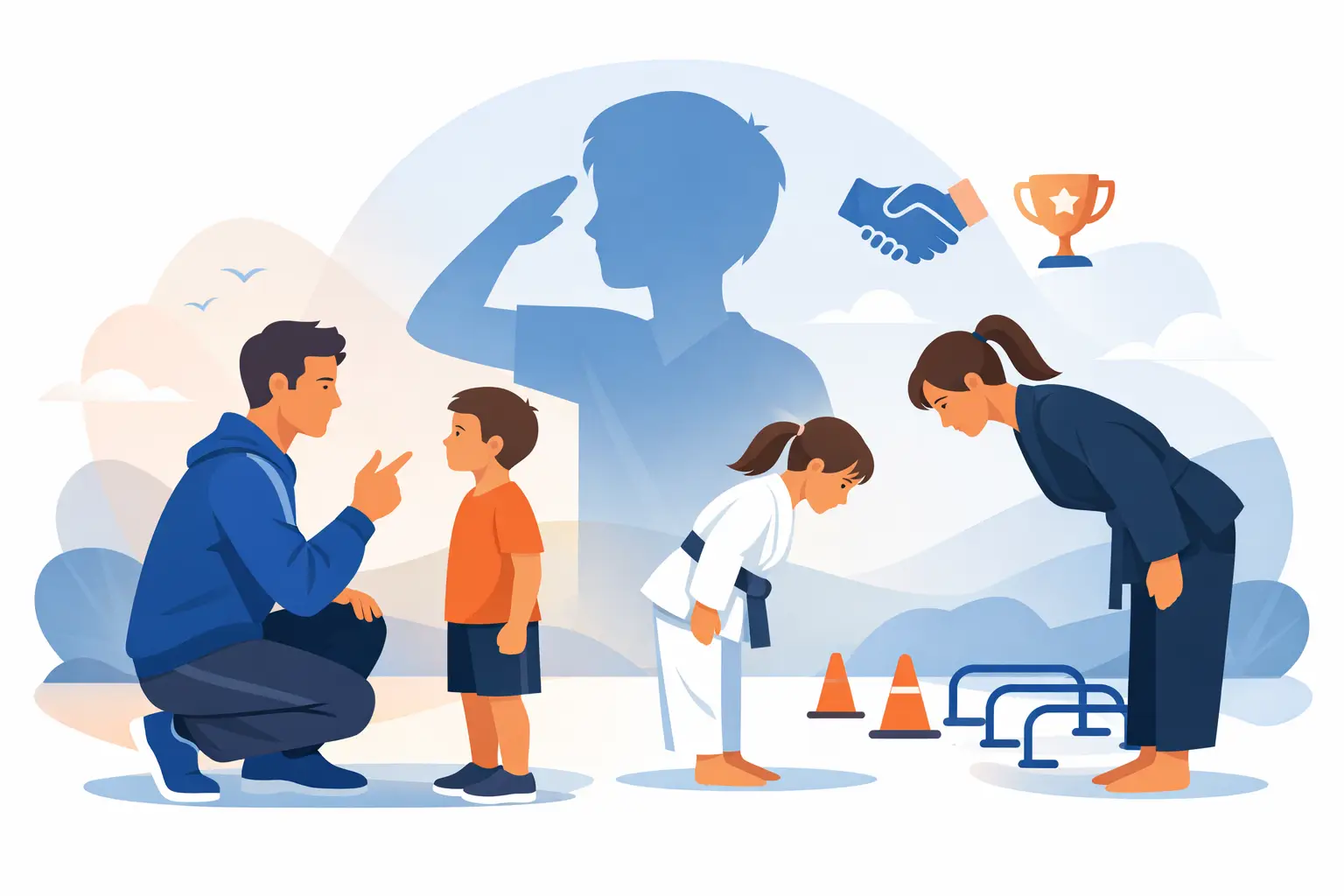
Martial arts provides one of the clearest examples of how children learn respect because the training environment makes expectations visible. Students bow, stand ready, listen when an instructor speaks, and practice control before power. They are taught that skill without discipline is incomplete.
That matters for children who have plenty of energy but need direction. In a strong martial arts class, a child quickly learns that class time is not free play. There is a place to focus, a time to move, and a standard for behavior. They discover that respect is part of advancement. You do not earn trust by being the loudest in the room. You earn it by showing self-control, effort, and coachability.
Traditional training also helps children separate confidence from arrogance. A student can become more capable physically while also becoming more humble. They learn to partner safely, respond to correction, and treat classmates with care. For some children, this is the first time they experience a system where discipline feels meaningful rather than restrictive.
At Japanese Martial Arts Academy, that kind of structured training is central to student growth. Children are not only learning techniques. They are learning how to carry themselves with discipline, composure, and respect in class, at home, and at school.
Respect grows through repetition, not one big breakthrough
Parents sometimes hope for a single moment when everything clicks. Usually, that is not how it works. Respect is built through repetition. A child may need dozens of reminders to stand still, answer appropriately, or follow through the first time. That is normal.
The key is that repetition should happen inside a stable system. When expectations stay the same, children start building reliable habits. At first, they may act respectfully only when watched closely. Over time, that behavior becomes more internal. They begin making better choices before being reminded.
Progress is rarely perfectly linear. A child may do well for two weeks, then have a rough day. That does not erase growth. It means they are still learning. Respect is a discipline, and discipline develops through practice under pressure, not comfort alone.
The role of correction, consequences, and encouragement
Children do not learn respect from encouragement alone. They also need correction. Healthy correction shows a child that actions have weight and that poor behavior does not get ignored. The goal is not shame. The goal is accountability.
Consequences work best when they are immediate, proportional, and connected to the behavior. If a child interrupts constantly, they may lose a privilege or need to step back and reset. If they speak disrespectfully, they should be required to try again appropriately. This teaches that respect is not just a feeling. It is a way of acting.
At the same time, children need encouragement when they improve. Not empty praise, but specific recognition. When a child handles frustration better, listens the first time, or accepts correction without arguing, that should be noticed. Those moments build momentum. Kids are more likely to repeat behavior that gets clear, honest reinforcement.
Why role models matter so much
Children study adults closely. They notice how parents handle stress, how instructors lead, and how older students behave. If the adults in their lives demand respect but show little themselves, children will see the gap. If adults remain composed, speak firmly without disrespect, and treat others with dignity, children absorb that standard.
Peer influence matters too. In a healthy class culture, children see others following directions, showing courtesy, and working hard. That social environment can accelerate growth. A child who resists structure in one setting may accept it more readily when it is simply the norm among peers.
This is why community matters. Respect is easier to learn when it is part of the culture, not just a rule posted on the wall.
What parents should expect as respect develops
As children mature in respectful behavior, parents usually notice changes beyond manners. Kids often become more coachable, more patient, and more confident. They may handle losing better, recover from correction faster, and show more awareness of how their behavior affects others.
That said, age and temperament still matter. A six-year-old and a twelve-year-old will not show respect in exactly the same way. Some children are naturally compliant but need confidence. Others are bold and capable but need stronger self-control. Good teaching adjusts to the child without lowering the standard.
The goal is not to raise children who never question anything. It is to raise children who can disagree without being disrespectful, handle authority without resentment, and carry themselves with discipline wherever they go. That kind of respect serves them in school, in friendships, at home, and later in life.
Children do not become respectful by accident. They grow into it through examples worth following, boundaries that stay firm, and training that asks something of them every time they show up. When a child learns to listen, respond, and lead themselves well, respect stops being something you demand and starts becoming part of who they are.