
Top Benefits of Martial Arts for Families
A child who hesitates to speak up at school, a teen glued to a screen, and an adult looking for a healthier way to manage stress may seem like very different situations. Disciplined training can help with all three. The top benefits martial arts training offers reach far beyond learning how to punch, block, or escape a hold. With the right instruction, students build habits that carry into school, work, home life, and everyday challenges.
For families in Sapulpa, martial arts can become a shared source of structure, encouragement, and progress. Every class gives students a clear goal, skilled coaching, and a chance to improve through effort. That combination matters whether your child is a complete beginner or you are ready to pursue a stronger, more capable version of yourself.
Top Benefits of Martial Arts Training
Confidence that comes from earned progress
Real confidence is not pretending to be fearless. It is knowing you can handle a difficult task because you have practiced, made mistakes, and kept going. Martial arts gives students regular opportunities to earn that confidence.
A beginner may start by learning a basic stance, a safe fall, or a simple sequence of movements. Over time, those skills become more precise. Students test themselves through drills, controlled partner work, and belt advancement. Each milestone proves that consistent effort produces results.
This is especially valuable for children. When a child sees that focus and practice help them improve, they begin to approach challenges differently. They may raise their hand more often, recover faster from setbacks, and carry themselves with greater assurance. Teens and adults benefit from the same process. Training provides a healthy reminder that progress does not require perfection on day one.
Focus, discipline, and better self-control
Martial arts classes have clear expectations: listen closely, follow instructions, respect training partners, and give full effort. Students learn that discipline is not a punishment. It is a tool for reaching goals.
For kids, this structure can strengthen the skills parents want to see at home and teachers want to see in the classroom. Students practice waiting their turn, remembering sequences, controlling their energy, and responding calmly when corrected. Those habits are useful long after class ends.
Adults often discover that training restores focus in a different way. A demanding class requires you to be present. You cannot spend the entire session worrying about emails, chores, or tomorrow’s schedule while working through footwork, technique, and conditioning. That mental reset can be one of the most valuable parts of consistent practice.
Fitness With a Purpose
A treadmill workout can improve conditioning, but many people lose interest when exercise feels repetitive. Martial arts makes movement purposeful. Students build endurance, coordination, balance, flexibility, mobility, and strength while learning skills they can use.
Stand-up training develops footwork, timing, striking mechanics, defensive movement, and body awareness. Ground-fighting instruction adds another layer by teaching students how to move, control position, and respond when a confrontation becomes close-range. A dual-system approach helps create well-rounded conditioning because the body must work in different ways.
The intensity should match the student. A young child does not need an adult-level workout, and a brand-new adult should not be pushed past safe limits just to prove something. Quality instruction scales the challenge. Students work hard, but they also learn correct technique, safe training habits, and how to progress at a sustainable pace.
A healthier alternative to sedentary routines
Families have busy schedules, and screens can fill the gaps quickly. Martial arts gives children and teens an active routine that asks more of them than simply showing up. They must think, move, cooperate, and persist.
That does not mean every student leaves class completely exhausted every time. Some days focus on conditioning, while others emphasize forms, technical detail, weapon safety, or partner drills. The variety keeps training engaging and helps students develop an appreciation for movement that is not based on appearance or a number on a scale.
Practical Self-Defense Starts With Awareness
Self-defense is more than a collection of moves. It includes awareness, sound judgment, verbal boundaries, physical positioning, and the ability to act when leaving is not immediately possible. Responsible martial arts training should teach students to avoid trouble whenever they can, not to seek conflict.
Still, having practical skills matters. Students can learn how to create distance, protect themselves from common attacks, maintain balance, escape certain grabs, and respond if a situation goes to the ground. Training in both stand-up and ground ranges gives students a broader understanding than a single-style approach alone.
There is an important trade-off here: self-defense skills require regular practice. Watching a video or attending one class does not create reliable reactions under pressure. Students become more capable through repetition, supervised partner work, and instruction that puts safety first. The goal is calm readiness, not aggression.
Respect for others and respect for the responsibility of skill
Traditional Japanese martial arts place strong value on respect. Students bow, follow class etiquette, care for equipment, and recognize the role of instructors and training partners. These practices are not empty rituals. They help create a safe environment where everyone can learn.
A skilled student should become more controlled, not more reckless. Children learn that strength is not permission to bully. Teens learn to manage ego and frustration. Adults learn that restraint often takes more discipline than reacting emotionally. Those lessons are just as meaningful as the physical techniques.
Why Families Benefit From Training Together
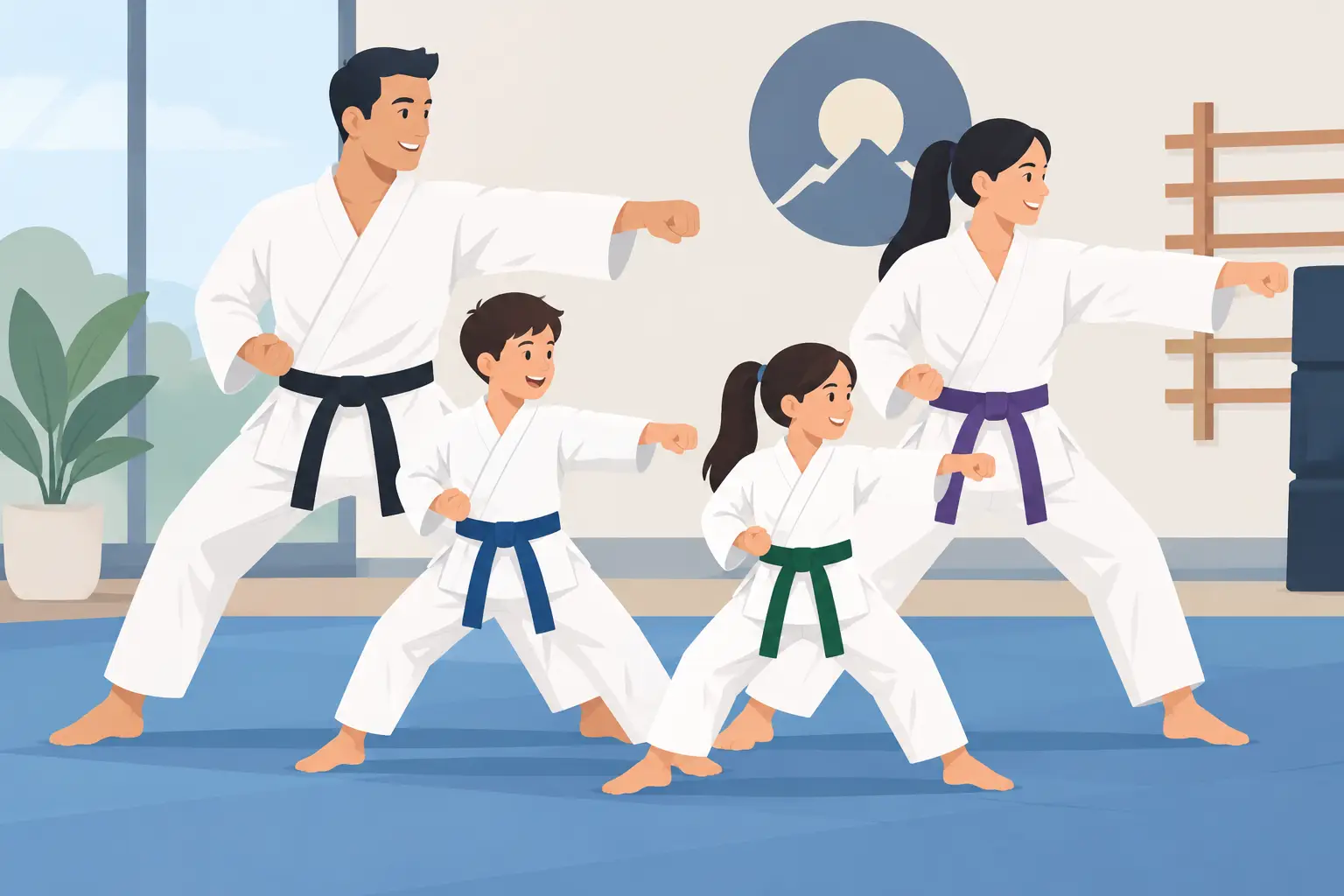
Finding one activity that can serve children, teens, and adults is not always easy. Family martial arts programs create a shared point of connection while allowing each person to progress at the right level. A parent does not need to have prior experience to support a child, and a child does not need to train exactly like a parent to feel part of the same community.
When families train together, they gain a positive language for effort. Instead of only asking, How was your day?, they can talk about a new technique, a difficult drill, or a belt goal. Parents also get to model persistence. That can be powerful for kids who need to see that adults are still learning too.
At Japanese Martial Arts Academy, students can explore traditional disciplines such as Goju-ryu Karate, Japanese Jujutsu, Iaido, Kenjutsu, and Wrestling within a structured, welcoming environment. Specialty options can add extra excitement, but the foundation remains the same: build capable students through disciplined instruction, practical skills, and strong character.
The Benefits Depend on Consistency
Martial arts is not a quick fix for low confidence, poor focus, or fitness goals. A student may have an awkward first class. A child may struggle with attention before the routine becomes familiar. An adult may need time to rebuild mobility or conditioning. That is normal.
The results become visible through consistent attendance and a willingness to learn. Over weeks and months, students often stand taller, listen more carefully, move with greater coordination, and handle challenges with more composure. Belt rank can mark progress, but the deeper change appears in how students act outside the dojo.
The best first step is simply to try a class with an open mind. Look for qualified instructors, age-appropriate structure, a respectful training culture, and a program that teaches both skill and character. When a student finds that kind of environment, martial arts can become more than an activity on the calendar. It can become a steady practice of growing stronger, calmer, and more confident together.