
How to Choose a Youth Dojo With Confidence
A youth dojo should feel different the moment you walk through the door. Students should be moving with purpose, instructors should know their names, and parents should see structure without seeing fear. The right program can help a child build confidence, focus, self-control, and practical skills. The wrong one can become just another activity your child is ready to quit after a few weeks.
Knowing how to choose a youth dojo starts with looking beyond uniforms, trophies, and flashy demonstrations. Your child needs a school that takes their safety seriously, challenges them at the right pace, and teaches lessons that carry into school, home, and everyday life.
How to Choose a Youth Dojo That Fits Your Child
Every child comes into martial arts with different needs. One may need a constructive outlet for energy. Another may be quiet, hesitant, or struggling to speak up. A teen may want real self-defense skills, fitness, and a stronger sense of direction.
That is why the best dojo is not always the largest school, the closest building, or the program with the lowest introductory price. Look for a school that can explain how its training serves students at different ages and experience levels. A quality youth program has a clear path for beginners while still giving committed students room to grow.
Ask what a typical class looks like. Young students need more than drills and exercise. They need consistent routines, clear expectations, coaching that corrects without shaming, and goals they can work toward. A well-run class balances discipline with encouragement so children learn that effort matters and progress is earned.
Watch the Instructor, Not Just the Curriculum
A dojo may offer an impressive list of styles, but the instructor on the floor shapes your child’s experience every week. Watch how they speak to students. Are corrections calm, specific, and respectful? Do they keep the group focused while still making beginners feel welcome? Can they redirect a distracted child without embarrassing them?
Strong instructors do not simply teach punches, kicks, throws, or forms. They teach responsibility. They expect students to listen, control their bodies, work through frustration, and treat training partners with respect. Those expectations are especially valuable for children because martial arts becomes a place to practice character under pressure.
Experience matters, but credentials alone are not enough. An instructor can have decades of training and still struggle to communicate with young students. Look for both technical knowledge and the ability to connect. The best teachers can explain a movement simply, demonstrate it correctly, and help a nervous child believe they can improve.
Look for Safety With Real Standards
Martial arts should be challenging, but challenge is not the same as chaos. Before enrolling, ask how the dojo manages safety during sparring, grappling, weapons practice, and partner drills. Age-appropriate instruction, close supervision, clean training areas, and clearly taught rules should be visible from the first visit.
A good youth dojo does not rush children into contact they are not ready for. Students should first learn body control, distance, proper falling skills when applicable, and how to respect a partner. When sparring or grappling is introduced, it should be structured rather than uncontrolled. The goal is to develop awareness and confidence, not to prove who is toughest.
It also helps to ask how instructors handle injuries, bullying, and repeated unsafe behavior. No parent expects every class to be risk-free, but they should expect a school with clear procedures and leaders who address problems immediately.
Choose Training That Builds Useful Skills
Some youth programs focus mostly on forms, while others center on sport competition, fitness, or self-defense. None of these approaches is automatically wrong. The best choice depends on what your family wants from martial arts and what keeps your child engaged.
Still, a broad foundation gives young students more tools for life. Stand-up skills can build coordination, balance, distance management, and confidence. Ground-fighting instruction can teach a child how to stay calm, escape pressure, and regain control if a situation goes to the ground. Training across both areas creates a more complete understanding of personal safety than a narrowly focused program alone.
Traditional martial arts also have lasting value when they are taught with purpose. Forms, etiquette, rank advancement, and Japanese martial arts traditions can give children a sense of belonging and pride in disciplined practice. They learn that progress is not instant. It comes from showing up, practicing details, and staying committed when something is difficult.
At Japanese Martial Arts Academy, students can develop through a dual-system approach that combines stand-up combat training with ground fighting, alongside traditional Japanese disciplines. That kind of variety can be especially helpful for families with more than one student, since children, teens, and adults may each find a training path that fits their goals.
Pay Attention to the Culture Parents Do Not See Online
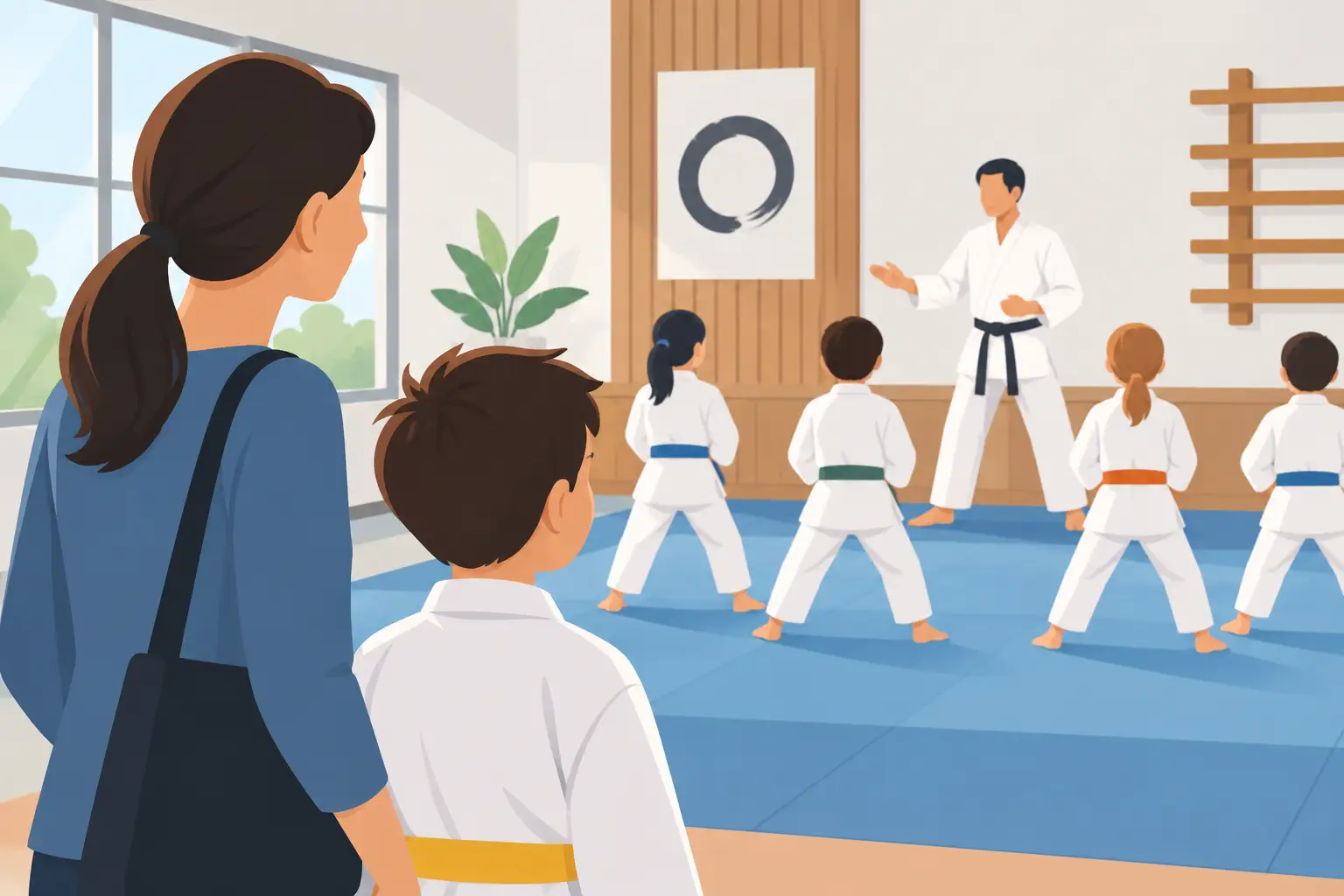
A website can tell you what classes are offered. A visit tells you how the school feels. Arrive a few minutes early and watch what happens before class starts. Are older students helpful to beginners? Do students greet instructors respectfully? Are parents comfortable asking questions? Is the atmosphere focused, welcoming, and organized?
The right dojo creates a community where students are expected to work hard without feeling isolated. This matters when a child has a rough day, misses a technique repeatedly, or feels intimidated by more experienced classmates. A supportive culture keeps children training long enough to experience the confidence that comes from overcoming real challenges.
Be cautious if a school relies on pressure, makes unrealistic promises, or treats every child the same regardless of maturity and ability. Martial arts can transform a young person, but that transformation takes patient instruction and consistent effort. A trustworthy dojo will be honest about that process.
Understand the Path for Progress
Children are motivated by visible progress, and rank can be a powerful tool when it represents genuine learning. Ask how belt testing works, what students must demonstrate, and whether instructors give feedback between tests. A meaningful rank system should reward attendance, attitude, skill development, and effort, not simply time or payment.
Progress should also extend beyond belt color. Notice whether the program helps students set personal goals: making eye contact, improving focus, learning to lead warm-ups, controlling emotions after a mistake, or helping a new classmate. These wins are often the ones parents notice at home.
For teens, a clear progression can be even more important. Adolescence brings more independence and more pressure. A dojo that offers advanced training, leadership opportunities, and challenging material can give teens a productive place to direct their energy while building fitness and practical self-defense awareness.
Take a Trial Class Before You Decide
The best way to choose a youth dojo is to let your child experience it. A trial class reveals more than a sales conversation ever can. Notice whether your child is treated with patience, whether they understand the instructions, and whether they leave feeling proud of trying something new.
Do not expect every child to be instantly comfortable. Some children need a few classes to settle in, especially if they are shy or unfamiliar with group activities. What matters is whether the instructors recognize that hesitation and provide the right level of encouragement. Your child should feel challenged, never overlooked.
Also consider the practical side. Class times, drive distance, family scheduling, tuition, and attendance expectations all matter. The ideal program is one your family can attend consistently. Martial arts rewards repetition, and a convenient, well-organized schedule can make the difference between a short-term interest and a lasting habit.
A good youth dojo gives children more than an activity after school. It gives them a place to stand taller, listen better, make friends, and discover what disciplined effort can do. Visit, observe, ask direct questions, and trust the evidence you see on the mat. The right training environment will help your child grow stronger in far more ways than one.