
7 Top Extracurriculars for Active Families
A family calendar can fill up fast, yet not every activity gives back what it takes. The best top extracurriculars for active families do more than keep children busy after school. They build stronger bodies, sharper focus, real confidence, and habits that carry into the classroom, at home, and into adulthood.
For many Sapulpa-area parents, the real question is not, “What can my child do?” It is, “What activity will help my child grow while still fitting our family’s values, energy, and schedule?” The answer depends on your child, but certain programs consistently deliver meaningful results.
What Makes an Extracurricular Worth the Commitment?
An active family does not necessarily need more activity. It needs the right kind of activity. A worthwhile program gives children a clear structure, safe instruction, measurable progress, and a reason to return each week. It should also support parents rather than turn every evening into a stressful race between practices, homework, and dinner.
Look beyond the uniform, equipment, or final score. Ask whether instructors set expectations, teach respect, and help students work through frustration. Ask whether beginners receive encouragement without being handed empty praise. The strongest extracurricular programs teach children that confidence is earned through consistent effort.
Family fit matters, too. A highly competitive travel sport may be a great choice for a child who loves the challenge and has the available time. For another family, multiple practices, weekend tournaments, and long drives may create more pressure than progress. There is no single perfect activity. The goal is to choose one that helps your family stay active without losing the connection that makes family life work.
7 Top Extracurriculars for Active Families
1. Martial arts
Martial arts stand out because they combine physical activity with personal development. Students learn how to move with coordination, improve balance, build strength, and develop practical self-defense awareness. Just as important, they practice listening, following directions, controlling emotions, and staying respectful under pressure.
Unlike activities that separate children by age or skill level alone, martial arts can provide a long-term path of progress. A beginner has clear goals to work toward, from learning basic stances and techniques to earning rank through effort and disciplined training. That visible progress can be especially powerful for children who need help building confidence or focus.
Martial arts also work well for multigenerational families. A child can train alongside a parent, teen sibling, or even a grandparent in an age-appropriate setting. At Japanese Martial Arts Academy, families can explore traditional Japanese systems while developing both stand-up and ground-fighting skills, creating a more complete foundation than a single-style fitness class.
2. Youth wrestling
Wrestling is demanding in the best sense of the word. It teaches children how to use leverage, body control, endurance, and determination. Because wrestling requires close contact and constant adjustment, students learn to remain calm when a challenge is right in front of them.
For active children with plenty of energy, wrestling provides a direct and productive outlet. It can improve coordination and conditioning while teaching athletes how to handle both wins and losses with maturity. A well-coached wrestling program makes it clear that effort, preparation, and sportsmanship matter as much as the final result.
The trade-off is intensity. Wrestling can be physically challenging, and competition may not suit every child at first. Families should look for coaches who prioritize proper technique, safety, and age-appropriate expectations rather than pushing young athletes too hard too soon.
3. Team sports
Soccer, basketball, baseball, softball, and volleyball offer children an opportunity to move, communicate, and contribute to something bigger than themselves. Team sports are particularly valuable for kids who enjoy shared goals and the excitement of game day. They learn how to accept coaching, support teammates, and recover when a play does not go their way.
The best fit often comes down to personality and season. A child who dislikes constant contact may thrive in baseball or volleyball. A child who enjoys nonstop movement may prefer soccer or basketball. Try a recreational league before committing to a more competitive program, especially if your family is still learning what schedule feels sustainable.
4. Dance and movement classes
Dance develops strength, flexibility, rhythm, posture, and body awareness. It gives children a disciplined way to express themselves while learning how repetition and attention to detail lead to improvement. For many students, performing in front of others also becomes a powerful confidence-building experience.
Dance is not only for children who already see themselves as performers. Boys and girls can benefit from the athletic control, endurance, and coordination it requires. It can complement martial arts, team sports, or wrestling by improving mobility and helping students become more comfortable in their own bodies.
As with any activity, program culture matters. Look for an instructor who challenges students while keeping the environment respectful and encouraging. Healthy standards build resilience. Constant comparison does not.
5. Outdoor adventure programs
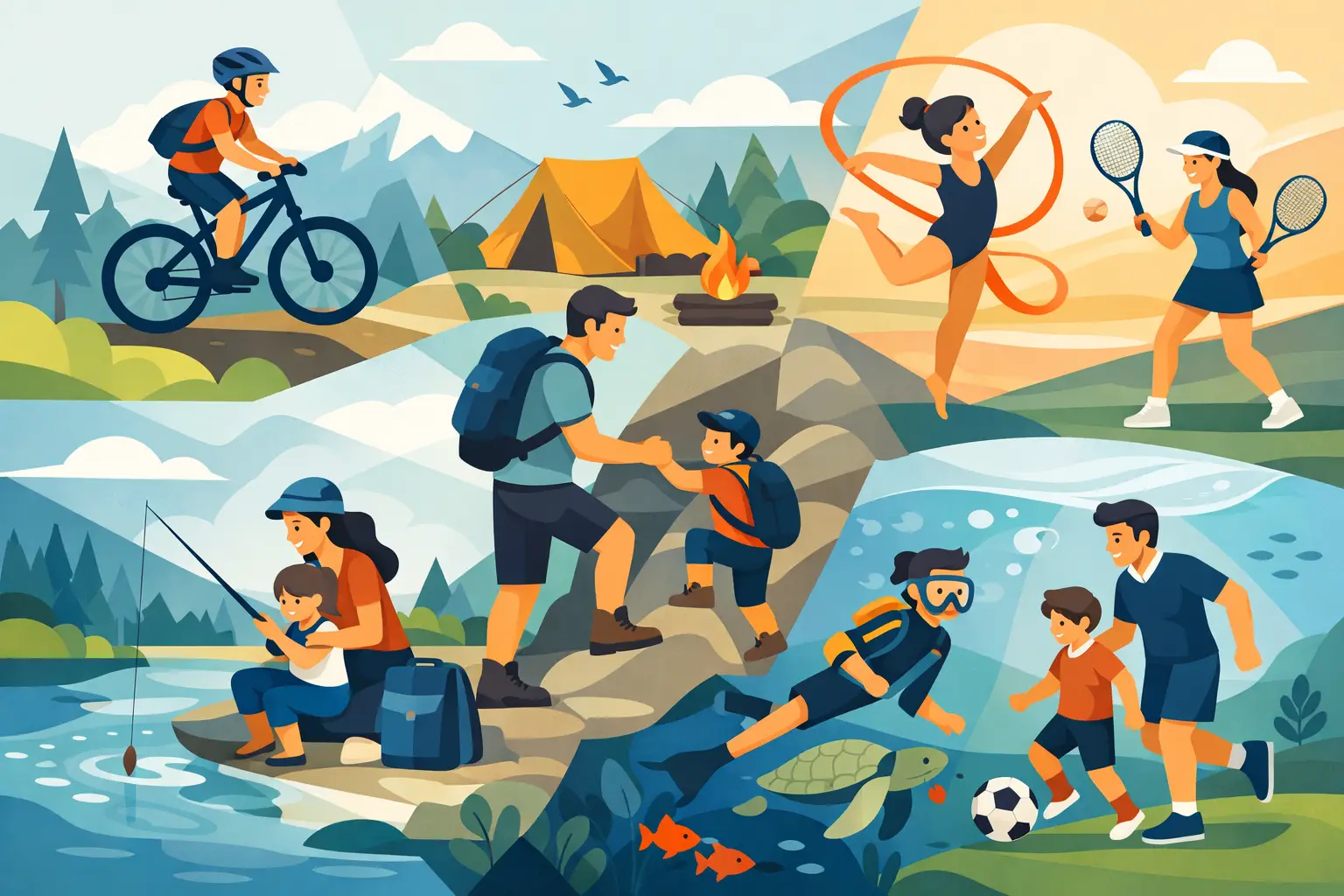
Hiking clubs, climbing programs, cycling groups, fishing teams, and outdoor skills classes give active families a welcome break from indoor routines. Children learn to respect nature, prepare for changing conditions, and take responsibility for gear, safety, and teamwork.
Outdoor programs can be an excellent choice for children who struggle to sit still or spend too much time on screens. The environment naturally invites curiosity and movement. It also gives families a shared interest they can continue on weekends, whether that means visiting a local trail, taking a bike ride, or practicing basic camping skills.
Keep access and weather in mind. Some outdoor programs require equipment, transportation, or seasonal flexibility. A simple local program may be a better long-term fit than an ambitious activity that becomes difficult to maintain.
6. Swimming
Swimming is one of the most valuable life skills a child can learn. It builds full-body conditioning with low impact on growing joints, and it gives children greater confidence around water. Structured swim lessons teach technique, breathing control, endurance, and safety in a setting where discipline truly matters.
For families who spend time at lakes, pools, or on vacation near water, swim training provides practical peace of mind. It may not carry the same social rhythm as a large team sport, but it can be a strong choice for children who prefer individual progress and clear skill milestones.
7. Youth leadership and service programs
Not every active extracurricular has to be built around competition. Scouting, youth leadership groups, community service projects, and organized volunteer programs help children develop initiative, responsibility, and empathy. Many include physical components such as outdoor projects, events, camps, or team challenges.
These programs are particularly valuable for families who want children to see leadership as service, not simply being in charge. A child who helps organize a food drive, clean a neighborhood space, or mentor a younger student gains a different kind of confidence: the knowledge that their effort can help other people.
How to Choose Without Overloading the Schedule
Start with one primary activity and give it time. Children often need several weeks to move past the discomfort of being new. Switching constantly can prevent them from experiencing the reward that comes after steady practice.
Pay attention to what happens after class or practice. A good challenge may leave your child tired, but it should also leave them proud, engaged, or eager to improve. If they are consistently anxious, exhausted, or losing interest in school and family time, the schedule may need adjustment.
It also helps to choose programs with values that reinforce your own. If you want your child to develop discipline, seek instructors who model discipline. If you want more confidence, find a program that lets students earn progress through real work. The activity itself matters, but the culture surrounding it matters just as much.
The right extracurricular should give your child a place to move, learn, and belong. Choose a program that challenges them with purpose, then give them the steady support to discover what disciplined effort can do.