
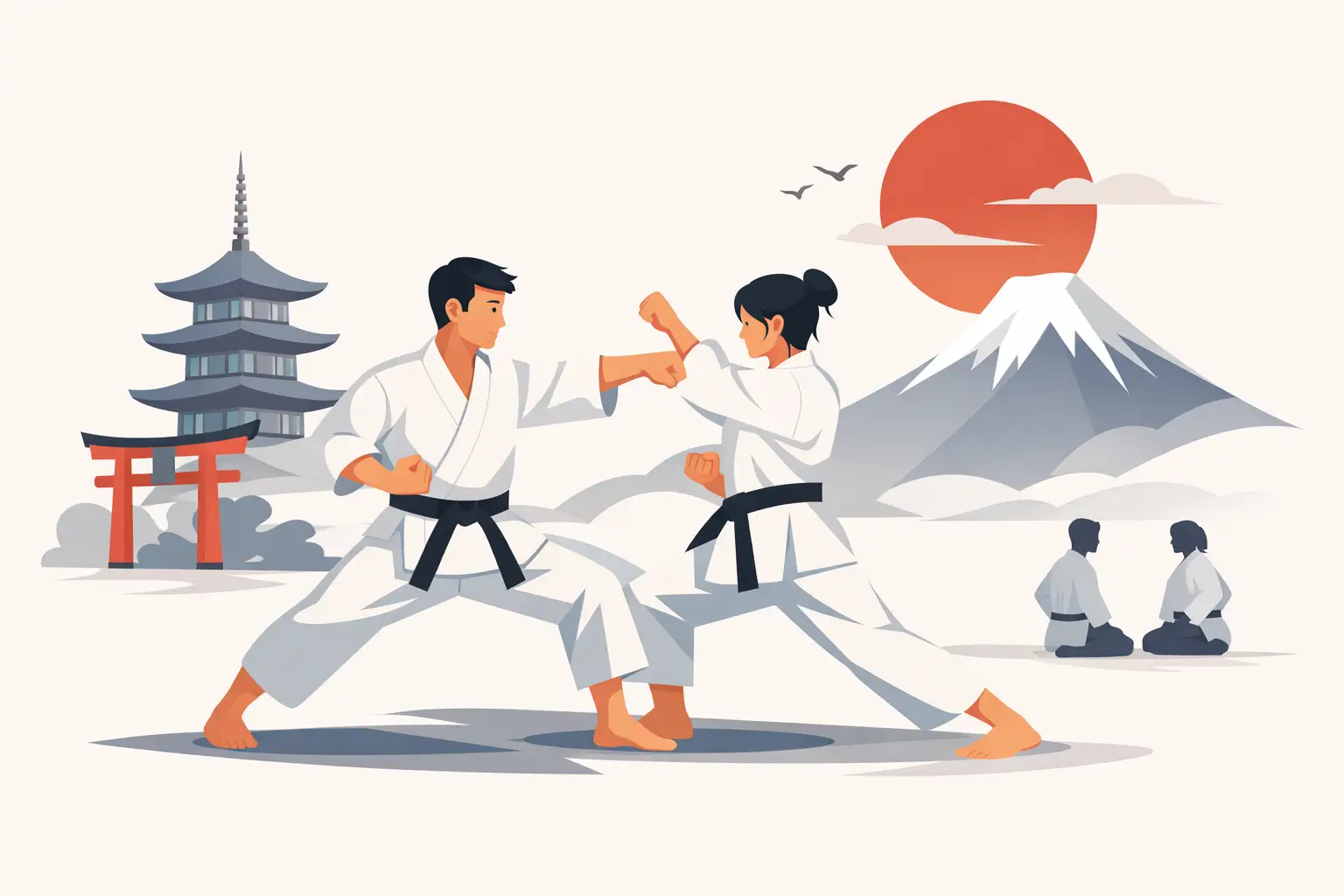
Japanese Goju Ryu Training Guide for Beginners
The first time a student settles into a deep stance, drives a focused punch, and hears the sound of a class moving together, Japanese Goju ryu training becomes more than exercise. This traditional karate system gives children, teens, and adults a clear path to stronger bodies, calmer minds, and practical self-defense skills. For families looking beyond a screen-time activity or a basic fitness class, it offers structured progress that students can feel in every lesson.
Goju-ryu is not built around flashy techniques or quick belt promises. It asks students to practice with attention, respect their training partners, and develop control before speed. That standard is exactly why it remains valuable for beginners and experienced martial artists alike.
What Makes Japanese Goju-Ryu Different?
Goju-ryu translates to “hard-soft style.” The name describes the balance at the center of the system. Students learn hard techniques such as solid strikes, blocks, rooted stances, and direct movement. They also learn soft skills such as breathing, circular motions, balance, redirection, and close-range control.
That combination matters in real training. A student who only knows how to hit may struggle when space gets tight or an opponent grabs hold. A student who only moves lightly may lack the structure to protect themselves under pressure. Goju-ryu develops both sides: the ability to generate force and the ability to stay composed, adjust position, and respond with control.
Traditional forms, called kata, are a major part of the curriculum. Kata are not empty dance routines. They teach posture, timing, body mechanics, defensive angles, transitions, and concentration. When students practice a kata carefully, they build habits that carry into partner drills and self-defense training.
For children, this structure creates a healthy routine of listening, trying, correcting, and improving. For adults, it provides a demanding but approachable way to rebuild fitness, reduce stress, and train skills with purpose.
Japanese Goju Ryu Training Guide: Your First Months
Beginning karate can feel intimidating if you have never trained before. The good news is that progress does not depend on arriving in perfect shape or knowing Japanese terminology. It starts with consistency, a willingness to learn, and an instructor who can teach fundamentals safely.
Start with stance, posture, and balance
Before a student throws fast combinations, they need a stable base. Goju-ryu training teaches students to stand with knees engaged, hips aligned, shoulders relaxed, and weight under control. This foundation improves the power and safety of every block, strike, kick, and turn.
Expect to spend time in basic stances. They can make the legs work hard, especially for new students, but the goal is not to hold an uncomfortable position forever. The goal is to develop awareness of where the body is and how to move without losing balance. Children often gain coordination and body control. Adults frequently notice improved mobility, posture, and leg strength.
Learn a small number of techniques well
A quality beginner class does not overwhelm students with dozens of complicated moves. It builds a dependable base through repeated practice of straight punches, basic blocks, open-hand positions, front kicks, controlled turns, and defensive footwork.
Repetition is where confidence grows. At first, a student may need to think through every step. With patient practice, the movements become more natural. That frees the mind to focus on distance, timing, breathing, and awareness.
The trade-off is simple: slow practice can feel less exciting than rushing into advanced techniques. But students who respect the basics develop cleaner technique and safer habits. Speed and power have more value when they are built on control.
Train breathing with purpose
Breathing is a defining feature of Goju-ryu. Students learn to avoid holding their breath, use controlled exhales, and stay steady during challenging drills. Proper breathing supports endurance, helps the body stay relaxed when it needs to move, and gives students a practical tool for settling their focus.
For a child, that lesson can carry into school, sports, and stressful moments at home. For teens and adults, it can become a useful reset after a long day. Breathing alone is not self-defense, but it helps students avoid panic and make better choices under pressure.
Practice kata as a training tool
Kata builds more than memorization. Each sequence asks a student to coordinate footwork, technique, direction, posture, and breathing. It gives beginners a measurable goal and gives advanced students details to refine for years.
Parents sometimes wonder why kata matters when their child wants to kick a target or work with a partner. Both are important. Pad work can build excitement and conditioning, while kata develops precision and discipline. A well-rounded program uses each type of training for what it does best.
Add partner drills gradually
Goju-ryu includes close-range applications, blocking-and-countering drills, controlled striking practice, and scenarios that build defensive awareness. Partner work should be introduced at the right pace, with supervision and clear safety expectations.
Beginners do not need to prove toughness by taking unnecessary contact. They need to learn distance, respect, control, and how to work with another person without losing composure. In a family-focused academy, students are challenged while safety remains non-negotiable.
A Weekly Routine That Builds Real Progress
Two or three class sessions per week is a strong starting point for most students. A child with a busy school schedule may do best with two consistent classes. A motivated teen or adult may enjoy three sessions, especially when combining karate with complementary training such as grappling, wrestling, or Japanese jujutsu.
At home, short practice sessions work better than occasional marathon workouts. Ten focused minutes can reinforce stances, basic punches, a section of kata, or simple mobility. Parents can help younger students by asking what they practiced rather than trying to coach techniques they have not been taught.
A useful home routine includes a brief warm-up, several minutes of stance and footwork practice, slow technique repetitions, and a calm finish. Keep it positive. Training at home should build ownership, not turn into a battle over perfection.
Recovery matters as well. Students need sleep, water, balanced meals, and rest when soreness is more than normal training fatigue. Karate develops grit, but pushing through pain is not the same as developing discipline. Communicate with the instructor if an injury, illness, or physical limitation affects training.
How Goju-Ryu Builds Confidence Without Creating Recklessness
Real confidence is quiet. It comes from knowing that you can follow instructions, work through frustration, and improve through effort. A student earns that confidence one class at a time.
Goju-ryu supports this process because its progress is visible. A student stands stronger than they did last month. They remember a kata that once felt impossible. They stay focused through a difficult drill. They learn that correction is not failure – it is part of growth.
This is especially meaningful for children who need a constructive place to practice self-control and social skills. Martial arts classes teach them to wait for direction, encourage teammates, show respect, and handle small setbacks without quitting. Teens benefit from the same standards while gaining an outlet for energy and stress. Adults gain a training community that expects effort but welcomes beginners.
Self-defense training also needs the right mindset. The goal is not to start conflict or prove who is toughest. The goal is awareness, avoidance when possible, and decisive action when safety requires it. Students should leave class more responsible, not more reckless.
Choosing the Right Goju-Ryu Program
A good program gives beginners a clear curriculum while making room for individual progress. Look for instructors who correct technique, explain why a movement matters, and maintain firm standards without humiliating students. For parents, observe whether children are engaged, supervised, and treated with patience.
It also helps to choose a school with a broader view of martial arts development. Goju-ryu is an excellent stand-up system, and cross-training with ground-fighting skills can give students a more complete understanding of self-defense. The right balance depends on a student’s age, goals, schedule, and interest, but comprehensive training prevents a narrow view of what a real encounter can involve.
At Japanese Martial Arts Academy in Sapulpa, students train in traditional Japanese systems within a supportive environment built for children, teens, adults, and families. The aim is not simply to earn a belt. It is to build confidence, discipline, fitness, and skills that serve students beyond the training floor.
Your first class does not need to be perfect. Show up ready to listen, move with intention, and give honest effort. The stance will become stronger, the techniques will become sharper, and the discipline you practice in class can begin showing up everywhere else in your life.