
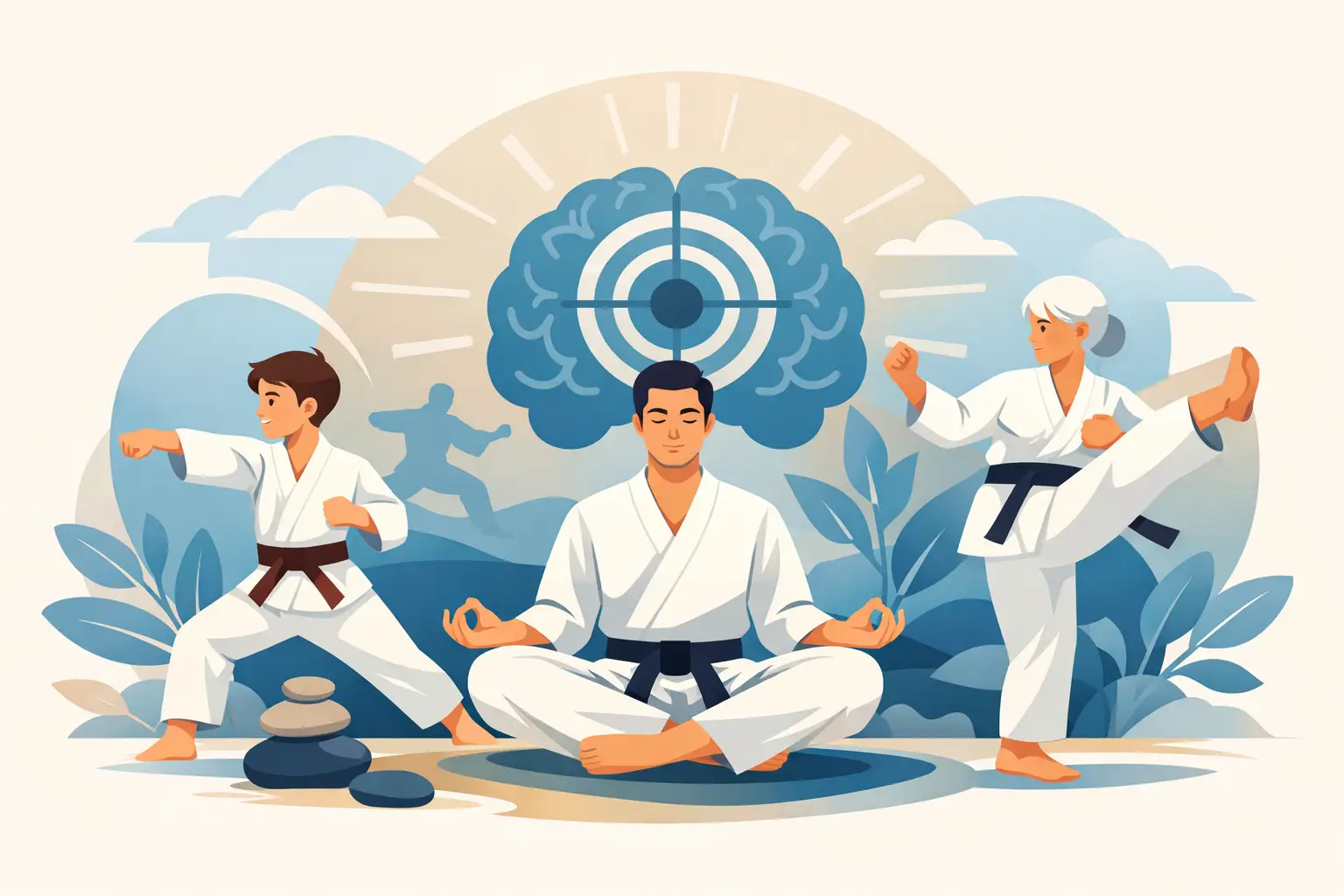
How Martial Arts Improves Focus at Any Age
A child who struggles to sit still in class can spend 45 minutes in a martial arts lesson listening, moving with purpose, and responding to instruction. An adult who feels mentally scattered after a long workday can step onto the mat and feel their attention narrow almost immediately. That is a big part of how martial arts improves focus – it gives the mind a job, the body a structure, and attention a clear direction.
Focus is not just about being quiet or still. Real focus means noticing what matters, filtering out distractions, and staying engaged long enough to do something well. For children, that might mean following directions and finishing tasks. For teens, it can mean better self-control and stronger academic habits. For adults, it often means mental clarity, discipline, and relief from constant distraction. Martial arts builds those skills in a practical, repeatable way.
How martial arts improves focus through structure
Many people struggle with focus because their day is full of fragmented attention. Screens, notifications, noise, and multitasking train the brain to jump from one thing to the next. Martial arts asks for the opposite. Class has a clear beginning, a clear goal, and a clear standard for behavior.
Students bow in, line up, listen, and follow instruction in sequence. That routine matters. It teaches the brain to shift gears and become present. Over time, students learn that when class begins, their attention needs to come with them.
This is especially valuable for children. Kids often do better when expectations are clear and consistent. In a well-run martial arts class, they know when to watch, when to move, when to speak, and when to wait. That kind of structure supports self-control, and self-control is closely tied to focus.
Adults benefit from the same system. A demanding training session leaves little room for mentally drifting. You have to pay attention to stance, timing, distance, breathing, and safety. That level of engagement creates a break from the scattered pace of everyday life.
Repetition trains attention, not just technique
One reason martial arts is so effective is that it uses repetition with purpose. Students practice basics again and again – strikes, blocks, footwork, grappling entries, balance, posture, and combinations. From the outside, that can look simple. In reality, good repetition develops concentration.
To repeat a technique correctly, a student has to notice details. Is the stance stable? Is the hand in the right position? Is the timing sharp? Is the student rushing, hesitating, or losing balance? That process strengthens the ability to pay attention to one task and improve it over time.
This matters because focus is rarely built by entertainment. It is built by sustained effort. Martial arts makes that effort meaningful because students can feel progress. A punch becomes cleaner. A kata becomes sharper. A takedown becomes more controlled. Improvement rewards attention, and that encourages students to stay engaged.
There is also a trade-off here. Not every training environment develops focus equally. If a class is chaotic, inconsistent, or overly casual, students may get exercise without gaining much discipline. Strong instruction makes the difference. The best programs challenge students while keeping expectations clear.
Why movement helps the mind settle
Some people focus best when they are not forced to sit still. That is one reason martial arts works so well for many kids and teens. Physical movement gives energy a direction. Instead of fidgeting, students learn to channel it.
When the body is active in a disciplined way, the brain often becomes easier to organize. Students are not asked to suppress all motion. They are taught to control it. That distinction matters. Controlled movement can improve body awareness, timing, and emotional regulation, all of which support better focus.
For adults, training can have a similar effect after a stressful day. Physical effort helps clear mental clutter. A good class demands enough attention that work stress, chores, and phone alerts fade into the background for a while. That mental reset is one reason many students leave training feeling both energized and calmer.
How martial arts improves focus by building self-discipline
Focus is not only about attention span. It is also about discipline. Can a student stay with something when it gets hard? Can they listen before reacting? Can they correct mistakes without giving up?
Martial arts builds those habits through steady expectations. Students learn to wait for instruction, respect boundaries, control power, and stay composed under pressure. They also learn that progress takes time. Belts, rank, and skill development do not happen in one class. They come from showing up, working hard, and staying consistent.
That lesson carries over. A child who practices patience in class may start showing more patience with homework. A teen who learns to stay composed in sparring may handle frustration better at school. An adult who commits to training may become more consistent in other parts of life too.
This is where traditional martial arts training has real value. Discipline is not treated as punishment. It is treated as a skill. Students are supported, corrected, and encouraged to rise to a higher standard.
Focus grows when students have clear goals
People pay attention better when they know what they are working toward. Martial arts provides that naturally. Students can work toward mastering a technique, preparing for a rank test, improving sparring control, or becoming more confident in self-defense.
Clear goals make focus easier because they turn effort into something measurable. A child may begin by learning to hold a stance correctly for a full drill. Later, that same child may work toward remembering a full sequence without reminders. Those are visible wins, and visible wins build motivation.
For families, this matters because motivation and focus often rise together. When students feel capable, they are more willing to stay engaged. They begin to connect attention with achievement.
That said, goals need to be age-appropriate. Younger children need shorter milestones and frequent encouragement. Teens may respond well to challenge and responsibility. Adults often want practical outcomes, whether that is self-defense skill, fitness, or sharper mental discipline. Good instruction meets students where they are.
Kids, teens, and adults improve focus in different ways
Children usually show focus gains through behavior. Parents may notice better listening, improved ability to follow multi-step directions, and more patience during tasks. Martial arts gives kids a place to practice these skills in real time, not just hear about them.
Teens often benefit from the balance of challenge and accountability. They want independence, but they still need structure. Martial arts gives them both. They are expected to take ownership of their effort while respecting the class environment. That combination can strengthen concentration, emotional control, and resilience.
Adults often come in for fitness or self-defense and discover a mental benefit they did not expect. Training demands presence. You cannot think about five things at once and perform well. That forced attention can become one of the most valuable parts of practice, especially for people who spend much of the day mentally overloaded.
What to look for in a martial arts program
If focus is one of your goals, the teaching environment matters as much as the style. Look for classes with clear routines, qualified instructors, consistent expectations, and a balance between discipline and encouragement. Students should feel supported, but they should also be challenged to pay attention and improve.
A program that serves children, teens, and adults well often understands that focus develops differently at each age. Some students need more movement. Some need more repetition. Some need stronger accountability. A thoughtful academy adjusts without lowering standards.
At Japanese Martial Arts Academy, that kind of structured training is part of the process. Whether a student is learning traditional striking, grappling, or weapons-based discipline, the goal is not just to stay busy. It is to build control, confidence, and lasting personal growth.
Focus does not appear overnight. It is built class by class, correction by correction, and success by success. When students train in an environment that values discipline, respect, and steady progress, attention stops feeling like a struggle and starts becoming a strength.