
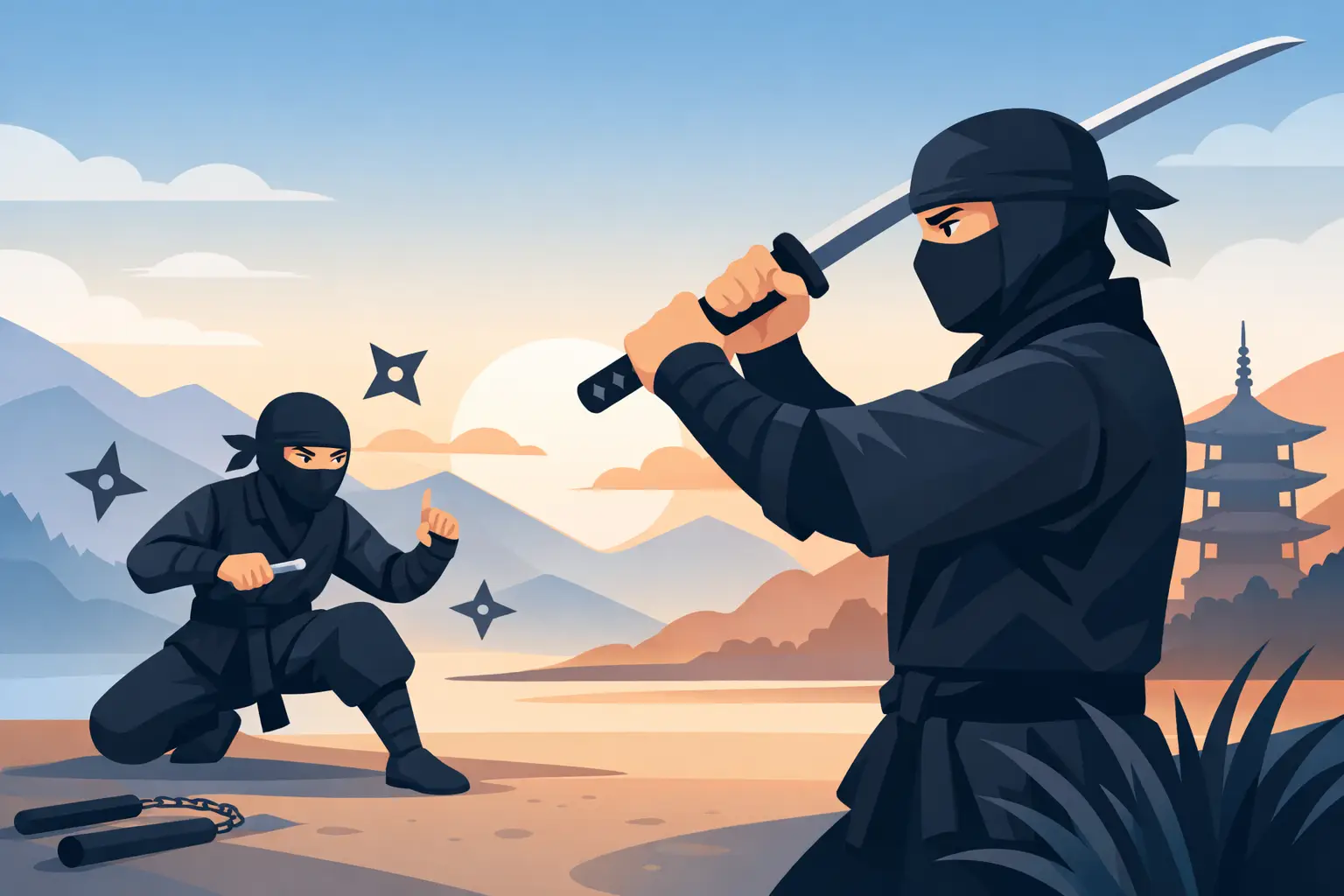
Ninjutsu Training for Beginners: Start Right
The first surprise for most new students is that ninjutsu training for beginners is not about movie-style flips, smoke bombs, or trying to look mysterious. Real beginner training is much more useful than that. It teaches how to move with balance, stay aware under pressure, protect yourself, and build calm discipline one class at a time.
That matters for families because good martial arts training should do more than wear kids out for an hour. It should build confidence, self-control, coordination, and respect. It matters for teens and adults too, especially if you want practical self-defense, better fitness, and a training environment that challenges you without throwing you into the deep end.
What beginners actually learn in ninjutsu training
At the beginner level, ninjutsu is about fundamentals. Students start by learning posture, footwork, distance, timing, basic strikes, escapes, and controlled ways to fall safely. Those skills may sound simple, but they shape everything that comes later. A student who learns how to move correctly from day one will progress faster and train more safely than someone chasing advanced techniques too early.
A good instructor does not hand a beginner a pile of complicated material and hope it sticks. Training should be structured. First comes body control, then partner drills, then a clearer understanding of how techniques work in realistic situations. Beginners also learn awareness – how to recognize space, manage balance, and respond without freezing.
That is one reason ninjutsu appeals to many different students. Children benefit from the discipline and coordination. Teens often connect with the practical side of movement and self-protection. Adults appreciate that training develops both physical skill and mental control.
Why ninjutsu training for beginners works so well
Ninjutsu gives beginners a broad base. Instead of focusing on only one range of combat, it often introduces movement, striking, evasion, control, and problem-solving together. For a new student, that can create a more complete understanding of self-defense.
There is also a strong mindset component. Beginners are not just memorizing motions. They are learning how to stay composed, pay attention, and make smart decisions under stress. That carries over into daily life. Kids become more focused in structured settings. Teens gain confidence without needing to act tough. Adults often find that training helps them manage stress and become more physically capable at the same time.
Of course, breadth can also be a challenge if the school is not organized. A beginner needs clear progression, not random techniques. That is why instructor quality matters so much. Traditional systems are valuable, but for modern students, tradition needs to be taught in a way that is safe, understandable, and practical.
What to expect in your first classes
Most beginners are nervous before the first class. That is normal. The good news is that quality instruction meets students where they are. You should expect a respectful environment, clear direction, and training that builds from simple skills to more demanding ones.
A first class often includes stance work, basic movement, partner awareness drills, and introductory self-defense mechanics. You may practice how to maintain balance while stepping, how to create distance, or how to protect yourself during a fall. Children may work through these same ideas in a more age-appropriate format, with extra emphasis on listening, control, and following instruction.
You should also expect repetition. Repetition is not boring when it is done well. It is how students build reliable skill. In martial arts, confidence comes from doing the basics correctly enough times that your body begins to trust the movement.
Some people worry they need to be in shape before starting. They do not. Beginner classes are where fitness begins. Training improves mobility, endurance, coordination, and strength over time. Progress matters more than starting point.
The benefits for kids, teens, and adults
For kids, ninjutsu can be a strong outlet for energy while reinforcing structure and respect. The right training helps children improve focus, body awareness, listening skills, and self-control. Parents often notice the difference outside class first – better posture, more confidence, and a stronger sense of responsibility.
For teens, the appeal is often a mix of challenge and purpose. Training gives them a constructive place to work hard, learn self-defense, and build resilience. It can also help them step away from screen-heavy routines and into an activity where effort creates visible progress.
For adults, ninjutsu offers more than fitness. It develops practical movement, situational awareness, and a disciplined approach to self-defense. Many adults want training that feels meaningful, not just exhausting. Martial arts can provide that. You get the physical benefits, but you also gain sharper focus and a stronger sense of personal capability.
Families often see the biggest value when everyone can train in the same community. Shared training creates common goals, mutual encouragement, and a healthier routine at home. That sense of support is one reason many students stay with martial arts long term.
How to choose the right beginner program
Not every martial arts school teaches beginners well. If you are looking into ninjutsu training for beginners, pay close attention to the teaching method, not just the style name. A good beginner program should feel organized, respectful, and purposeful from the moment class starts.
Look for instruction that emphasizes safety, clear progressions, and real coaching. Beginners should be corrected with patience and precision. Children should be challenged without being overwhelmed. Adults should be pushed to improve without being treated like they should already know everything.
It also helps to look at the bigger training environment. A school with strong roots in traditional Japanese martial arts and a wider self-defense curriculum can offer a richer foundation. When stand-up skills, movement, and control are all valued, students often develop into more complete martial artists. At Japanese Martial Arts Academy, that broader approach matters because students are not limited to a single narrow lane of training. They build practical skill through disciplined instruction and a supportive community.
Common beginner mistakes and how to avoid them
The most common mistake is trying to advance too fast. Beginners sometimes want flashy techniques right away, but skipping fundamentals slows progress. Strong basics are not a delay. They are the fast track.
Another mistake is training with too much tension. New students often think power comes from stiffness. It does not. Good movement depends on posture, timing, and relaxed control. A skilled instructor helps students stay disciplined without becoming rigid.
Consistency is another challenge. Students who train once in a while tend to feel like they are starting over each time. Students who show up regularly build momentum. Even two steady classes a week can produce real change over time.
Parents should also avoid choosing a program based only on entertainment value. Kids may enjoy games and high energy, but long-term growth comes from structure, expectations, and meaningful instruction. The best classes are engaging, but they also teach discipline with purpose.
Getting started with confidence
If you are new, the goal is not to prove anything on day one. The goal is to begin. Wear comfortable training clothes if the school recommends it, arrive ready to listen, and focus on learning one skill at a time. Ask questions. Pay attention. Be coachable.
Beginners who improve the fastest are usually not the strongest or most athletic. They are the ones who stay humble, train consistently, and trust the process. That applies to children, teens, and adults alike.
Ninjutsu can be a powerful starting point for anyone who wants practical self-defense, better fitness, and stronger discipline. When it is taught the right way, it builds more than technique. It builds confidence that shows up at school, at work, at home, and in the way you carry yourself each day.
If you have been waiting for the right time to start, this is a good moment to stop waiting and step onto the mat.